

Where to Start Your Journey
Émile Zola’s monumental 20-volume cycle, Les Rougon-Macquart, is one of the grandest achievements in literary history. Subtitled "The Natural and Social History of a Family under the Second Empire," the series follows the descendants of Adelaïde Fouque through two generations. Zola’s characters climb the highest peaks of Parisian high society and descend into the absolute depths of poverty, representing a vivid cross-section of 19th-century French life.
Because Zola designed each novel to be a self-contained study of a specific profession, social class, or setting, you do not need to read them in a strict chronological sequence to appreciate them. If you are a newcomer looking for the best entry points, you have a few excellent options depending on your reading style:
- The Logical Origin: The Fortune of the Rougons (1871). This is the first published novel and serves as the foundation for the entire family tree, introducing the genetic branch lines and the coup d'état that establishes the Second French Empire.
- The Gritty Masterpiece: L'Assommoir (1877). A devastating portrayal of working-class struggle, alcoholism, and poverty in Paris. It remains one of Zola's most famous and emotionally resonant works.
- The Scandalous Sequel: Nana (1880). Following the life of Gervaise’s daughter from L'Assommoir, this book chronicles the rise and fall of a high-class courtesan, exposing the moral rot of the Parisian elite.
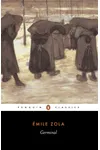
- The Industrial Epic: Germinal (1885). Widely regarded as Zola's crowning achievement, this novel follows Étienne Lantier into a northern French coal-mining community during a bitter, desperate labor strike.
The Two Primary Reading Orders
For readers who want to experience the complete cycle, there are two primary pathways to follow: the order in which the books were published, or the alternative reading order suggested by Émile Zola himself in the preface to the final novel, Doctor Pascal.
Option 1: The Publication Order
Reading the novels in the order Zola wrote them allows you to see his style evolve and witness how his thematic ambitions grew over more than two decades of writing. It is the most common way readers tackle the cycle.
- The Fortune of the Rougons (La Fortune des Rougon, 1871)
- The Kill (La Curée, 1871–72)
- The Belly of Paris (Le Ventre de Paris, 1873)
- The Conquest of Plassans (La Conquête de Plassans, 1874)
- The Sin of Father Mouret (La Faute de l'Abbé Mouret, 1875)
- His Excellency Eugène Rougon (Son Excellence Eugène Rougon, 1876)
- L'Assommoir (L'Assommoir, 1877)
- A Love Episode (Une Page d'amour, 1878)
- Nana (1880)
- Pot Luck (Values published as Pot-Bouille, 1882)
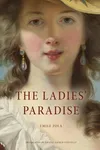
- The Ladies' Paradise (Au Bonheur des Dames, 1883)
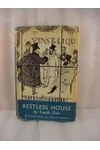
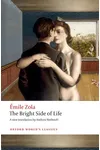
- The Joy of Life (La Joie de vivre, 1884)
- Germinal (1885)
- The Masterpiece (L'Œuvre, 1886)
- The Earth (La Terre, 1887)
- The Dream (Le Rêve, 1888)
- The Beast Within (La Bête humaine, 1890)
- Money (L'Argent, 1891)
- The Downfall (La Débâcle, 1892)
- Doctor Pascal (Le Docteur Pascal, 1893)
Option 2: Zola's Recommended Reading Order
In the introduction to Doctor Pascal, Zola outlined an alternative reading sequence. Instead of following the order of writing, this structure group books by family branches, social spheres, and thematic arcs, building a distinct structural progression through the Second Empire before concluding with the final retrospective in Doctor Pascal.
- The Fortune of the Rougons (1871)
- His Excellency Eugène Rougon (1876)
- The Kill (1871–72)
- Money (1891)
- The Dream (1888)
- The Conquest of Plassans (1874)
- Pot Luck (1882)
- The Ladies' Paradise (1883)
- The Sin of Father Mouret (1875)
- A Love Episode (1878)
- The Belly of Paris (1873)
- The Joy of Life (1884)
- L'Assommoir (1877)
- The Masterpiece (1886)
- The Beast Within (1890)
- Germinal (1885)
- Nana (1880)
- The Earth (1887)
- The Downfall (1892)
- Doctor Pascal (1893)
Timeline Caveats and Chronological Overlap
If you are looking for a strict, linear chronological timeline, you won't find one. Because the novels take place concurrently during the eighteen-year reign of Napoleon III (1852–1870), many of the stories run parallel to one another. For example, while Aristide Rougon is speculating on real estate in Paris during The Kill, his brother Eugène is consolidating political power in His Excellency Eugène Rougon, and their cousin Florent is navigating the food markets in The Belly of Paris.
As a result, attempting to build a perfect timeline is unnecessary. What matters most is the heredity chart. Zola uses the family connections to explore his naturalist theories of how genetic traits (like addiction, madness, or ambition) interact with different environmental circumstances. No matter which order you choose, you should save Doctor Pascal for the absolute end, as it explicitly catalogs the entire family genealogy and serves as the thematic and narrative wrap-up for the entire saga.
Beyond the Rougon-Macquart: Spin-offs and Sequels
Once you finish the 20-novel saga, you might wonder if Zola wrote any follow-up works. While there are no direct sequels focusing on the Rougon-Macquart family, Zola wrote two subsequent literary cycles that expand on his social theories and represent his transition toward a more optimistic philosophy:
The Three Cities Trilogy
Published between 1894 and 1898, this trilogy follows a young priest named Pierre Froment as he experiences a crisis of faith. It takes readers on a journey through the changing religious and social landscapes of Europe: Lourdes (1894), Rome (1896), and Paris (1898).
The Four Gospels
Following the Three Cities, Zola began a cycle focused on secular, utopian progress, centering on the sons of Pierre Froment. The cycle includes Fécondité (Fruitfulness, 1899), Travail (Labor, 1901), and Vérité (Truth, 1903). The fourth volume, Justice, was left unfinished upon Zola's death in 1902.