



The Recommended Reading Path
Brent Hartinger's Russel Middlebrook universe spans high school angst, twenty-something existential dread, and even Hollywood spotlights. For the best reader experience, we strongly recommend following Russel and his friends chronologically as they grow up. This lets you experience the character development and changing tone naturally, starting with the iconic young adult novels, transitioning into the 'new adult' phase, and finishing with the companion spin-off novels.
Phase 1: The High School Years (Young Adult Series)
This is where the story begins. Russel is a closeted teenager navigating high school, summer camp, movie sets, and complicated friendships. Start with these titles in order:
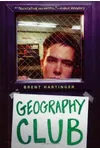
- Geography Club (2003) – The groundbreaking first novel where Russel and his friends form a secret support group disguised as a boring academic club.
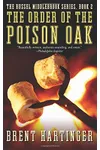
- The Order of the Poison Oak (2005) – Russel works as a camp counselor, finding romance, challenges, and self-discovery.
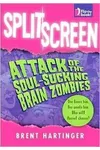
- Split Screen (also published as Double Feature) (2007) – A unique dual-perspective novel following Russel and Min as extras on a zombie movie set.
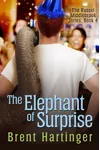
- The Elephant of Surprise (2013) – The final high school novel, bringing unexpected twists and new characters like Wade.
Phase 2: Supplemental Short Fiction
Before jumping into Russel's adult years, there is an important companion piece you should read:
- Two Thousand Pounds Per Square Inch (2013) – A short story (approximately 22 pages) where Russel waits for the results of an HIV test. Written for Brent Hartinger's 'The Real Story Safe Sex Project,' it fits beautifully right after the high school years.
Phase 3: The Futon Years (New Adult Series)
In this trilogy, Russel is in his mid-twenties, living in Seattle, and trying to figure out career, love, and adulthood alongside his long-term friends. Read these in order:
- The Thing I Didn't Know I Didn't Know (2014)
- Barefoot in the City of Broken Dreams (2015)
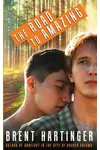
- The Road to Amazing (2016)
Phase 4: The Otto Digmore Spin-Offs
Otto Digmore, a fan-favorite character introduced in the main series who has a facial scar and a passion for acting, gets his own spotlight in this companion duology. These novels follow Otto's career in Hollywood:
- The Otto Digmore Difference (2017)
- The Otto Digmore Decision (2020)
Publication Order vs. Chronological Order
For the main books, the publication order matches the chronological timeline perfectly. Because the characters age in real-time across the series, reading them out of order is not recommended, as you will spoil major relationship dynamics, career changes, and life events.
The only minor timeline overlap occurs with the Otto Digmore spin-off books. While they are published after The Futon Years, they focus on Otto's life in Hollywood, which runs adjacent to and slightly after the events of the late Futon Years. Reading them at the very end of your journey is the most satisfying path.
Crucial Caveats and Title Changes
When searching for these books, keep a couple of key points in mind to avoid purchasing duplicate copies or getting confused:
The "Split Screen" vs. "Double Feature" Confusion
The third young adult book was originally published in 2007 under the title Split Screen, featuring two distinct stories: Attack of the Soul-Sucking Brain Zombies (told from Russel's perspective) and Bride of the Soul-Sucking Brain Zombies (told from Min's perspective). The book was later re-released under the title Double Feature. They are the exact same book, so you only need to purchase one or the other.
The Structure of the Dual-Perspective Book
Unlike standard novels, Split Screen / Double Feature requires a specific reading approach. The book contains two halves that overlap chronologically. First, you read Russel's side of the story, and then you flip the book (or continue reading) to experience Min's side of the same timeframe. The storylines intersect, and both halves are essential to get the complete picture of what happens on that zombie movie set.
What to Know Before You Start
Hartinger's series is a landmark in LGBTQ+ YA literature. When Geography Club was published in 2003, positive representation of gay teens in young adult fiction was exceptionally rare. The book's success helped pave the way for modern queer YA, leading to a feature film adaptation in 2013 starring Cameron Deane Stewart.
As you progress from the original series to The Futon Years, be prepared for a shift in tone. While the high school books are lighthearted and conform to classic YA sensibilities, The Futon Years shifts into New Adult territory. The characters face more mature situations, navigate complex sexual relationships, deal with career failures, and face the sobering realities of growing up. However, Hartinger's signature warm humor, witty dialogue, and deep empathy for his characters remain a constant anchor throughout all nine books.