










How to Read the Ruth Fielding Books
Unlike many juvenile series of the early 20th century where characters remain frozen in a state of perpetual youth, the Ruth Fielding series features a continuous chronological timeline. Ruth ages, completes her education, serves in World War I, establishes a career as a screenwriter and film director, gets married, and raises a daughter. For this reason, the absolute best way to experience the series is in publication (and chronological) order.
Beginning with her arrival as a penniless twelve-year-old orphan at her uncle's mill in 1913 and concluding with her mature triumphs in 1934, reading the books in sequence allows you to watch Ruth grow up, build her independence, and adapt to the rapid technological and social changes of the early 20th century.
Ruth Fielding Books in Publication Order
Below is the complete list of all 30 novels in the series, including their original publication years. Every book follows Ruth's life chronologically:
- Ruth Fielding of the Red Mill (1913)
- Ruth Fielding at Briarwood Hall (1913)
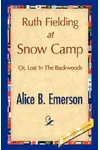
- Ruth Fielding at Snow Camp (1913)
- Ruth Fielding at Lighthouse Point (1913)
- Ruth Fielding at Silver Ranch (1913)
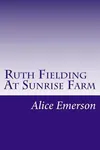
- Ruth Fielding at Sunrise Farm (1915)
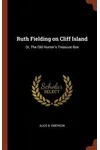
- Ruth Fielding on Cliff Island (1915)
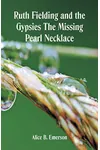
- Ruth Fielding and the Gypsies (1916)
- Ruth Fielding in Moving Pictures (1916)
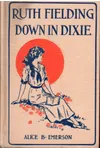
- Ruth Fielding Down in Dixie (1916)
- Ruth Fielding At College (1917)
- Ruth Fielding in the Saddle (1917)
- Ruth Fielding of the Red Cross (1918)
- Ruth Fielding At the War Front (1918)
- Ruth Fielding Homeward Bound (1919)
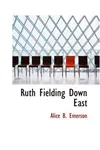
- Ruth Fielding Down East (1920)
- Ruth Fielding in the Great Northwest (1921)
- Ruth Fielding on the St. Lawrence (1922)
- Ruth Fielding Treasure Hunting (1923)
- Ruth Fielding In The Far North (1924)
- Ruth Fielding at Golden Pass (1925)
- Ruth Fielding in Alaska (1926)
- Ruth Fielding and Her Great Scenario (1927)
- Ruth Fielding at Cameron Hall (1928)
- Ruth Fielding Clearing Her Name (1929)
- Ruth Fielding in Talking Pictures (1930)
- Ruth Fielding and Baby June (1931)
- Ruth Fielding and Her Double (1932)
- Ruth Fielding and Her Greatest Triumph (1933)
- Ruth Fielding and Her Crowning Victory (1934)
The Eras of Ruth's Life and Career
To help navigate this extensive 30-book journey, the series can be naturally divided into several distinct eras that mark key milestones in Ruth's life:
1. The Schoolgirl and Early Adventures (Books 1–10)
This era introduces Ruth as an orphan sent to live with her miserly Uncle Alvah Wilcox at the Red Mill. Here she meets Helen Cameron and her twin brother, Tom Cameron. Ruth is soon sent to Briarwood Hall, a boarding school where she makes lifelong friends and solves her first mysteries. A major turning point occurs in Ruth Fielding in Moving Pictures (1916), when Ruth writes a screen scenario to raise money for her school, sparking her lifelong passion for filmmaking.
2. The College Years (Books 11–12)
Ruth and Helen head to Ardmore College, juggling academic responsibilities, college athletics, and continuing their adventurous outings. During these years, Ruth's ambition to work in the budding film industry grows, setting her apart from traditional heroines of the era.
3. The World War I Era (Books 13–15)
Reflecting real-world events, the series takes a dramatic historical turn during World War I. Ruth volunteers for the Red Cross and travels directly to the war front in France. These books are notably darker and more realistic than the typical schoolgirl adventures, depicting the dangers of the war zone before Ruth returns home in Ruth Fielding Homeward Bound.
4. The Silent Film and Hollywood Career Era (Books 16–23)
Ruth pursues her professional dreams, traveling across North America—from the Great Northwest to Alaska—while writing scenarios for silent movies. She faces intense corporate sabotage and industry rivalries, eventually building her own production brand.
5. Marriage, Sound Films, and Motherhood (Books 24–30)
In Ruth Fielding at Cameron Hall (1928), Ruth marries her long-time companion Tom Cameron. Unusually for the period, Tom agrees that Ruth will continue her professional career, and she retains her maiden name professionally. This final era sees her transition the studio from silent films to "talkies" in Ruth Fielding in Talking Pictures (1930), raise her daughter June (introduced in Ruth Fielding and Baby June), and direct her greatest cinematic masterpieces.
Behind the Pseudonym: The Ghostwriters of Alice B. Emerson
Like Nancy Drew and the Hardy Boys, the Ruth Fielding books were outlined by Edward Stratemeyer and published under a collective syndicate pseudonym: Alice B. Emerson. However, three distinct ghostwriters penned the actual books, each leaving a unique mark on Ruth's characterization:
- W. Bert Foster (Books 1–19): Foster wrote the bulk of the series, creating the Red Mill setting, building the core relationships, and writing the intense WWI trilogy. His style combined traditional melodrama with details of the early movie industry.
- Elizabeth M. Duffield Ward (Books 20–22): Ward took over briefly for three outdoor travel-adventure books set in the Far North and Alaska.
- Mildred A. Wirt Benson (Books 23–30): Best known as the primary writer behind Nancy Drew (as Carolyn Keene), Benson took over the final leg of the series. Under Benson's pen, Ruth became a sharper, highly independent career woman navigating the sound-era transition of Hollywood.
Practical Reader Advice
If you are looking to dive into this vintage classic, keep these tips in mind:
- Start at the Beginning: While individual books feature stand-alone mysteries, the emotional payoff of Ruth's personal development, career progression, and relationships depends on starting with Ruth Fielding of the Red Mill.
- Observe the Historical Transitions: The series acts as a time capsule for the early 20th century. Pay attention to how the books transition from early silent movies to the dawn of the "talking picture" era, as well as the changing societal expectations for women.
- Availability: Because these books are in the public domain, many of the early volumes are freely available on digital archives like Project Gutenberg, though the later Mildred Wirt Benson books can sometimes be harder to locate in print.