

Recommended Reading Order
The Ruthenia Quintet, officially designated by author Olen Steinhauer as the Yalta Boulevard Sequence, is a carefully structured five-book series. Because the series timeline progresses chronologically decade-by-decade, the publication order and chronological order are identical. To fully experience the evolution of the fictional setting and the recurring character arcs, readers should follow the books in their original order of release:
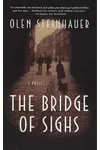
- The Bridge of Sighs (2003) – Set in 1948
- The Confession (2004) – Set in 1956
- 36 Yalta Boulevard (2005) – Set in 1966–1967 (also published as The Vienna Assignment)
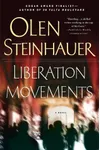
- Liberation Movements (2006) – Set in 1968 and 1975 (also published as The Istanbul Variations)
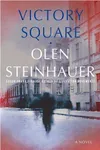
- Victory Square (2007) – Set in 1989
The Changing Face of Yalta Boulevard
Steinhauer structured the sequence to cover five distinct decades of Cold War history, beginning in the immediate aftermath of World War II and ending with the historic revolutions of 1989. Rather than focusing on a single hero, the narrative mantle shifts with each installment. Each book features a new protagonist from the state's security apparatus or police force, though previously established characters frequently return as colleagues, mentors, adversaries, or older versions of themselves.
This shifting focus allows readers to witness the transformation of the state itself. The setting remains unnamed throughout the series, though it mirrors the historical realities of Soviet satellite states like Hungary, Slovakia, and Romania. Steinhauer, who spent a year in Romania on a Fulbright grant, utilizes this fictional construct to explore the psychological stress, paranoia, and moral compromises demanded of citizens living under an authoritarian regime.
Deep Dive: Decades of Espionage and Intrigue
1. The Bridge of Sighs (1948)
The series opens in 1948, just as the communist regime is cementing its grip on power. The story follows Emil Brod, a naive twenty-two-year-old homicide detective who has just joined the People's Militia. His first case is a politically sensitive murder investigation involving a prominent state figure. Emil is forced to navigate the treacherous waters of state security, learning quickly that seeking the truth can be a capital offense under the new system.
2. The Confession (1956)
Set during the turbulent year of 1956, the second novel centers on Ferenc Kolyesar, a homicide detective who also harbors ambitions of being a writer. The political atmosphere is thick with tension, heavily influenced by the real-world Hungarian Revolution taking place just across the border. When Ferenc is assigned to investigate the suspicious death of a rebellious artist, he finds himself caught between Party loyalists and dissident intellectuals, marking the series' transition from a police procedural to a complex political thriller.
3. 36 Yalta Boulevard (1966–1967)
The third installment, also published under the title The Vienna Assignment in the UK, moves into the late 1960s. The focus shifts to Brano Sev, an enigmatic State Security (Securitate-style) officer who appeared as a secondary figure in the previous books. After being demoted to a factory job, Brano is reinstated to investigate a potential defector in his hometown. The case goes wrong, framing Brano for murder and forcing him into exile in Vienna, Austria, where he is thrust into a hall of mirrors involving double agents and Western intelligence.
4. Liberation Movements (1975)
Also known as The Istanbul Variations in the UK, this book is set primarily in 1975, with crucial flashbacks to 1968. The story is told from multiple perspectives, focusing on secret policeman Gavra Noukas and homicide detective Katja Drdova as they work under the oversight of Brano Sev. The plot kickstarts when an investigator is killed after a commercial flight to Istanbul is hijacked by Armenian terrorists. The investigation digs deep into a conspiracy involving state-sanctioned assassinations, blackmail, and personal vendettas.
5. Victory Square (1989)
The final book brings the quintet full circle in 1989, as the communist bloc begins to crumble. Emil Brod, the young protagonist of the first book, is now the aging chief of the People's Militia, mere days away from retirement. When an old murder case from the late 1940s is unearthed, Emil is targeted by political conspirators seeking revenge. As riots take over the capital, Emil must survive the chaotic fall of the regime and confront the consequences of the state he helped protect for forty years.
Practical Reader Guidance and Standalone Status
While Olen Steinhauer designed each book to feature a self-contained mystery or spy investigation, they are not true standalones. The evolving political climate of the fictional nation and the intricate web of returning characters build upon the events of previous books. Reading them out of order will spoil major character fates and lessen the impact of the historical sweep that defines the Yalta Boulevard Sequence. Start with The Bridge of Sighs to appreciate the full chronological trajectory.
Crossover Connections
For readers who finish the quintet and crave more of Steinhauer's spy fiction, there is a minor crossover to look out for. The character of Brano Sev makes a brief cameo appearance in Olen Steinhauer's contemporary Milo Weaver Series (beginning with the 2009 novel The Tourist). This brief connection links the historical Cold War atmosphere of Yalta Boulevard with Steinhauer's modern-day espionage universe.