
The Recommended Reading Path
Because the Scary Stories to Tell in the Dark books are anthologies of independent folk tales, urban legends, and ghost stories, there is no overarching narrative continuity. You do not need to read them in a strict order to understand the plot. However, for the ultimate nostalgic experience, the best way to read the series is in its original publication order. This allows you to experience the evolution of Alvin Schwartz's curated folklore and Stephen Gammell's increasingly surreal, nightmarish illustrations.
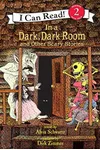
For younger readers who might not be ready for the intense imagery of the main trilogy, we recommend starting with the easy-reader companion book, In a Dark, Dark Room and Other Scary Stories, before moving on to the main collection.
Scary Stories to Tell in the Dark Books in Publication Order
Here is the chronological publication order of the Scary Stories books, including the main trilogy and the younger reader companion book. All of these books were written by folklorist Alvin Schwartz.
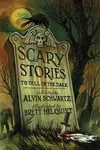
- Scary Stories to Tell in the Dark (1981): The book that started it all. This classic collection features 29 tales of terror, including famous stories like "The Big Toe," "The White Satin Evening Gown," and "The Red Spot." It establishes the series' signature formula of conversational, oral-tradition storytelling combined with haunting illustrations.
- In a Dark, Dark Room and Other Scary Stories (1984): Released the same year as the second main book, this is a Level 2 "I Can Read!" book designed for beginning readers. While it features simpler vocabulary and illustrations by Dirk Zimmer rather than Stephen Gammell, it contains iconic, eerie stories like "The Green Ribbon" and "The Teeth" that serve as a perfect gateway to horror.
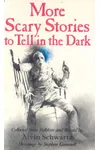
- More Scary Stories to Tell in the Dark (1984): The official second installment in the trilogy features 28 more tales of ghosts, grave robbers, and supernatural occurrences. Standout entries include "The Bride," "The Drum," and "The Wonderful Sausage."
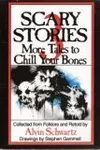
- Scary Stories 3: More Tales to Chill Your Bones (1991): The final book in the original trilogy contains 25 stories. This volume is home to some of the most famous and deeply unsettling tales in the entire series, most notably "Harold" (the story of a cursed, lifelike scarecrow) and "The Dream."
What to Know Before You Start
Before grabbing a copy and turning down the lights, there are a few important details to keep in mind regarding illustrations, adaptations, and the origins of these stories.
The Battle of the Illustrations: Gammell vs. Helquist
You cannot talk about Scary Stories to Tell in the Dark without talking about the artwork. Stephen Gammell's original charcoal and ink-splattered illustrations are legendary for their grotesque, dreamlike, and profoundly disturbing qualities. For many readers, Gammell's drawings were far scarier than the text itself.
In 2011, to mark the 30th anniversary of the first book, publisher HarperCollins re-released the trilogy with new illustrations by Brett Helquist (famous for illustrating A Series of Unfortunate Events). Helquist's artwork, while technically excellent, was significantly cleaner and less frightening. This change sparked a massive backlash from fans who felt the original soul of the books had been lost. Responding to decades of fan demand, HarperCollins restored Stephen Gammell's original artwork to the printings in 2017. When buying copies, always double-check the cover and interior credits to ensure you are getting the classic Gammell-illustrated versions.
Schwartz's Folkloric Methodology
Alvin Schwartz was not just a horror writer; he was a dedicated folklorist. Almost every story in the trilogy is a retelling of an existing urban legend, regional ghost story, or traditional ballad. Schwartz spent years researching archives and academic journals to find these tales. At the back of each book, readers will find extensive source notes detailing where each story originated, how it spread through oral tradition, and variant versions from different cultures. Reading these notes adds a fascinating layer of historical appreciation to the scares.
The 2019 Film Adaptation
In 2019, CBS Films and Entertainment One released a live-action feature film adaptation directed by André Øvredal and produced by Guillermo del Toro. Rather than being an anthology movie, the film weaves several of the books' most famous monsters and stories—such as "Harold the Scarecrow," "The Red Spot," "The Big Toe," and "The Pale Lady" (from "The Dream")—into a cohesive, 1968-set narrative about a group of teenagers who discover a cursed book of stories. It is a fantastic companion watch for fans of the trilogy.
Practical Reading Advice
Here are a few quick tips to get the most out of your reading experience:
- Read them aloud: Schwartz specifically wrote these books using conversational speech patterns meant for oral performance. Many stories include performance notes, telling the reader when to raise their voice, whisper, or jump out at the listener. They are best experienced when read aloud in a dark room with a flashlight.
- Treat "In a Dark, Dark Room" as a prequel: If you are introducing a young child to the genre, start with In a Dark, Dark Room and Other Scary Stories. The story of "The Green Ribbon" is a childhood rite of passage, but the book lacks the terrifying charcoal visuals of the main trilogy.
- Standalone reading is fine: If you happen to find a copy of the third book before the first, don't hesitate to read it. There is no continuous plot or recurring characters between the books, making each volume completely standalone.