
Welcome to the Endless Woods
Step into the enchanting world of The School for Good and Evil, where fairy tales twist and turn in delightfully unexpected ways! Created by Soman Chainani, this captivating fantasy series invites readers to the Endless Woods, a magical realm where best friends Sophie and Agatha discover that the line between hero and villain isn’t as clear as it seems. Sophie is a glamorous dreamer obsessed with becoming a princess, while Agatha is a quirky outcast labeled a witch. When they are whisked away to a magical academy, they find their expectations completely shattered: Sophie lands in the School for Evil, while Agatha is placed in the School for Good. With its witty storytelling and heartfelt exploration of friendship, identity, and morality, this series is a must-read for fans of fairy tales with a modern, darker edge.
Recommended Reading Order: Publication Order
If you are diving into this magical universe for the first time, we strongly recommend reading the books in their publication order. The series is highly serialized, and the overarching plot, character dynamics, and magical lore build directly upon each volume. Reading them in this sequence ensures you experience the narrative arc exactly as the author intended.
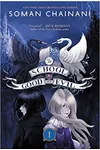
- The School for Good and Evil (2013) – The adventure begins as Sophie and Agatha are swept away to the schools, starting their chaotic first year.
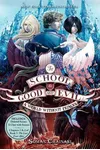
- A World Without Princes (2014) – The stakes rise as the girls return to the school, only to find the institutions transformed and divided by gender rather than alignment.
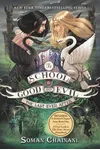
- The Last Ever After (2015) – The grand finale of the original trilogy, wrapping up Sophie and Agatha's initial adventures as they face their pasts and futures.
- The Ever Never Handbook (2016) – A companion guide filled with school rules, survival tips, maps, and quizzes. This is best enjoyed after the first trilogy to avoid spoilers.
- Quests for Glory (2017) – The beginning of the Camelot Years trilogy, where the students must step out into the Endless Woods to complete their required graduation quests.
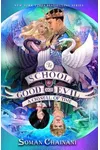
- A Crystal of Time (2019) – The middle chapter of the sequel trilogy, where Agatha and her companions must race against time to save Camelot.
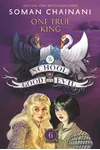
- One True King (2020 / 2021) – The final battle for the crown of Camelot, bringing the main saga of Sophie, Agatha, and Tedros to a dramatic conclusion.
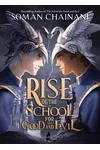
- Rise of the School for Good and Evil (2022) – The first prequel novel, taking readers back hundreds of years to follow the School Master brothers, Rafal and Rhian.
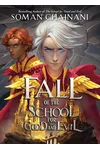
- Fall of the School for Good and Evil (2023) – The second prequel novel, detailing the ultimate battle between the brothers that set the stage for the main series.
The Chronological Reading Order Option
For readers who have already finished the main series once and want to experience the timeline of the Endless Woods from its historical beginnings, a chronological reading path is an alternative. This path places the prequel duology at the very beginning of the journey:
- Rise of the School for Good and Evil (2022)
- Fall of the School for Good and Evil (2023)
- The School for Good and Evil (2013)
- A World Without Princes (2014)
- The Last Ever After (2015)
- The Ever Never Handbook (2016)
- Quests for Glory (2017)
- A Crystal of Time (2019)
- One True King (2020 / 2021)
Caveats to Chronological Reading
While reading chronologically might seem logical, it is not recommended for newcomers. The prequel duology focuses on the origin stories of the School Master brothers (Rafal and Rhian) and contains deep lore, political intrigue, and structural explanations of the school that assume you are already familiar with the magical systems, legends, and ultimate fates of these characters. Reading the prequels first can diminish the mystery and suspense of the original trilogy.
Breaking Down the Series Structure
The School Years (Books 1–3)
This original trilogy introduces us to the Endless Woods, the concept of the Storian (the magical pen that writes fairy tales), and the primary conflict between Sophie and Agatha. The narrative explores themes of inner beauty, self-acceptance, and the toxic nature of forcing people into strict binary categories of Good and Evil.
The Camelot Years (Books 4–6)
Following a short time jump, this sequel trilogy shifts the focus toward Camelot, where Agatha and Tedros try to reclaim the throne. The scale of the world expands significantly, introducing new characters, political conspiracies, and a darker, more young-adult-oriented fantasy tone. Sophie’s role also shifts dramatically as she navigates her complicated path between villainy and heroism.
The Prequel Duology
Set many generations before Sophie and Agatha arrive, these books chronicle the relationship between the twin School Master brothers. They explore how the balance of Good and Evil was kept for centuries, the creation of the schools, and the tragic events that led to the division and corruption of the academy.
What to Know Before You Start
The School for Good and Evil is ideal for readers who enjoy subverted fairy tales, complex moral gray areas, and strong focus on character growth and friendship. While it starts as a whimsical middle-grade adventure, it quickly matures into a darker, high-stakes young adult fantasy series with elements of violence, betrayal, and emotional complexity. Additionally, the books are highly serialized, meaning you cannot read them as standalones; each novel begins right where the previous one left off.
For fans of Soman Chainani's other work, the fairy tale collection Beasts & Beauty: Dangerous Tales is set in a separate universe, though it shares similar themes and contains a subtle canon nod to Hort's father in its Peter Pan retelling. Lastly, the 2022 Netflix movie adaptation serves as a fun visual companion to the first book, but contains significant plot differences, making the books the definitive way to experience the story.