














The Recommended Reading Path for Scobie Malone
To get the most out of Jon Cleary’s classic Australian police procedurals, the best path is to read the Scobie Malone books in publication order. Although each novel delivers a self-contained investigation—ranging from high-profile political assassinations to local underworld slayings—the true heart of the series is the life of Scobie himself. Over the course of the novels, you will watch Scobie advance from a young sergeant to a seasoned Detective Inspector, court and marry his wife Lisa, raise three children, and eventually prepare for retirement. Reading in order ensures you experience this rich family and career progression without spoilers.
If you cannot find the first novel, a great alternative starting point is the second book, Helga's Web (1970). It leans heavily into the local atmosphere of Sydney and firmly establishes Cleary's signature style of combining grit with local social commentary.
The Scobie Malone Novels in Publication Order
Below is the complete sequence of the Scobie Malone books. Note that minor discrepancies in dates exist in some regional catalogs due to differences between Australian, UK, and US release schedules (particularly around A Different Turf and Endpeace in the late 1990s):
- The High Commissioner (1966) – Scobie Malone is introduced as he travels to London to arrest the Australian High Commissioner for a long-cold murder case.
- Helga's Web (1970) – Malone investigates the murder of a high-society call girl whose body is found in the basement of the under-construction Sydney Opera House.
- Ransom (1973) – A highly personal, international thriller where Malone's new wife, Lisa, is kidnapped in New York City.
- Dragons at the Party (1987) – Marking the series' return after a 14-year hiatus, Malone is drawn into political conspiracies involving a controversial expatriate.
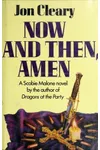
- Now and Then, Amen (1988) – The murder of a nun at a prestigious Sydney convent forces Malone to dig into the secrets of one of Australia's wealthiest families.
- Babylon South (1989) – A cold case resurfaces when bones are discovered in the hills, linking back to a 1966 disappearance Malone investigated as a young constable.
- Murder Song (1990) – Malone leads the search for a rogue sniper terrorizing the citizens of Sydney.
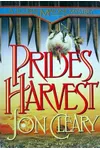
- Pride's Harvest (1991) – Sent to a rural town, Malone must investigate the suspicious death of a Japanese businessman amidst local racial tensions.
- Dark Summer (1992) – A drug-related murder on a Sydney beach draws Malone into the dangerous world of high-society white-collar crime.
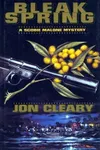
- Bleak Spring (1993) – The killing of a prominent solicitor reveals deep-seated corruption in the local legal and gambling systems.
- Autumn Maze (1994) – Malone investigates the murder of the state police minister's son at an upscale hotel.
- Winter Chill (1995) – A security conference murder leads Malone into a web of corporate espionage and high-tech secrets.
- A Different Turf (1996) – Malone tackles a string of hate crimes, testing his police force's resolve against local bigotry.
- Endpeace (1997) – An investigation into the death of a powerful media tycoon exposes ruthless family dynamics.
- Five Ring Circus (1998) – Set against the financial frenzy and real-estate boom preceding the Sydney 2000 Olympics.
- Dilemma (1999) – The secrets of a retired cop force Malone into a difficult moral and professional crisis.
- Yesterday's Shadow (2001) – Malone investigates two homicides at a luxury hotel, discovering that one victim is an old flame from his youth.
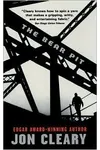
- The Bear Pit (2001) – Tensions boil over just before the 2000 Sydney Olympics when the State Premier is shot by a sniper, drawing Malone and his journalist daughter into the political crosshairs.
- The Easy Sin (2003) – A kidnapping gone wrong involves internet millionaires, domestic secrets, and international syndicate ties.
- Degrees of Connection (2004) – Malone's final case before retirement, bringing his long career in Sydney law enforcement to a close.
- The Climate of Courage (2015) – A historical World War II novel originally published in 1954; it is not a Scobie Malone book. (See details below).
Chronology, Time Gaps, and Sydney's Evolution
Unlike many detective sagas that run continuously, the Scobie Malone series is marked by a massive 14-year gap. Jon Cleary published the first three novels between 1966 and 1973, but then stepped away from the character to write standalone international adventure and historical novels. He only returned to Malone in 1987 with Dragons at the Party.
This revival was driven by personal circumstances. Following the tragic death of his daughter and his wife’s illness, Cleary was no longer able to travel the globe to research exotic backgrounds for his standalone novels. He realized that by focusing on crime procedurals set in his hometown of Sydney, he could keep writing high-stakes fiction using a setting he knew intimately. From that point on, Cleary wrote a Scobie Malone book almost every year until the series finished.
As a result, the books double as a brilliant social history of Sydney. The city itself functions as a main character, evolving from the provincial post-war city of The High Commissioner, through the construction of the Opera House in Helga's Web, and finally to the hyper-modern global metropolis preparing for the 2000 Olympics in The Bear Pit. Malone's career progression and his family life mirror these changes, creating a vivid sense of passing time.
The Case of the "21st Book" (The Climate of Courage)
Many digital book databases list The Climate of Courage as the 21st book in the Scobie Malone series, often using a reissue date of 2015. However, this is a cataloging error. The Climate of Courage was actually Jon Cleary’s fourth novel, originally published in 1954—more than a decade before Scobie Malone was created.
The novel is an acclaimed piece of historical war fiction based on Cleary's own wartime service. It follows Australian soldiers on leave in Sydney during the 1942 Japanese midget submarine attack before they deploy to New Guinea. While it is an outstanding example of Cleary’s early work, it does not feature Scobie Malone or his police investigations, and it should be read strictly as a standalone war novel.
Practical Reader Guidance & Starting Points
While the mysteries themselves are self-contained and can technically be read as standalones, reading the series out of order will spoil the major developments of Malone’s personal life. His courtship of Lisa, their marriage, the birth and growth of their children, and Malone's promotions from Sergeant to Inspector are major narrative threads. For the best experience, start at the beginning with The High Commissioner or at least early on with Helga's Web.
What to Know Before You Start
Scobie Malone is not a typical cynical, hard-boiled noir detective. He is a grounded, family-oriented Catholic man who would often rather be at a backyard barbecue or playing cricket than chasing criminals. His stable home life and strong moral compass provide a comforting anchor against the political corruption and greed he investigates. Cleary's contributions to the genre were recognized in 1996 when he received the Inaugural Ned Kelly Award for his lifetime contribution to Australian crime fiction.
The series also spawned two notable film adaptations: Nobody Runs Forever (1968), starring Rod Taylor as Malone, and Scobie Malone (1975), starring Jack Thompson. Both films offer a fascinating mid-century visual take on Cleary’s iconic detective.