


The Recommended Reading Path
For readers diving into Larry Millett’s unique Sherlockian pastiches, the choice of where to begin comes down to whether you prefer publication order or chronological order. While publication order is the traditional approach, reading chronologically offers a smoother progression of the partnership between Sherlock Holmes, Dr. John Watson, and the St. Paul saloonkeeper-detective Shadwell Rafferty, as well as a more natural timeline of Minnesota's history.
Regardless of the path you choose, starting with the first published novel is highly recommended. It establishes the central characters, sets the tone for the series' blend of Midwestern grit and Victorian logic, and provides the foundation for the complex relationship between the characters.
Publication Order
If you prefer to read the books in the order they were written and released, follow this list:
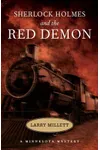
- Sherlock Holmes and the Red Demon (1996) — Set in 1894, Holmes and Watson are hired by railway tycoon James J. Hill to track down a mysterious arsonist amid the devastating Hinckley forest fire.
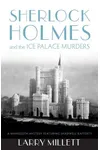
- Sherlock Holmes and the Ice Palace Murders (1998) — Set in 1896, the trio investigates a series of murders and a disappearance during the St. Paul Winter Carnival.
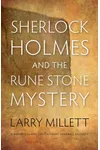
- Sherlock Holmes and the Rune Stone Mystery (1999) — Set in 1899, Holmes travels to Minnesota to investigate a murder tied to the controversial Kensington Rune Stone.
- Sherlock Holmes and the Secret Alliance (2001) — Set in 1899, Shadwell Rafferty takes the lead on a murder case involving union strikes and political conspiracies in Minneapolis while Holmes is detained in New York.
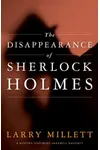
- The Disappearance of Sherlock Holmes (2002) — Set in 1900, Holmes goes missing and is accused of kidnapping and murder, prompting Rafferty to travel to New York and Chicago to help clear his name.
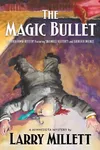
- The Magic Bullet (2011) — Set in 1917, Rafferty is called to solve a locked-room mystery involving the death of a prominent financier in a secure high-rise office in St. Paul.
- Strongwood: A Crime Dossier (2014) — Set in 1903, this epistolary novel details the murder trial of Adelaide Strongwood, with Holmes and Rafferty investigating the truth behind the crime.
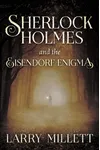
- Sherlock Holmes and the Eisendorf Enigma (2017) — Set in 1920, an aging Holmes visits the Mayo Clinic for his health and gets drawn into a gothic mystery in a dying Minnesota village.
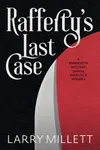
- Rafferty’s Last Case (2022) — Set in 1928, the final novel in the series begins with the murder of Shadwell Rafferty, prompting an aging Holmes and Watson to return to St. Paul to crack one last case.
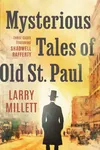
- Mysterious Tales of Old St. Paul (2024) — A collection of three prequel novellas showcasing Shadwell Rafferty’s early solo cases before his fateful meeting with Sherlock Holmes.
Chronological Order
For readers who want to experience the narrative in the order the events actually occurred in the characters' lives, the order changes slightly, specifically placing the prequel collection first and swapping the positions of the sixth and seventh novels:
- Mysterious Tales of Old St. Paul (2024) — Set in the 1880s and early 1890s.
- Sherlock Holmes and the Red Demon (1996) — Set in 1894.
- Sherlock Holmes and the Ice Palace Murders (1998) — Set in 1896.
- Sherlock Holmes and the Rune Stone Mystery (1999) — Set in 1899.
- Sherlock Holmes and the Secret Alliance (2001) — Set in 1899.
- The Disappearance of Sherlock Holmes (2002) — Set in 1900.
- Strongwood: A Crime Dossier (2014) — Set in 1903.
- The Magic Bullet (2011) — Set in 1917.
- Sherlock Holmes and the Eisendorf Enigma (2017) — Set in 1920.
- Rafferty’s Last Case (2022) — Set in 1928.
Where Should You Start?
The absolute best starting point for any reader is the first published novel, Sherlock Holmes and the Red Demon. This book introduces the partnership between Sherlock Holmes and Shadwell Rafferty, establishing their contrasting personalities—Holmes's cold, analytical British intellect versus Rafferty’s warm, street-smart Irish-American bravado. It also provides Watson's initial impressions of Minnesota, making it the perfect gateway to the series' unique atmosphere.
While the prequel collection, Mysterious Tales of Old St. Paul, takes place chronologically first, it is best read after you have completed at least a few novels. The novellas are designed to flesh out Rafferty's backstory, and their historical callbacks are far more rewarding once you already know the saloonkeeper he eventually becomes.
What to Know Before You Start
Larry Millett’s background as a journalist and architecture critic for the St. Paul Pioneer Press heavily influences the series. The Twin Cities of Minneapolis and St. Paul are not just settings, but characters in their own right. Millett meticulously researches actual historical events, local architecture, and prominent figures (such as railroad tycoon James J. Hill and the builders of the St. Paul Ice Palace) to ground his stories in reality.
Unlike many Holmes pastiches that strictly imitate Arthur Conan Doyle's style, Millett introduces a distinct Midwestern voice. While Watson still narrates most of the books through his journal entries, the presence of Shadwell Rafferty pulls the narratives into the world of American frontier politics, labor disputes, and immigrant culture. As the series progresses, the timeline moves from the Victorian era into the 1920s, allowing readers to watch the characters age and witness the rapid modernization of the American Midwest.
Spin-Offs and Connected Works
While the Sherlock Holmes & Shadwell Rafferty books form a cohesive ten-book narrative, Larry Millett has written other historical mysteries. Notably, his 2025 collection, Mysterious Tales of Old Minneapolis, features three historical novellas set in the same region. However, these stories feature different protagonists (including a murder mystery featuring Oscar Wilde during his 1882 tour) and do not include Shadwell Rafferty or Sherlock Holmes. They serve as excellent companion reads for fans of Millett’s historical style, but are not part of the core Rafferty reading order.