





How to Start Reading Sherlock Holmes
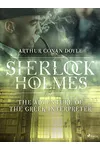
Entering the world of Sherlock Holmes can feel as mysterious as one of 221B Baker Street's famous cases. With four novels and 56 short stories making up the official 'canon,' readers have debated the best approach for decades. Unlike modern serialized thrillers, Conan Doyle's works are largely self-contained. However, following a deliberate reading path will greatly enhance your appreciation of Holmes and Dr. John Watson's legendary partnership.
The Best Starting Point: A Study in Scarlet
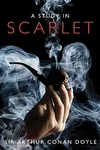
If you want to experience the relationship from the very beginning, you should start with A Study in Scarlet (1887). This short novel introduces the iconic meeting between Holmes and Watson, their decision to share rooms at 221B Baker Street, and Holmes's unique methods of deduction. It provides the essential foundation for their dynamic and Watson's role as Holmes's biographer.
The Alternative Entry: The Adventures of Sherlock Holmes
For readers who find the Victorian novel structure slow-paced, the absolute best alternative starting point is The Adventures of Sherlock Holmes (1892). This collection contains some of Conan Doyle's most famous and tightly plotted short stories, including 'A Scandal in Bohemia' (introducing Irene Adler) and 'The Adventure of the Speckled Band.' Starting here allows you to jump straight into Holmes's active career without the setup of the origin story.
The Recommended Path: Original Publication Order
For the vast majority of readers, the original publication order is the most rewarding way to read the series. This path allows you to experience the evolution of Conan Doyle’s writing style, the deepening of the characters' bond, and the historical progression of the Victorian and Edwardian eras. Here is the recommended publication timeline:
- A Study in Scarlet (Novel, 1887) – The origin story where Holmes and Watson first meet.
- The Sign of Four (Novel, 1890) – The second novel, which introduces Mary Morstan (Watson's future wife) and the Baker Street Irregulars.
- The Adventures of Sherlock Holmes (Short Story Collection, 1892) – Twelve classic tales that established Holmes as a global phenomenon.
- The Memoirs of Sherlock Holmes (Short Story Collection, 1894) – Eleven stories showcasing Holmes's brilliant detective work, culminating in his dramatic clash with Professor Moriarty.
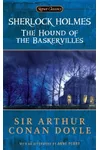
- The Hound of the Baskervilles (Novel, 1902) – A gothic masterpiece set on the moody Devonshire moors. Published after Conan Doyle 'killed off' Holmes, it is set chronologically before his death.
- The Return of Sherlock Holmes (Short Story Collection, 1905) – The triumphant resurrection of the detective, starting with the explanation of how he survived the Reichenbach Falls.
- The Valley of Fear (Novel, 1915) – The final novel, featuring a dark mystery with ties to Professor Moriarty's syndicate.
- His Last Bow (Short Story Collection, 1917) – A collection of later cases, including the title story where Holmes assists the British government on the eve of World War I.
- The Case-Book of Sherlock Holmes (Short Story Collection, 1927) – The final stories published by Conan Doyle, written in the twilight of his career.
The Chronological Path and the 'Grand Game'
For dedicated fans, there is a secondary way to read: chronological order. Because Conan Doyle did not write the stories in the order they occurred, and frequently left contradictory dates and timelines, Sherlockian scholars have engaged in a playful pursuit known as the 'Grand Game.' This involves treating Holmes and Watson as real historical figures and trying to construct an accurate timeline of Holmes's cases.
The Baring-Gould Chronology
The most famous chronological ordering was created by scholar William S. Baring-Gould in his 1967 work, The Annotated Sherlock Holmes. Baring-Gould rearranged the stories to fit Holmes's life from his early university days to his retirement. For example, he placed 'The Adventure of the Gloria Scott' (an early case from Holmes's college years) as the very first story, even though it was published in The Memoirs of Sherlock Holmes. While chronological reading is a fascinating exercise, it is not recommended for first-time readers because it scatters the stories across different collections and requires constantly flipping between books.
Leslie S. Klinger's Modern Alternative
For a more structured, analytical approach, Leslie S. Klinger's The New Annotated Sherlock Holmes (2004–2006) preserves the original publication order of the collections but provides extensive side-by-side annotations. Klinger synthesizes decades of chronological debates without forcing the reader to jump between books, making it the preferred choice for modern collectors and scholars.
Critical Reading Caveats: Spoilers and Continuity
While you can read most Sherlock Holmes stories in any order, there is one absolute rule that you must follow to avoid major spoilers and narrative confusion:
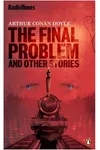
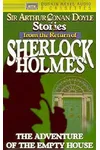
You must read 'The Final Problem' (the last story in The Memoirs of Sherlock Holmes) before reading 'The Adventure of the Empty House' (the first story in The Return of Sherlock Holmes). 'The Empty House' is a direct sequel that deals with the aftermath of 'The Final Problem' and explains Holmes's miraculous survival. Reading them out of order will ruin one of the most famous twists in literary history.
Additionally, note that The Hound of the Baskervilles was published in 1901–1902 during the period when Holmes was presumed dead. Conan Doyle bypassed this by setting the novel in 1889, before the events of Reichenbach Falls. Therefore, you can read The Hound of the Baskervilles at any point after the first two novels without disrupting the main narrative arc.
Other Stories and Non-Canonical Collections
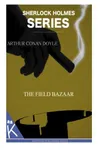
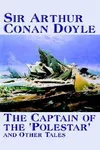
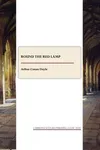
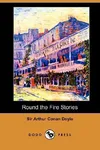
Arthur Conan Doyle was a prolific author who wrote many stories outside of the Sherlock Holmes universe. Collections such as The Captain of the Polestar (1883), Round the Red Lamp (1894), and Round the Fire Stories (1908) contain mysteries, gothic horror, and adventures, but they do not feature the detective. In addition, minor satirical sketches written by Conan Doyle for charity, such as 'The Field Bazaar' (1896) and 'How Watson Learned the Trick' (1924), are considered fun curiosities rather than core canon, though they are often included in complete editions today.