
Where to Start Reading The Medieval Murderers
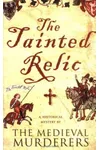
For readers looking to dive into this unique collaborative historical mystery series, the best starting point is the very first book, The Tainted Relic (2005). Because the series is collaborative and episodic, you can technically pick up any volume and enjoy it as a standalone chronicle of a cursed object or concept. However, reading them in order of publication allows you to appreciate how the group of authors refined their shared storytelling technique and how they weave their respective signature sleuths into these centuries-spanning relay races.
The Recommended Reading Order (Publication Order)
The Medieval Murderers series consists of ten books published between 2005 and 2014. We recommend reading them in publication order to experience the series exactly as the authors developed and presented it to their audience:
- The Tainted Relic (2005) — Follows a cursed fragment of the True Cross from the sack of Jerusalem in 1100 through the centuries to Tudor and Renaissance London.
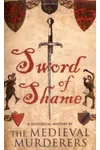
- Sword of Shame (2006) — Traces a cursed, blood-soaked sword crafted during the Norman Conquest of 1066 as it carves a path of greed and death through Venice and England.
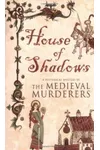
- House of Shadows (2007) — Centers on Bermondsey Priory, beginning with a curse placed by a disgraced chaplain in 1114 that sparks centuries of political plots, murder, and treachery.
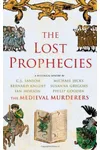
- The Lost Prophecies (2008) — Focuses on the "Black Book of Bran," an ancient text of prophecies written by a 6th-century Irish monk that leaves madness and poison in its wake.
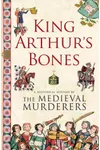
- King Arthur's Bones (2009) — Follows the legendary bones of King Arthur and Queen Guinevere, dug up at Glastonbury Abbey in 1191, as they vanish and cause bloodshed across history.
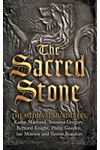
- The Sacred Stone (2010) — Tracks a mysterious, supposedly healing stone (a meteorite) from Greenland that brings out the worst of human greed, leaving a trail of death from the 11th century onward.
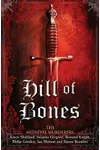
- Hill of Bones (2011) — Explores the dark and supernatural history surrounding Solsbury Hill, an ancient site of pagan rituals, sacrifice, and modern-era murders.
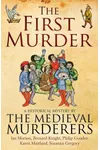
- The First Murder (2012) — Revolves around a cursed theatrical play about the biblical brothers Cain and Abel, which seems to bring real-world death to anyone who stages it.
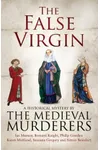
- The False Virgin (2013) — Explores the dark legacy of a murdered young woman whose supposed sainthood and holy relics are surrounded by rumors, heresy, and murder.
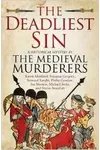
- The Deadliest Sin (2014) — Set during a raging plague, travelers sheltering at an inn tell connected stories that examine the corrupting nature of the Seven Deadly Sins.
Understanding the Chronological Flow Within Each Book
One of the most fascinating aspects of The Medieval Murderers is their internal structure. While you should read the books in publication order, each individual novel is actually a self-contained chronological anthology.
Instead of following a single detective in a linear timeline, each book focuses on a central "villain"—usually a cursed artifact, location, or dark prophecy—and follows its path chronologically through history. Typically, a book is structured as follows:
- The Prologue: Usually set in the earliest era (often the 11th or 12th century), detailing how the cursed object was forged, stolen, or cursed.
- Act I through Act V (The Novellas): The story jumps forward by decades or centuries in each section. Each author takes control of a specific era, using their own signature series detective to solve a murder connected to the cursed object.
- The Epilogue: Bridges the final historical mystery to a resolution, sometimes jumping as far forward as the Elizabethan or Stuart eras, or even the modern day.
The Authors and Their Crossover Sleuths
The Medieval Murderers series is a treat for historical fiction fans because it functions as a massive crossover event. The core members of the collective adapted characters from their individual, bestselling series and dropped them into the collaborative timeline:
- Bernard Knight: Contributed stories featuring his 12th-century coroner, John de Wolfe, better known to mystery readers as Crowner John.
- Ian Morson: Brought his 13th-century Oxford academic and investigator, William Falconer, into the collaborative pages.
- Michael Jecks: Included his famous 14th-century Devon sleuths, former Knight Templar Sir Baldwin Furnshill and bailiff Simon Puttock.
- Susanna Gregory: Brought her 14th-century Cambridge physician-sleuth, Matthew Bartholomew, and his Benedictine colleague, Brother Michael. Gregory also wrote sections under her Simon Beaufort pseudonym featuring 12th-century knight Sir Geoffrey de Mappstone.
- Philip Gooden: Regularly handled the later historical eras, contributing segments featuring his Elizabethan-era actor-sleuth, Nick Revill.
- Karen Maitland & C.J. Sansom: While Sansom (famous for the Matthew Shardlake series) and Maitland (acclaimed for gothic medieval thrillers like Company of Liars) did not always use recurring detectives, their contributions added immense atmosphere, folklore, and historical depth to the shared anthologies.
What to Know Before You Start
Before you begin your journey with The Medieval Murderers, here are a few practical tips to keep in mind:
First, you do not need to be familiar with the authors' individual book series to enjoy this collaborative work. Each novella introduces the sleuth and their setting with enough context for new readers. However, if you are already a fan of Crowner John or the Matthew Bartholomew books, seeing them solve mysteries related to the same cursed relics adds a wonderful layer of fun.
Second, keep in mind that the tone of these books is highly atmospheric. Because the contributors are all masters of historical fiction, the focus is heavily grounded in historical accuracy, medieval daily life, religious superstitions, and the grim realities of the era. If you enjoy rich, immersive world-building alongside your crime-solving, this series is an excellent fit.