



Where to Start the Asian Saga
With six massive mainline novels spanning nearly four hundred years, deciding where to start James Clavell’s Asian Saga can feel daunting. Fortunately, you have two excellent entry points depending on your preference:
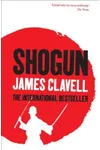
- Shōgun: Widely considered the series masterpiece, this is the best starting point if you want immediate immersion in a detailed historical setting (feudal Japan, 1600) and complex political maneuvering.
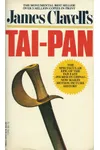
- Tai-Pan: If you want to follow the multigenerational lineage of the "Noble House" (Struan’s trading company) from its very inception, start here. It introduces Dirk Struan and the foundation of Hong Kong in 1841, setting the stage for four of the other books.
The Recommended Chronological Order
Most fans recommend reading the saga chronologically. This path allows you to follow the rise, evolution, and modern struggles of the Struan family dynasty and its trading empire across centuries.
- Shōgun (Set in 1600): The story of English pilot John Blackthorne, who shipwrecked in feudal Japan, navigating the rise of Lord Toranaga.
- Tai-Pan (Set in 1841): Focuses on Dirk Struan, the founding of Hong Kong, and the birth of the Noble House trading empire.
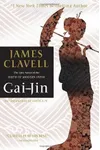
- Gai-Jin (Set in 1862): Set in Japan twenty years after Tai-Pan, exploring the inheritance of the Struan empire and tension between foreigners and samurai.
- King Rat (Set in 1945): A gritty, semi-autobiographical survival story set inside Singapore’s Changi POW camp during WWII. Note that this book does not feature the Struan lineage directly.
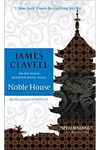
- Noble House (Set in 1963): Set in a high-stakes, fast-paced Hong Kong, following Ian Dunross as he fights to save the family empire from rivals and corporate spies.
- Whirlwind (Set in 1979): Set during the Iranian Revolution, tracking a helicopter company owned by the Noble House as pilots struggle to escape the country.
The Publication Order
If you prefer to see how Clavell’s writing style and scope evolved over three decades, read the novels in the order they were published:
- King Rat (1962)
- Tai-Pan (1966)
- Shōgun (1975)
- Noble House (1981)
- Whirlwind (1986)
- Gai-Jin (1993)
Understanding "Escape" (1995)
You may see a seventh title, Escape, listed in reading orders. Published posthumously in 1995, this is not a standalone novel. Instead, it is a heavily abridged, rewritten version of a specific subplot from Whirlwind, focusing purely on the romance and escape of helicopter pilot Erikki Yokkonen and his Iranian wife, Azadeh. If you read Whirlwind, you do not need to read Escape.