

How to Start Reading Biggles
With nearly 100 books spanning multiple decades, you don't need to read the entire series from start to finish. Instead, most readers choose one of three entry points based on their favorite historical era:
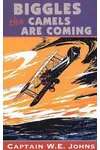
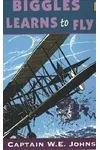
- The World War I Era: Start with Biggles Learns to Fly (1935) to read how a 17-year-old James Bigglesworth first took to the skies, or pick up The Camels Are Coming (1932) to read the very first published short stories.
- The World War II Era: Jump straight into the action with Biggles Spitfire Parade (1941) or Biggles Sees It Through (1941), which follow Biggles and his squadron during the height of the Second World War.
- The Special Air Police Era: For post-war international intrigue, start with Sergeant Bigglesworth C.I.D. (1947), which introduces Biggles' career as a detective investigating global smuggling rings and mysteries for Scotland Yard.
Publication Order vs. Chronological Order
Captain W.E. Johns wrote the Biggles books over a 36-year span, frequently publishing prequels and retroactively filling gaps in Biggles' timeline. Reading in publication order allows you to experience the character's evolution exactly as original readers did. However, if you prefer a chronological order that follows Biggles' life story, you will need to jump around the publication timeline:
1. Youth and Childhood Prequels
Although published near the end of Johns' life, these stories serve as the narrative starting point:
- The Boy Biggles (1968) - Biggles' early life growing up in India.
- Biggles Goes to School (1951) - Details his youth and education.
2. World War I Era (1914–1918)
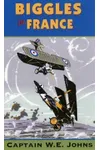
Biggles enlists in the Royal Flying Corps. Key titles include Biggles Learns to Fly (1935), The Camels Are Coming (1932), Biggles of the Camel Squadron (1934), and Biggles in France (1935).
3. The Interwar Years (1919–1939)
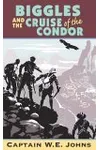
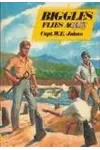
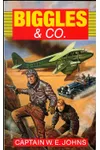
Biggles works as a civilian charter pilot and treasure hunter. Important books include The Cruise of the Condor (1933), Biggles Flies Again (1934), and Biggles & Co. (1936).
4. World War II Era (1939–1945)
Biggles rejoins the RAF to fight in various theaters. Highlights include Biggles Defies the Swastika (1941), Biggles in the Baltic (1940), and Biggles Sweeps the Desert (1942).
5. Special Air Police (Post-1945)
Biggles becomes a detective for Scotland Yard. Notable books include Biggles Takes a Holiday (1949), Biggles Works It Out (1951), and his final uncompleted adventure, Biggles Does Some Homework (1997).
Spin-offs and Universe Crossovers
W.E. Johns created several other popular adventure series set in the same universe, making for excellent companion reading:
- Worrals (11 books): Following Joan "Worrals" Worralson of the WAAF, this series was requested by the British Air Ministry to encourage female recruitment during WWII.
- Gimlet (10 books): Centered on Captain Lorrington "Gimlet" King, a daring British commando. Biggles makes crossover guest appearances in four of these books.
- Steeley (6 books): An earlier series featuring Deeley Montfort Delaroy ("Steeley"), a former WWI pilot turned crime-fighter.
Debunking the "Co-Author" Myth
Some online retail listings and metadata incorrectly attribute late-era Biggles books to co-authors like "Wilhelm John Redfox." This is a common database error caused by combining the name of the author, W.E. Johns (William Earl Johns), with the name of the popular paperback publisher, Red Fox. W.E. Johns is the sole creator and author of the Biggles series; no official sequel or successor novels have been authorized since his death in 1968.