
Where to Start Reading the Chalet School Books
The best and most rewarding way to read the Chalet School series is in original publication order. Unlike many school story series that reset every term, the Chalet School operates on a continuous, linear timeline. Characters age, move from students to prefects, graduate, get married, and eventually send their own children to the school. Starting at the beginning lets you experience this rich family saga and school development naturally.
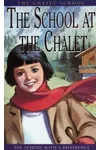
You should start your journey with the very first book, The School at the Chalet (1925). This novel introduces Madge Bettany, who decides to establish an English-style boarding school in the Austrian Tyrol to support her delicate younger sister, Joey. Joey quickly becomes the central figure of the series' early eras.
The Five Great Eras of the Chalet School
As the series progresses, the school is forced to relocate due to historical events and local challenges. The books are commonly divided into five distinct geographic eras:
- Austrian Tyrol Era (Books 1–15): Set in the beautiful, fictional village of Briesau on the Tiernsee (based on the real-world Pertisau on the Achensee). This is the classic, most beloved era of alpine adventures and Christmas festivities.
- Guernsey Era (Books 15–17): Following the Nazi annexation of Austria (Anschluss) in 1938, the school flees in the dramatic novel The Chalet School in Exile and briefly relocates to the Channel Island of Guernsey.
- Herefordshire Era (Books 17–23): The German invasion of the Channel Islands forces another escape, this time to the Golden Valley in England near the Welsh border.
- The Island Era (Books 24–29): The school moves to a fictional island off the coast of South Wales, introducing new local dynamics and beachside adventures.
- Swiss Oberland Era (Books 30–63): The school returns to its continental roots, settling permanently in the Swiss Alps for the remainder of the series.
Publication Order vs. Chronological Caveats
While the internal timeline flows forward, readers should keep a few quirks in mind:
The Paperback Split Novels
When publishers like Armada printed the books in paperback, several of the longer novels were heavily abridged and split into two separate volumes. For instance, the second half of The Chalet School and the Lintons (1934) became A Rebel at the Chalet School (1974), and the second half of A Genius at the Chalet School (1956) was published as Chalet School Fête (1971). If you are reading modern unabridged editions, you will find these stories intact within their original single-volume editions.
Modern Fill-In and Posthumous Works
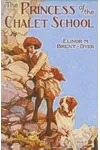
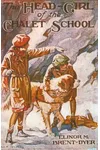
Later writers have expanded the series with authorized "fill-in" stories. The most notable is Visitors for the Chalet School (1995), written by biographer Helen McClelland using Elinor M. Brent-Dyer's surviving notes. Chronologically, this book fits between The Princess of the Chalet School (Book 3) and The Head Girl of the Chalet School (Book 4). Additionally, anthologies like The Chalet School Christmas Story Book (2007) collect shorter seasonal stories set across different points in the timeline.
Crossovers: The "La Rochelle" and Standalone Connectors
Elinor M. Brent-Dyer created a shared universe across her works, and fans refer to these non-series entries as "Chalet School Connectors" (CS Connectors):
- The La Rochelle Series (7 Books): Beginning with Brent-Dyer's debut novel Gerry Goes to School (1922), this series introduces characters like the Temple sisters, who eventually cross over and join the Chalet School.
- Standalone Connectors: Novels like Monica Turns Up Trumps (1936) and The Lost Staircase (1946) feature characters who eventually enroll in the Chalet School or interact directly with Jo Maynard.
- Jo to the Rescue (1945): Though officially part of the series, this unique novel takes place entirely during the school holidays in the Yorkshire Moors, focusing on the main characters' domestic and family lives outside school bounds.