
The Recommended Reading Path
The best way to experience the Cluster series is in its original publication order. Although each novel features a different main character and a distinct, self-contained mission, the series spans generations. The lore of Kirlian auras, galactic politics, and family lineages builds chronologically from one book to the next.
Start with the first book, Cluster (often published in the UK as Vicinity Cluster), and follow the sequence straight through to the final volume, Viscous Circle.
Cluster Series in Publication Order
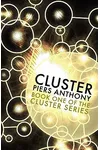
- Cluster / Vicinity Cluster (1977) – Introduces Flint of Outworld, a green-skinned human with a highly powerful Kirlian aura who is sent on an espionage mission to stop Galaxy Andromeda from draining the Milky Way’s energy.
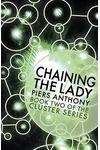
- Chaining the Lady (1978) – Follows Melody of Mintaka, Flint’s descendant, as she combats Andromedan agents who are using involuntary aura transfers to take over the galaxy.
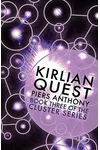
- Kirlian Quest (1978) – Focuses on Herald the Healer, Melody's descendant, who must unite the galaxy against a massive, ancient alien fleet threat.
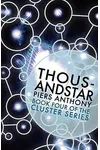
- Thousandstar (1980) – Shifts focus to Hebe of Sol, who participates in a high-stakes interstellar race to claim a newly discovered, resource-rich planet.
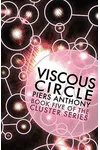
- Viscous Circle (1982) – Concludes the main saga with Bandy, a segment of an amoeba-like entity who must navigate inter-galactic threats using Kirlian transfer.
Precursors and Shared-Universe Tie-ins
For readers who want to explore the complete universe, Piers Anthony wrote two other works that share the same continuity and technological rules as the Cluster series:
But What of Earth?
This novel is a conceptual precursor set approximately 500 years before the events of Cluster. It details the discovery of "mattermission" (instantaneous teleportation) and the resulting mass emigration from Earth. Note that the original 1976 edition was heavily altered by editors without Anthony's consent; readers should seek out the 1989 annotated edition, which restores Anthony's original text and explains how it bridges the Cluster and Tarot series.
The Tarot Trilogy
Consisting of God of Tarot (1979), Vision of Tarot (1980), and Faith of Tarot (1980), this series explores a planet where religious beliefs and animations take physical form. Set within the same shared universe, the metaphysical rules of Tarot—such as Kirlian energy fields—tie directly into the lore of the Cluster series, culminating in references in Viscous Circle.