
The Recommended Reading Order
To fully appreciate the emotional gravity, political tensions, and intricate relationships of the series, it is highly recommended to read the novels in their publication and chronological order. Because the narrative timeline moves forward continuously, reading them out of sequence will spoil major character arcs and personal developments for Luigi Alfredo Ricciardi and his companion, Brigadier Maione.
1. The Seasons Cycle (Ciclo delle stagioni)
The first four novels establish Ricciardi's character, his supernatural curse (referred to as "the fact"—the ability to see the final moments of violent deaths), and the historical backdrop of 1931 fascist-era Naples.
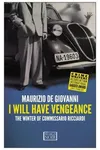
- I Will Have Vengeance (2007) – Set in Winter 1931. Ricciardi investigates the murder of a famous tenor at the San Carlo Theatre. (English translation published by Europa Editions in 2012)
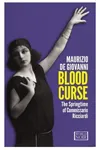
- Blood Curse (2008) – Set in Spring 1931. The case centers on the murder of an elderly tarot reader and moneylender. (English translation in 2013)
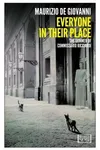
- Everyone in Their Place (2009) – Set in Summer 1931. Ricciardi probes a murder in the upper echelons of Neapolitan high society. (English translation in 2013)
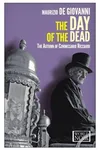
- Day of the Dead (2010) – Set in Autumn 1931. A tragic case involving the death of a young street orphan. (English translation in 2014)
2. The Holidays Cycle (Ciclo delle festività)
These novels transition from seasons to specific Italian holidays and festivals, continuing chronologically through the years 1931 and 1932.
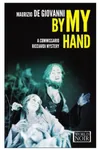
- By My Hand (2011) – Set during Christmas 1931. Ricciardi investigates a double murder of a fascist militia officer and his wife. (English translation in 2014)
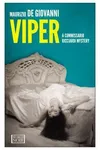
- Viper (2012) – Set during Easter 1932. The case centers on the murder of a high-class prostitute in a local brothel. (English translation in 2015)
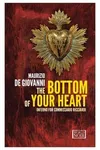
- The Bottom of Your Heart (2014) – Set during the July 1932 festival of the Madonna del Carmine. (English translation in 2015)
3. The Songs and Melancholy Novels
These novels delve deeper into Ricciardi's internal isolation, romantic conflicts, and the oppressive atmosphere under Mussolini's regime.
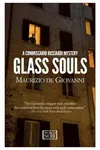
- Glass Souls (2015) – Set in Autumn 1932. Ricciardi agrees to re-examine a closed case for a beautiful duchess. (English translation in 2017)
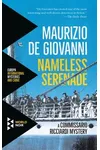
- Nameless Serenade (2016) – Set in Late Autumn/Winter 1932. Ricciardi investigates the death of a local boxer. (English translation in 2018)
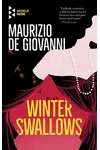
- Winter Swallows (2017) – Set around Christmas 1932 / New Year 1933. The shooting of an actress on stage leads to a complex investigation. (English translation in 2019)
- Il purgatorio dell'angelo (2018) – Set in May 1933. A priest is found dead, and secrets of the confessional must be unraveled. Note: Currently unavailable in English translation.
- Il pianto dell'alba (2019) – Set in July 1934. Written as the original emotional finale to the series. Note: Currently unavailable in English translation.
4. The Tango / World War II Trilogy (Trilogia del tango)
After a brief hiatus, de Giovanni returned to the character, leaping forward five years to the brink of World War II. These books follow a mature Ricciardi dealing with fatherhood and the dark political atmosphere of 1939–1940.
- Caminito (2022) – Set in April 1939. Ricciardi investigates a double homicide. Note: Currently unavailable in English translation.
- Soledad (2023) – Set in December 1939. A story of deep isolation and murder on the cusp of war. Note: Currently unavailable in English translation.
- Volver (2024) – Set in July 1940. Concludes the wartime era of Ricciardi's life. Note: Currently unavailable in English translation.
Short Story Collections and Prequels
For readers looking to dive deeper into the early cases and supplemental stories of Ricciardi, de Giovanni has published several collections (currently available primarily in Italian):
- L'omicidio Carosino. Le prime indagini del commissario Ricciardi (2012) – Early cases that function as prequels.
- Una domenica con il commissario Ricciardi (2015) – Supplementary short stories.
- L'ultimo passo di tango. Tutti i racconti (2017) – A comprehensive collection of all Ricciardi short stories, including the original 2005 writing competition piece, I vivi e i morti, which birthed the character.
Adaptations: Graphic Novels and TV Series
Ricciardi's atmospheric cases have been successfully adapted into other mediums:
- Sergio Bonelli Editore Graphic Novels: Since 2017, the famous Italian comic publisher has adapted the novels into graphic formats. These are co-written by de Giovanni alongside Claudio Falco, Sergio Brancato, and Paolo Terracciano.
- Inspector Ricciardi (Il commissario Ricciardi) TV Series: A hit television adaptation produced by Rai 1 starting in 2021, starring Lino Guanciale, which beautifully captures the gothic and historical atmosphere of 1930s Naples.