

The Recommended Reading Order
Daniel Abraham’s The Dagger and the Coin is a tightly woven, five-volume epic fantasy series that follows a single, continuous, linear storyline. Because the narrative unfolds sequentially without any prequels, side stories, or spin-offs, there is only one correct way to read the series: in publication order. Reading these books out of order will ruin the overarching plot and spoil key character arcs.
Here is the recommended reading path for the series:
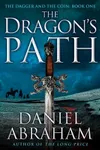
- Book 1: The Dragon's Path (Published April 7, 2011) – Introduces the fractured world, the ancient legacy of the dragons, and the four central characters whose paths collide during a caravan journey.
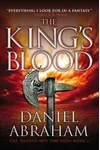
- Book 2: The King's Blood (Published May 22, 2012) – Escalates the political tension as Geder Palliako rises to power, sparking a continental conflict, while Cithrin bel Sarcour tests her financial schemes in a war-torn city.
- Book 3: The Tyrant's Law (Published May 14, 2013) – Focuses on the spreading influence of the spider priests and the terrifying psychological shift of the growing empire under Geder.
- Book 4: The Widow's House (Published August 5, 2014) – Follows the desperate attempts of Clara Kalliam and Marcus Wester to build a resistance, while Cithrin seeks a way to defeat the ancient spider magic using economic influence.
- Book 5: The Spider's War (Published March 8, 2016) – The grand finale where the balance between military might (the dagger) and financial system control (the coin) decides the fate of all thirteen human races.
Publication Order and History
The entire saga was published by Orbit Books between 2011 and 2016. Daniel Abraham, widely recognized as one half of the writing team behind the hit sci-fi series The Expanse (written under the pen name James S.A. Corey), set out to write a fantasy that subverted typical tropes. While his first fantasy series, The Long Price Quartet, focused on a highly philosophical, Asian-inspired setting, The Dagger and the Coin was designed as a modern take on classic Western European epic fantasy structures, introducing medieval banking and commerce as key plot devices.
Understanding the Chronology and Continuity
There is no chronological confusion when navigating this universe. Daniel Abraham chose to write a completely linear story. Unlike other massive fantasy worlds (such as George R.R. Martin's A Song of Ice and Fire or Brandon Sanderson's Cosmere), Abraham has not written any companion short stories, novellas, or sequel series set in the same world. Once you finish The Spider's War, the story is fully complete.
The Core Conflict: The Dagger vs. The Coin
The series title represents the two primary forms of power that drive human civilization. The 'dagger' represents military force, physical violence, and the raw power of the state. In the story, this is represented by the expansionist kingdom of Antea and the fanatical spider priests of the goddess Inalo, who use supernatural truth-sensing magic to enforce absolute conformity and wage war.
The 'coin' represents economic influence, commercial networks, and capital. This is championed by Cithrin bel Sarcour, a young orphan trained by the great banking house of Medean. Cithrin discovers that wars cannot be fought without money, and that controlling the flow of capital can topple empires just as easily as an army of knights. This unique focus on macroeconomic forces, inflation, credit, and trade routes makes the series stand out as one of the most realistic depictions of power in fantasy literature.
The Thirteen Races of Humanity
Instead of traditional fantasy races like elves, dwarves, or orcs, Abraham constructs a world populated by thirteen distinct human subspecies. According to the lore, these races were genetically engineered by the ancient, long-extinct dragons to serve specific roles in their fallen empire. They include:
- Firstblood: The baseline humans who are the most populous group in the world.
- The Eastern Triad: The scale-covered Jasuru, the massive and tusked Yemmu, and the tall, canine-like Tralgu.
- The Western Triad: The pale and intellectual Cinnae, the glowing-eyed Dartinae, and the insect-scaled Timzinae.
- The High Triad: The pelt-wearing Kurtadam, the mineral-skinned Haunadam, and the mysterious Raushadam.
- The Decadent Races: The Haaverkin, the Southlings, and the water-dwelling Drowned.
Each race has its own cultural norms, biological traits, and societal biases, adding a rich layer of complexity to the political conflicts and personal relationships throughout the five books.
What to Know Before You Start
Before diving into The Dragon's Path, it is helpful to keep a few details in mind regarding tone and pacing. First, this is a slow-burn epic fantasy. The books focus heavily on political maneuvering, banking logistics, and character psychology. Action scenes are impactful but sparse. Second, the series features dual protagonists on opposite sides of the conflict: Cithrin (the banker) and Geder Palliako (a socially awkward noble who becomes a brutal tyrant through a series of logical but tragic compromises). Lastly, although the series touches on dark themes of war, propaganda, and authoritarianism, Abraham avoids the extreme graphic violence and sexual abuse common in other grimdark fantasy series, preferring to focus on the quiet horror of bureaucratic cruelty.