
How to Read the Darkness Series in Order
The Darkness series (sometimes referred to as the World at War series) is a six-volume military fantasy epic written by the acclaimed master of alternate history, Harry Turtledove. Because the series functions as a single, massive chronological narrative detailing a global war, there is only one logical way to read these books: in order of publication. Skipping any volume will leave you completely lost amidst the shifting battle lines and hundreds of characters.
Here is the recommended reading path for the Darkness series:
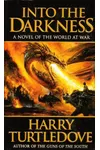
- Into the Darkness (1999) – The spark of war. The death of the Duke of Bari provides the Kingdom of Algarve with a pretext to invade neighboring nations, igniting the continent-wide Derlavai War.
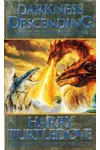
- Darkness Descending (2000) – The war escalates. Algarvian occupation forces begin systematically rounding up Kaunian civilians to exploit their life energy for devastating military spells.
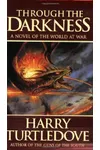
- Through the Darkness (2001) – The conflict reaches its brutal zenith. Global alliances solidify as massive battles mirror the mid-war struggle on the Eastern and Western fronts of our history.
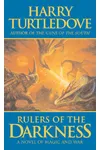
- Rulers of the Darkness (2002) – The tide begins to turn. Power dynamics shift as the allied nations search for ways to counter Algarve’s lethal magic and Unkerlant’s endless numbers.
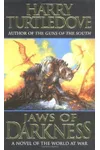
- Jaws of Darkness (2003) – The endgame approaches. Algarve is pushed back onto the defensive, and the focus shifts toward bringing the devastating conflict to a final conclusion.
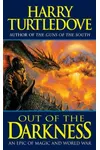
- Out of the Darkness (2004) – The war’s climax and aftermath. The deployment of a revolutionary, catastrophic magic brings an end to the hostilities, leaving the continent of Derlavai to pick up the pieces.
Understanding the Derlavai Allegory
Turtledove, who holds a Ph.D. in Byzantine history, built the world of Derlavai to directly mirror the events, politics, and horrors of World War II. However, to prevent readers from relying on real-world prejudices, he intentionally "jumbled" the cultural, linguistic, and physical traits of the nations compared to their real-world geopolitical counterparts. Understanding these matches will help you keep the factions straight as you read:
- Algarve (Nazi Germany Analog): The primary aggressor. Algarvians are physically characterized by red hair and kilts, speak a language resembling Italian, and seek vengeance for their defeat in the previous Six Years' War (World War I).
- Unkerlant (Soviet Union Analog): A massive, populated eastern kingdom ruled by the dictatorial King Swemmel. Unkerlantians have darker complexions, wear simple tunics, and speak a language similar to German.
- Kuusamo (United States Analog): A wealthy island nation that remains neutral early in the conflict. Its inhabitants have East Asian features and speak a Finnish-based language.
- Lagoas (Great Britain Analog): An island nation separated from the main continent by a narrow strait, serving as Algarve's persistent maritime opponent.
- Gyongyos (Imperial Japan Analog): A nation allied with Algarve that launches a surprise attack on the island of Sibiu (an analog to Pearl Harbor), drawing Kuusamo into the war.
- The Kaunians (Jewish Analog): An ancient, historically cultured people scattered across Derlavai. Unlike real-world history, Kaunians are described as tall, fair-skinned, and blonde, speaking a Slavic-sounding language. They are subjected to systemic genocide in Algarvian "Victory Camps."
Magic as Military Technology
Instead of relying on conventional weaponry, the nations of Derlavai wage war using a complex magic system that maps directly to mid-20th-century military technology. Keeping track of these conversions makes the battlefield maneuvers much easier to follow:
- Dragons: These serve as the airplanes of Derlavai. They are bred, trained, and ridden by scouts and bombers who drop explosive magical "eggs" on enemy positions.
- Behemoths: Massive, heavily armored beasts that act as tanks, complete with crews riding in turrets on their backs.
- Ley Lines & Crystals: These represent radio infrastructure and telephone lines, allowing commanders to communicate across vast distances using telepathic mages.
- Kaunian Life Energy: To power their most destructive offensive spells, Algarvian mages discover they can sacrifice Kaunian prisoners, converting their life force into raw magical energy. This horrifying practice serves as a direct allegory for both the Holocaust and the exploitation of resources for total war.
- The Law of Similarity and Contagion: Kuusamian scholars undertake a top-secret research initiative (analogous to the Manhattan Project) to link the two fundamental laws of magic. The result is a weapon of absolute destruction that mimics the atomic bomb.
What to Know Before You Start
Before diving into Into the Darkness, readers should prepare for a very specific type of narrative structure. Harry Turtledove relies on a sprawling, multi-perspective storytelling style. The series features over 130 named characters, following soldiers on the front lines, civilian survivors, occupied citizens, and political leaders. This ensures a comprehensive view of the global war but can initially feel overwhelming.
Additionally, because this series is a strict allegory for World War II, the narrative is incredibly dark. It does not shy away from depicting the horrors of combat, occupation, and genocide. The books cannot be read as standalones; they are chapters of a single, continuous 4,000-page story. If you enjoy epic military fantasy, detailed world-building, and alternate history, the Darkness series is one of the most ambitious undertakings in the genre.