

The Recommended Reading Order
The Death Gate Cycle is a continuous, overarching story. Because the plot developments, character arcs, and world-building build directly on previous volumes, the recommended reading order is identical to the publication order. Reading the books out of sequence will result in major plot spoilers and confusion regarding the magic systems and character motivations.
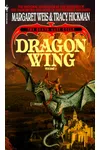
1. Dragon Wing (1990)
The series begins in Arianus, the Realm of Air. This world consists of floating islands divided into three distinct zones where water is the ultimate currency. We are introduced to the dwarf Limback Toy, the human assassin Hugh the Hand, and the mysterious Sartan named Alfred Montbank. More importantly, we meet Haplo, a Patryn agent sent from the Nexus by his master, Lord Xar, to explore the realm and stir discord among the 'mensch' (humans, elves, and dwarves).
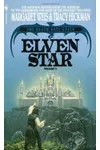
2. Elven Star (1990)
The second book shifts the setting to Pryan, the Realm of Fire. Pryan is a vast, endless jungle illuminated by multiple miniature suns, where the trees grow miles high. Here, the mensch races are constantly fighting each other while giants called Titans threaten their very existence. Haplo arrives to find a chaotic world, encountering the eccentric, seemingly mad wizard Zifnab and a group of mensch trying to survive the Titan invasion.
3. Fire Sea (1991)
In the third volume, Haplo travels to Abarrach, the Realm of Stone. This grim, barren world consists of giant caverns lit by rivers of molten lava. The human, elven, and dwarven populations are dwindling, and the Sartan who rule the realm have resorted to necromancy to maintain their society. Alfred Montbank also arrives on Abarrach, forcing him and Haplo to confront the dark reality of what their ancestors' magic has done to the world.
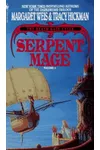
4. Serpent Mage (1992)
The final elemental realm is introduced in the fourth book: Chelestra, the Realm of Water. Chelestra is a massive, liquid-filled sphere where floating islands of ice and organic matter drift. Unlike the other worlds, the water of Chelestra dampens Sartan and Patryn magic, but sustains a new, terrifying force called the Dragon-snakes. Haplo and Alfred must navigate the political tension between the mensch and these malevolent entities.
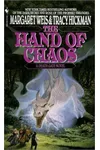
5. The Hand of Chaos (1993)
With all four elemental realms explored, the overarching narrative shifts into high gear. Haplo returns to Arianus accompanied by his loyal dog and Alfred. They find the realm in complete political chaos as Lord Xar begins his campaign to conquer the sundered worlds. The boundary between ally and enemy begins to blur as Haplo starts to question his master's ultimate goals.
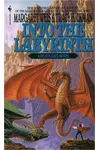
6. Into the Labyrinth (1993)
The sixth book takes readers inside the Labyrinth, the deadly, sentient maze where the Sartan originally imprisoned the Patryn race. Haplo, having turned against Xar, is hunted by his former master's agents. He must survive the deadly traps and monsters of the maze to find a way to stop Xar from gaining control of the Seventh Gate.
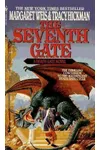
7. The Seventh Gate (1994)
The epic conclusion ties all four elemental realms, the Nexus, and the Labyrinth together. The characters converge on the Seventh Gate, a magical chamber capable of uniting or destroying the sundered worlds. Sartan and Patryn must decide whether to continue their ancient war or work together to save the universe from the destructive Dragon-snakes.
The Lore of the Sundered Earth
To fully appreciate the Death Gate Cycle, it helps to understand the cosmic history that shapes its setting. Centuries before the books begin, Earth was populated by humans, elves, dwarves, and two godlike sub-races: the Sartan and the Patryns. Fearing the aggressive nature of the Patryns, the Sartan executed a magical cataclysm known as the Sundering, splitting the Earth into four elemental worlds. They then imprisoned the Patryns in the Labyrinth, a brutal, shifting prison maze designed to rehabilitate them, though it instead bred centuries of hatred.
The Sartan intended to guide the remaining mensch races (humans, elves, and dwarves) across the four realms, using the Nexus as a central hub and the Seventh Gate to maintain balance. However, the Sartan mysteriously vanished or died out in most realms, leaving the mensch to build their own civilizations, completely unaware of the cosmic struggle happening around them.
Sartan and Patryn Rune Magic
The magic system of the Death Gate Cycle is highly structured, operating on the manipulation of physical laws and probability through runes. Sartan magic is geometric, based on octagons, and is often cast through song and dance to bring order and stability. In contrast, Patryn magic is reactive and defensive, utilizing runes tattooed directly onto their skin. These tattoos glow when activated, absorbing attacks and projecting force. While the Sartan represent order and the Patryns represent chaos, the narrative constantly challenges whether either philosophy is truly moral or sustainable on its own.
The Zifnab and Fizban Connection
One of the most popular characters in the series is Zifnab, a seemingly crazy, elderly wizard who possesses immense magical power and a habit of breaking the fourth wall. Fans of Margaret Weis and Tracy Hickman's Dragonlance series immediately recognized Zifnab as an anagram of Fizban the Fabulous. Due to copyright restrictions (since TSR/Wizards of the Coast owned the rights to Dragonlance and Fizban), the authors could not use the character directly. Instead, they created Zifnab as a thematic nod, adding humorous meta-references to other fantasy properties and pop culture throughout the books.
The 1994 Video Game Tie-in
In 1994, Legend Entertainment released a point-and-click adventure game titled 'Death Gate' for MS-DOS. The game adapts the narrative of the books, putting players in the role of Haplo as he travels the realms to recover the seal pieces. The game is highly regarded by fans of the series for its faithful world-building and puzzles. Crucially for lore enthusiasts, the original release of the game included a companion short story written by Weis and Hickman that provides official background information on the Assassin's Guild of Arianus.