



Where to Start with M.M. Kaye's Death In… Series
Unlike many classic mystery series, M.M. Kaye’s Death In… novels do not follow a recurring investigator or a single, linear storyline. Instead, they are a collection of standalone romantic suspense novels connected by their thematic structure: a young heroine visits a vivid, exotic location, stumbles into a web of post-World War II intrigue, and must solve a murder while navigating a budding romance. Because of this standalone structure, you can read the books in any order you choose.
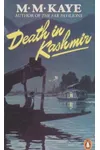
However, for the best reading experience, we recommend starting with Death in Kashmir. As the first book written in the series, it perfectly introduces Kaye’s signature style of blending high-stakes espionage, atmospheric travelogue writing, and classic whodunit suspense. Alternatively, Death in Zanzibar and Death in Cyprus are highly recommended starting points for readers who prefer sun-drenched, fast-paced tropical mysteries with particularly strong romantic subplots.
Publication Order of the Death In… Series
If you prefer to see the author's writing style and thematic focus evolve, reading in publication order is a great approach. Many of these books were published in the United States and the United Kingdom under different titles, and they were later revised and reissued under their famous "Death in..." names in the 1980s. Here is the publication order of the books with their original and revised titles:
- Death in Kashmir (Originally published as Death Walked in Kashmir in 1953; revised and reissued in 1984)
- Death in Berlin (Originally published as Death Walked in Berlin in 1955; revised and reissued in 1985)
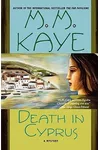
- Death in Cyprus (Originally published as Death Walked in Cyprus in 1956; revised and reissued in 1984)
- Death in Kenya (Originally published as Later Than You Think in 1958; revised and reissued in 1983)
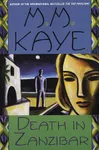
- Death in Zanzibar (Originally published as The House of Shade in 1959; revised and reissued in 1983)
- Death in the Andamans (Originally published as Night on the Island in 1960; revised and reissued in 1985)
Detailed Guide to the Books
1. Death in Kashmir (1953)
Set in 1947 during the final months of the British Raj, Death in Kashmir follows Sarah Parrish on a skiing holiday in Gulmarg. What begins as a peaceful escape into the Himalayas quickly turns treacherous when members of her social group die in suspicious "accidents." Before her death, a fellow vacationer named Janet Rushton leaves Sarah with a fragment of dangerous intelligence. Suddenly, Sarah finds herself chased by spies and murderers across the snowy mountain passes and onto the floating houseboats of Dal Lake, forced to team up with the handsome and mysterious Charles Mallory to survive.
2. Death in Berlin (1955)
Trading snowy peaks for the bleak, war-torn landscape of post-World War II Germany, Death in Berlin is an atmospheric historical thriller. Miranda Brand, a young fashion model, travels to the divided city of Berlin to visit her military cousin Robert and his wife Stella. On the train journey there, an elderly brigadier tells a gripping tale of stolen Nazi diamonds. When the brigadier is found murdered in his compartment, Miranda becomes a prime suspect. Under the watchful eye of British investigator Simon Lang, she must navigate the ruins of the bombed city and the rising tensions of the early Cold War to clear her name.
3. Death in Cyprus (1956)
In Death in Cyprus, Amanda Derington rebels against her strict uncle and takes a solo trip to the beautiful Mediterranean island of Cyprus. The cruise to the island is marred by tragedy when a beautiful passenger, Julia Blaine, dies under suspicious circumstances. Upon arrival in Cyprus, Amanda realizes that she may be the killer’s true target. Forced to navigate a maze of suspects—including Julia’s husband Alistair and a flamboyant romance novelist named Persis Halliday—Amanda reluctantly partners with Steven Howard, a cynical artist who may not be who he claims to be.
4. Death in Kenya (1958)
Set against the tense background of the Mau Mau Uprising in the early 1950s, Death in Kenya brings a gothic tone to the series. Victoria Caryll travels to the beautiful "Flamingo" estate in Kenya’s Rift Valley to assist her eccentric aunt, Lady Emily DeBrett. She also hopes to confront her former fiancé, Lady Emily's grandson Eden DeBrett, who has since married another woman. However, shortly after Victoria arrives, Eden's wife is found murdered. Amidst colonial tensions and family secrets, Victoria is trapped in a house where everyone has a motive, and a killer is waiting for the next opportunity.
5. Death in Zanzibar (1959)
Widely considered one of the strongest entries in the series, Death in Zanzibar takes readers to the historic, spice-scented island of Zanzibar. Dany Ashton is tasked with traveling to Zanzibar to join her mother and stepfather at their ancestral home, Kivulimi (the "House of Shade"). Before departing, she visits her stepfather's solicitor in London, who is murdered moments after handing her a secret document. On her journey, Dany loses her passport and is aided by Lashmer "Lash" Holden, an American publisher. Once in Zanzibar, a gathering of houseguests turns deadly as they search for lost family fortunes.
6. Death in the Andamans (1960)
Set on the isolated Andaman Islands in the Bay of Bengal, Death in the Andamans is a classic locked-room style whodunit. Copper Randal goes to visit her friend Valerie Masson, whose stepfather is the Chief Commissioner of the islands. The festive Christmas house party at Government House is interrupted by a violent hurricane, cutting the island off from all contact with the Indian mainland. When one of the guests is found dead, the isolated houseguests realize a murderer is trapped in the house with them, and no help can reach them until the storm clears.
The 1980s Revisions: What Changed?
In the late 1970s, M.M. Kaye achieved massive international acclaim with her monumental historical novel The Far Pavilions (1978). This sudden fame prompted publishers to reissue her early suspense novels. Between 1983 and 1985, Kaye revisited each of the books in the Death In… series, making revisions to refine the prose, adjust descriptions, and align them with her other books.
The most notable revision occurred in Death in Zanzibar (1983). Kaye added explicit ancestral links to connect the plot and the house Kivulimi to the characters in her 1963 historical novel, Trade Wind. The historical figure Rory Frost, who is central to the plot of Trade Wind, is established as an ancestor of the characters in Death in Zanzibar, turning the two standalone books into a frustrating multi-era companion pairing.
What to Know Before You Start
To fully enjoy the series, it is helpful to keep a few historical and stylistic points in mind:
- Firsthand Authenticity: M.M. Kaye was the daughter and wife of British officers, and she lived in all of the locations featured in these novels (including Kashmir, Kenya, Zanzibar, Berlin, and the Andamans). Her atmospheric descriptions are highly detailed and based entirely on her personal journals and memories of these places during the twilight of the British Empire.
- Post-War Context: The books capture a world in rapid transition. Whether detailing the destruction of Berlin, the partition tensions in India, or the Mau Mau Uprising in Kenya, the books do not shy away from the real-world historical turmoils of the 1940s and 1950s, adding substantial depth to the central mysteries.
- A Blend of Genres: While marketed as mysteries, these books lean heavily into romantic suspense. Expect classic whodunit mechanics paired with a strong focus on the emotional journeys of the main couples.
- Alternate Titles: When purchasing copies, pay close attention to the titles. You may find them sold under their original, more dramatic names (e.g., The House of Shade instead of Death in Zanzibar or Later Than You Think instead of Death in Kenya). The versions released from 1983 onward contain the author's preferred, revised text.