
The Recommended Reading Path
For the best reading experience, it is highly recommended to read the Desperate Duchesses series in its publication order. Because the books feature a tightly interconnected ensemble cast of aristocrats whose lives, political schemes, and romantic entanglements overlap, reading the books chronologically guarantees that you will not spoil major plot points. In particular, the character arc of Leopold Dautry, the notorious Duke of Villiers, serves as a central narrative thread that develops across the first six books before resolving in his own romance. Reading them out of order would diminish the impact of his multi-book transformation.
Desperate Duchesses Books in Order
The entire saga spans nine novels, split into the original six-book cycle and a three-book next-generation spin-off series often referred to as "Desperate Duchesses by the Numbers." Below is the complete reading order:
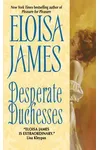
1. Desperate Duchesses (2007)
The book that launched the series introduces Lady Roberta St. Giles, a young woman from the country determined to marry a scandalous duke—specifically, the Duke of Villiers. Instead, she finds herself drawn to Damon Reeve, the Earl of Gryffyn's brother, who lives in the shadow of Villiers's notorious reputation. This book also sets up the central, slow-burn tension between Jemma Beaumont and Villiers, who engage in a legendary, high-stakes game of chess that mirrors the strategy of high-society courtship.
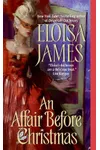
2. An Affair Before Christmas (2007)
Focusing on the complex realities of marriage rather than just the chase, this novel follows Poppy, Duchess of Fletcher, and her husband, Fletch. Though deeply in love, misunderstandings and societal pressures drive them apart. As they navigate their rocky relationship in the lead-up to Christmas, the Duke of Villiers continues to loom large, acting as both a catalyst and a complication in their lives.
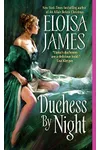
3. Duchess by Night (2007)
Harriet, the Duchess of Berrow, decides to escape the stifling constraints of widowhood by disguising herself as a young man named "Harry." Her plan for a quiet adventure in the country is disrupted when she meets the rakish Jemyn Strange, Lord Strange. As they share quarters and late-night talks, Strange finds himself increasingly attracted to the mysterious young man, leading to a humorous, tense, and sensual romance.
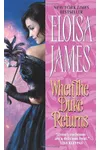
4. When the Duke Returns (2008)
Simeon Jermyn, the Duke of Girton, returns to England after years of traveling the world, only to find himself married to Isidore, the Duchess of Cosway. Isidore has waited years for her husband to return, resisting the temptations of London high society. When they finally meet, Simeon's eccentricities and Isidore's fierce independence spark a battle of wills that quickly turns passionate.
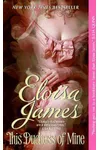
5. This Duchess of Mine (2009)
This novel brings the long-running storyline of Elijah, the Duke of Beaumont, and Jemma, the Duchess of Beaumont, to its highly anticipated climax. After nine years of living separate, scandalous lives in France and England, Jemma returns home to secure an heir. What follows is a brilliant game of seduction, pride, and emotional vulnerability as they realize the love they tried to ignore never truly died.
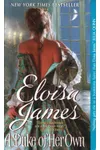
6. A Duke of Her Own (2009)
The grand finale of the original cycle focuses on Leopold Dautry, the Duke of Villiers. Needing to secure custody of his illegitimate children, the reformed rake decides he must marry a proper, respectable lady. He sets his sights on Lady Eleanor Carothers, a duke's daughter who is far more practical, independent, and captivating than the delicate ladies of the ton expect, bringing Villiers's sweeping character arc to a satisfying conclusion.
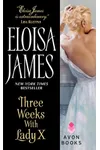
7. Three Weeks with Lady X (2014)
The series transitions to the next generation with the start of the "Desperate Duchesses by the Numbers" trilogy. Thorn Dautry, the wealthy but illegitimate son of the Duke of Villiers, needs a respectable wife to secure his place in society. He hires Lady Xenobia India, a fiercely independent woman famed for her decorating skills, to polish his estate and make him presentable to the ton in just three weeks. Naturally, their professional arrangement flares into an undeniable attraction.
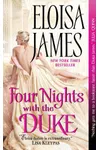
8. Four Nights with the Duke (2015)
Mia Carrington, a secret novelist, is forced to blackmail her childhood crush, Evander "Vander" Brody, the Duke of Pindar, into a marriage of convenience to gain custody of her orphaned nephew. Evander agrees to the marriage but sets a strict, retaliatory term: he will only spend four nights a year in her bed, and only if she begs for them. The two must reconcile their painful shared history—their parents having had a scandalous, decades-long affair—to find true happiness.
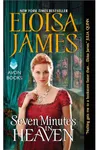
9. Seven Minutes in Heaven (2017)
The final book in the universe follows Edward "Ward" Reeve, the illegitimate son of the Earl of Gryffyn (first introduced as a boy in the earlier books). Now a successful businessman, Ward desperately needs a governess for his two newly inherited, rebellious half-siblings. He recruits Eugenia Snowe, a respectable widow who runs an agency for governesses and happens to be the daughter of Lord Strange and Harriet (from Duchess by Night). Their clash of stubborn wills culminates in a passionate, redemptive romance.
Chronological vs. Publication Order
In the Desperate Duchesses universe, the chronological timeline matches the publication order exactly. The narrative progresses year-by-year through the late Georgian period, starting in the late 1780s. While some romance series allow you to jump around chronologically, doing so here will disrupt the narrative payoff. Major background developments—such as Villiers's duel, his illegitimate children growing up, and the slowly mending marriage of the Beaumonts—happen incrementally in the background of other couples' stories.
The Two Distinct Eras of the Series
When planning your reading journey, it helps to understand that the series is divided into two distinct blocks:
- The Original Circle (Books 1–6): Set in the late Georgian era, these books focus on the main group of friends (Jemma, Elijah, Villiers, Roberta, Harriet, and Poppy). The central plot is highly interconnected, resolving with Villiers's marriage in book six.
- The "By the Numbers" Trilogy (Books 7–9): Written several years later, these books shift focus to the next generation and associated characters (Thorn, Vander, and Ward). While they retain the same witty, scandalous tone, they can technically be read as a standalone trilogy, though they are much more rewarding if you are already familiar with their parents' stories from the original six books.
What to Know Before You Start
Unlike many historical romance series that default to the Regency period (1811–1820), Desperate Duchesses is set in the late Georgian era (specifically the 1780s). This distinction is vital for setting the tone: the Georgian era featured looser social mores, wilder fashions (including natural waists and elaborate powdered hair rather than high-waisted empire gowns), and a more decadent, aristocratic culture. Eloisa James, who is a Shakespeare professor in her academic life, infuses the dialogue with brilliant literary allusions, sharp-witted banter, and strategic chess metaphors, making the series feel both intellectually stimulating and emotionally rich.