
The Recommended English Reading Order
For English-speaking readers, navigating the Detective Galileo series is remarkably straightforward because only the full-length novels have been officially translated. While the original Japanese series contains a mix of short story collections and novels, the translations published by Minotaur Books focus entirely on the major novels. This gives English readers a clear, chronological path that follows the evolution of physicist Manabu Yukawa and his partner in crime-solving, Detective Shunpei Kusanagi.
Here is the recommended reading order for the English translations:
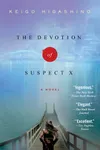
- The Devotion of Suspect X (Japanese: 2005 / English: 2011) – The international breakthrough novel that introduces the series' core themes of mathematical precision and tragic human emotion in a battle of wits.
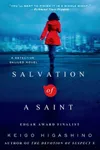
- Salvation of a Saint (Japanese: 2008 / English: 2012) – A classic domestic mystery where a poisoning seems completely impossible, forcing Yukawa to dissect the crime through sheer logic.
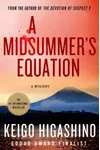
- A Midsummer's Equation (Japanese: 2011 / English: 2016) – Set in a beautiful but fading coastal resort town, this story features Yukawa shielding a young boy while unraveling a decades-old tragedy.
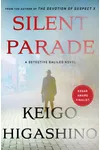
- Silent Parade (Japanese: 2018 / English: 2021) – A complex, multi-layered revenge plot where a community aligns to execute a seemingly perfect crime against a notorious killer.
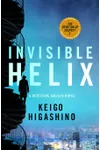
- Invisible Helix (Japanese: 2021 / English: 2024) – The latest translated entry, which digs deep into Yukawa's own past and family dynamics when a body is discovered in a remote forest.
The Full Japanese Chronology (Including Untranslated Works)
In Japan, the Detective Galileo franchise (known as Tantei Galileo) is a multimedia powerhouse that alternates between short story collections and full-length novels. Understanding the complete list helps explain why certain characters appear suddenly or why references are made to past investigations that were never published in English. The full list in original publication order is:
- Tantei Galileo (探偵ガリレオ) (1998) – Short Stories (Untranslated). The debut book introducing Dr. Yukawa and Detective Kusanagi.
- Yochimu (予知夢) (2000) – Short Stories (Untranslated). Focuses on seemingly supernatural phenomena like premonitions and ghosts.
- Yōgisha X no Kenshin (容疑者Xの献身) (2005) – Translated as The Devotion of Suspect X. First full-length novel.
- Galileo no Kunō (ガリレオの苦悩) (2008) – Short Stories (Untranslated). Introduces the character of rookie detective Kaoru Utsumi to the book series.
- Seijo no Kyūsai (聖女の救済) (2008) – Translated as Salvation of a Saint. Novel.
- Manatsu no Hōteishiki (真夏の方程式) (2011) – Translated as A Midsummer's Equation. Novel.
- Kyozō no Dōkeshi (虚像の道化師) (2012) – Short Stories (Untranslated).
- Kindan no Majutsu (禁断の魔術) (2012 / expanded novel 2015) – Short Stories/Novel (Untranslated). Focuses on a former student of Yukawa.
- Chinmoku no Parēdo (沈黙のパレード) (2018) – Translated as Silent Parade. Novel.
- Tōmei na Rasen (透明な螺旋) (2021) – Translated as Invisible Helix. Novel.
Should You Read Detective Galileo in Chronological Order?
While the cases in each novel are entirely self-contained, reading the series in publication order is highly recommended. The mysteries themselves do not require prior knowledge—you can easily pick up Salvation of a Saint or A Midsummer's Equation and enjoy them as standalone whodunits. However, the relationships between the recurring characters undergo significant growth and shift over time.
Specifically, the dynamic between Dr. Manabu Yukawa and Detective Shunpei Kusanagi deepens from simple college acquaintances to mutually respecting peers who share heavy emotional burdens. Additionally, characters like Kaoru Utsumi, who is introduced in later Japanese works to act as a bridge between the police and the eccentric professor, become major fixtures. Reading out of order might lead to minor confusion regarding the status of these relationships, but it will never ruin the central puzzles of the individual books.
Where to Start Reading
The definitive starting point for any reader is The Devotion of Suspect X. Not only is it the book that put Keigo Higashino on the global map, but it is also widely regarded as one of the finest locked-room and alibi mysteries of the 21st century. The novel pits Yukawa against a former university classmate, Tetsuya Ishigami, a genius mathematician who has covered up a murder for a neighbor. The ensuing battle of intellects serves as a perfect showcase of Yukawa's reliance on logic, scientific observation, and psychological insight.
If you prefer a more traditional domestic mystery structure, Salvation of a Saint is another excellent entry point. It features a brilliant battle between Yukawa and a woman who is the prime suspect in her husband's death, even though she was hundreds of miles away when the poison was administered.
What to Know Before You Start
Before jumping in, it helps to understand the unique structure of the Detective Galileo books. Manabu Yukawa is not a private eye or a police officer; he is a physics professor at Teikyo University. The police only consult him when a crime involves elements that seem physically impossible or supernatural—such as spontaneous combustion, levitation, or untraceable poisons. As a result, the series is a tribute to logical deduction and the scientific method.
Additionally, Higashino's background as an engineer shines through. The puzzles are deeply grounded in real physics and chemistry, but they are presented in a way that remains accessible and thrilling to lay readers. However, the true strength of the series lies in its emotional core. Higashino does not write cold, clinical puzzles; instead, he explores the messy, tragic, and desperate motives of ordinary people pushed to their absolute limits.
Television and Film Adaptations
The success of the books led to a massive Japanese media franchise. The television drama Galileo (which aired from 2007 to 2013) stars Masaharu Fukuyama as the eccentric professor. Interestingly, the TV adaptation had a profound impact on the books themselves. To provide a better foil for Yukawa on screen, the producers created the character of Kaoru Utsumi, a passionate rookie detective. Her chemistry with Yukawa was so popular that Higashino decided to officially write her into his subsequent novels, beginning with the short stories in Galileo no Kunō. The franchise has also spawned three highly successful theatrical films in Japan: Suspect X (2008), Midsummer's Equation (2013), and Silent Parade (2022), all of which align closely with the books of the same names.