
The Recommended Reading Order for D.I. Charlie Priest
Stuart Pawson's D.I. Charlie Priest series is a standout entry in British crime fiction, combining classic police procedural elements with a dry, self-deprecating humor. Set in the fictional Yorkshire town of Heckley, the series is best enjoyed in its original publication order. This allows readers to watch Charlie progress through his career, navigate his complex personal relationships, and see recurring colleagues grow over the course of fifteen years.
Here is the recommended reading list in chronological and publication order:
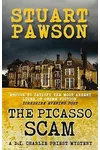
- The Picasso Scam (1995): D.I. Charlie Priest is introduced to the reader while investigating a high-society Yorkshire businessman linked to art fraud, extortion, and heroin distribution.
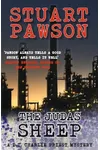
- The Judas Sheep (1996): Charlie faces a convoluted web of betrayal, blackmail, and old secrets when a young woman is found dead and a retired police officer is targeted.
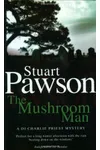
- The Mushroom Man (1996): This emotionally charged installment centers on the disappearance of a young girl, showcasing Charlie's profound empathy as he works against the clock.
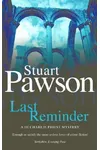
- Last Reminder (1997): Charlie is drawn into a historical mystery involving the remains of a pilot from World War II, alongside a modern-day threat that hits close to home.
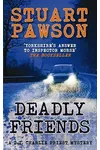
- Deadly Friends (1998): When a young woman is murdered, the investigation forces Charlie to look closely at his own social circle and the secrets of close-knit communities.
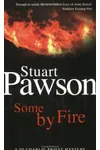
- Some by Fire (1999): Charlie investigates a series of arson attacks across Heckley, culminating in a deadly blaze that demands all of the team's forensic skills.
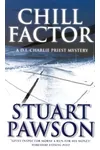
- Chill Factor (2001): A missing student and a body frozen in the snow launch Charlie into an investigation that tests his team's limits during a harsh Yorkshire winter.
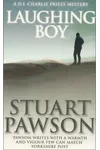
- Laughing Boy (2002): Charlie tracks a ruthless killer who leaves a chilling trademark on his victims, balancing the dark subject matter with his signature black humor.
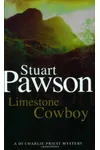
- Limestone Cowboy (2003): The local horse racing community becomes the focus of an investigation when a jockey is murdered, revealing greed and corruption beneath the surface.
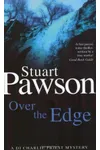
- Over The Edge (2004): Charlie tackles a series of suspicious falls from heights, investigating whether they are tragic suicides or calculated murders.
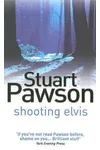
- Shooting Elvis (2006): A complex puzzle unfolds when a local Elvis impersonator is killed, forcing Charlie to dig into the town's underground rivalries.
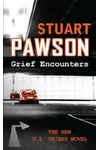
- Grief Encounters (2007): A multi-layered case involving the death of a young mother tests Charlie's deductive skills and emotional resilience.
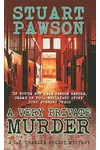
- A Very Private Murder (2010): The series finale sees Charlie, now a D.C.I., facing a bank robbery and a decades-old mystery that provides a satisfying conclusion to his detective career.
Chronological vs. Publication Order: Any Caveats?
For D.I. Charlie Priest, publication order and chronological order are identical. There are no prequels or timeline jumps that disrupt the narrative flow. Readers should simply follow the sequence in which the books were published.
Some minor variations exist in online bibliographies regarding the release dates of the early novels. For example, some sources place The Judas Sheep before The Mushroom Man, or list the years as slightly different due to paperbacks or US releases versus UK hardbacks. However, reading them in the order of the local database—starting with The Picasso Scam and following through to A Very Private Murder—guarantees a smooth, linear experience.
What to Know Before You Start
Charlie Priest is not your average gritty detective. Before joining the police force, he earned an art degree, and he frequently uses his sketching skills during investigations. He is a Roman Catholic, a dedicated mentor to younger constables, and possesses a sharp, dry wit that keeps the dark themes of police work from becoming overwhelming. Stuart Pawson, the author, drew heavily on his own experiences as a mining engineer and his part-time work in the probation service to bring a realistic, human touch to the procedurals.
The setting of Heckley is a fictionalized representation of rugged Yorkshire industrial towns, strongly resembling Huddersfield and the Heavy Woollen District. The local pubs, sweeping moors, and Yorkshire dialect ground the books in a strong sense of place, reminiscent of R.D. Wingfield's Jack Frost or Colin Dexter's Inspector Morse.
Co-authored Books, Spin-offs, and Adaptations
Stuart Pawson wrote the 13 Charlie Priest novels as a standalone, self-contained run. There are no official spin-offs, co-authored additions, or short story collections associated with this universe. While Pawson was an active member of the Northern crime writers' collective known as "The Murder Squad" alongside authors like Ann Cleeves and Martin Edwards, he focused his solo efforts entirely on D.I. Priest. No television or film adaptations have been made, though critics have often noted that the books' pacing and character-driven plots are highly suited for a British TV drama.