




























Where Should You Start Reading Doc Savage?
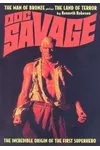
For almost every reader, the absolute best place to start is with the very first published novel, The Man of Bronze (1933). Written by Lester Dent under the house pseudonym Kenneth Robeson, this book establishes the origin of Clark Savage Jr. (Doc Savage), explaining how he was trained from infancy by a team of scientists to achieve physical and mental perfection. It also introduces his team of highly specialized aides—the "Fabulous Five" (Monk, Ham, Renny, Long Tom, and Johnny)—and sets the template for the globetrotting pulp adventures that followed.
However, if you prefer a strict chronological timeline, you might want to look at Escape from Loki. Published in 1991 by acclaimed science fiction author Philip José Farmer, this authorized novel is a prequel set during World War I. It explains how a young Doc Savage first met his future companions in a German prison camp. While chronological purists enjoy starting here, it is generally recommended to read a few classic 1930s adventures first to fully appreciate the characters before diving into their origin story.
The Classic Era: Publication Order vs. Chronological Order
Between 1933 and 1949, Street & Smith published 181 original Doc Savage novels in their monthly pulp magazine. Because these stories were designed as self-contained monthly adventures, reading them in publication order is highly recommended. Reading chronologically is possible, but since the stories rarely reference past events beyond brief character introductions, the publishing order allows you to naturally experience how Lester Dent's writing style evolved over nearly two decades.
The series transitioned through several distinct eras:
- The Early Supersaga Era (1933–1938): These are the classic, larger-than-life tales featuring lost civilizations, world-threatening superweapons, and Doc Savage at his peak physical and gadget-heavy strength.
- The Tone Shift (1938–1940): The stories became slightly more grounded, and Doc's gadgets were scaled back. Doc's Arctic retreat, the Fortress of Solitude, was introduced during this phase.
- The Mystery and Espionage Era (1941–1949): During World War II and the post-war years, the novels shrank in page count and shifted toward traditional detective mysteries and Cold War spy thrillers, with Doc often working alone or with only one or two aides.
An important exception to the publication timeline is The Red Spider. Written by Lester Dent in 1948, this Cold War espionage novel was rejected by the magazine's editor at the time. The manuscript remained lost in the publisher's archives until it was discovered by researcher Will Murray and finally published in 1979 by Bantam Books. Although published decades later, it is chronologically and stylistically part of the late classic era.
Essential Milestones and the John Sunlight Duology
While most Doc Savage novels can be read as standalones, there are a handful of essential books that shape the character's legacy. Chief among these are the only recurring villain stories in the original run: The Fortress of Solitude (October 1938) and its direct sequel, The Devil Genghis (December 1938). These novels introduce Doc's greatest nemesis, John Sunlight, a brilliant and ruthless criminal who discovers Doc's secret Arctic laboratory and turns his own advanced technology against him. This storyline is widely considered the high-water mark of the pulp run.
Other key early novels to look out for include:
- The Land of Terror (1933): Pits Doc against the terrifying "Smoke of Eternity" weapon and features prehistoric dinosaurs.
- Quest of the Spider (1933): Introduces the villainous Gray Spider and features Doc's cousin, Patricia "Pat" Savage, who would become a recurring ally.
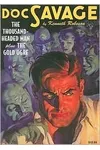
- The Thousand-Headed Man (1934): A classic lost-world exploration story set in the jungles of Indo-China.
The Modern Era: The Wild Adventures of Doc Savage
In 1991, Bantam Books commissioned author and pulp historian Will Murray to write new Doc Savage adventures based on original, unused outlines and detailed notes left behind by Lester Dent. Published under the banner The Wild Adventures of Doc Savage, this series successfully recaptures the flavor of the classic 1930s supersagas.
The first of these modern revivals, Python Isle (1991), is built from an outline Dent drafted in 1934. Chronologically, it fits seamlessly into the early era, taking place shortly after the events of Death in Silver. Murray has continued to expand this run with over twenty authorized novels, including crossovers like The Sinister Shadow (2015), which pairs Doc Savage with Street & Smith's other legendary pulp icon, The Shadow. These modern books can be read after enjoying the original pulp run, or integrated chronologically based on their historical setting.
What to Know Before You Start
Before diving into the world of Doc Savage, modern readers should keep a few things in mind. The pulp novels of the 1930s were written rapidly, often at a rate of one book per month. As a result, the plots are formulaic, emphasizing fast-paced action, cliffhangers, and scientific marvels (like Doc's "mercy bullets" and prototype autogyros) over deep psychological character studies. Additionally, the stories contain cultural tropes typical of the Great Depression era. Approaching them as exciting historical curiosities will help you get the most enjoyment out of the Man of Bronze's legendary exploits.