




The Recommended Reading Path
If you are planning to dive into the shadowy, suspenseful world of the Dougal series, there is only one logical way to do it: in publication order. Written by British crime novelist Andrew Taylor between 1982 and 1993, the eight-book series functions as a continuous, character-driven saga. Unlike classic procedural mysteries where characters remain static, William Dougal undergoes significant personal, professional, and ethical evolution across the novels. Reading the books out of order will spoil major plot points, shifting relationships, and his gradual transformation from an opportunistic postgraduate student into a seasoned, weary private investigator.
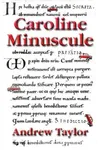
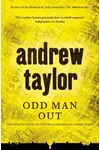
You should start your journey with the award-winning debut, Caroline Minuscule (1982), which establishes Dougal's background, his academic expertise, and the morally grey choices that set the template for the rest of the series. From there, follow the publication timeline straight through to the final volume, Odd Man Out (1993), which brings his complex narrative arc to a dramatic close.
William Dougal: The Publication Order
The series was published over the course of eleven years. Because chronological events align perfectly with the publication dates, the chronological order is identical to the publication order listed below:
- Caroline Minuscule (1982)
- Waiting for the End of the World (1984)
- Our Fathers' Lies (1985)
- An Old School Tie (1986)
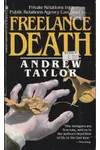
- Freelance Death (1987)
- Blood Relation (1990)
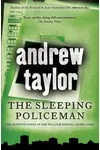
- The Sleeping Policeman (1992)
- Odd Man Out (1993)
Who is William Dougal?
Before stepping into this series, readers should understand that William Dougal is not your typical heroic detective. He begins his journey as a postgraduate history student at London University with expensive tastes, a chronic lack of funds, and a specialized knowledge of medieval paleography—specifically the Carolingian script known as "Caroline minuscule." When he discovers his tutor's murdered body, his first instinct is not to call the police, but rather to slip away to protect himself and search for a hidden fortune in diamonds.
This moral flexibility defines Dougal. He is amoral, self-interested, and quite willing to break the law, yet he remains an appealing and highly charismatic protagonist. Over the course of the eight novels, Dougal is dragged into blackmail, cult investigations, family betrayals, and cover-ups. He eventually transitions into working as a freelance book editor and part-time private investigator. His primary foil throughout the series is James Hanbury, a dangerous, calculating adversary who frequently blackmails or manipulates Dougal into doing his dirty work, creating a fascinating, toxic partnership that spans the entire series.
The Dougal Novels: A Book-by-Book Guide
1. Caroline Minuscule (1982)
The book that started it all. William Dougal is trying to finish his postgraduate thesis when he finds his tutor garroted. Instead of notifying the authorities, Dougal utilizes his knowledge of medieval handwriting to decode a secret cipher leading to a cache of diamonds. This debut won the Crime Writers' Association's John Creasey Memorial Award (now the New Blood Dagger) for best first novel and was shortlisted for the Edgar Allan Poe Award, introducing a refreshingly flawed protagonist to the crime fiction scene.
2. Waiting for the End of the World (1984)
Blackmailed by his cunning rival James Hanbury, Dougal is forced to infiltrate a fringe doomsday cult. What starts as a surveillance job quickly spirals out of control into kidnapping, conspiracy, and murder. This installment deepens the dark, cynical humor of the series and solidifies Hanbury as a recurring, manipulative presence in Dougal's life.
3. Our Fathers' Lies (1985)
In this third outing, Dougal is hired to investigate the apparent suicide of a prominent retired diplomat. As he digs deeper, he uncovers a tangled web of family secrets, old betrayals, and double-dealing. The story moves away from academic settings and explores themes of heritage, greed, and the lasting consequences of past sins.
4. An Old School Tie (1986)
Set in a seemingly quiet English village, this entry sees Dougal investigating a murder where Hanbury is at the center of the mystery. The novel contrasts the traditional, cozy village mystery trope with Dougal's modern, cynical perspective, proving that rural communities can be just as corrupt and deadly as the streets of London.
5. Freelance Death (1987)
This novel features a shift in perspective, focusing heavily on Celia Prentisse, Dougal's girlfriend. When a freelance photographer named Arabella Lorton dies under suspicious circumstances, her vengeful husband recruits Dougal to help blackmail a PR executive named Ivor Newley. When the plan goes disastrously wrong, Celia is left to investigate the tangled web of relationships and public relations schemes to figure out what happened.
6. Blood Relation (1990)
Now working as a part-time investigator and book editor, Dougal is hired by Victoria Hanbury to find her missing publisher lover, Oz Finwood. Dougal finds Finwood's body on the property of a vacation cottage. Although the police rule it an accident, Dougal's subsequent investigation reveals a complex web of family secrets involving Finwood’s ex-wife, mother-in-law, and a con-man brother-in-law.
7. The Sleeping Policeman (1992)
Dougal is approached by a young doctor who is being blackmailed. To find the source, Dougal travels to the doctor's quiet village, only to uncover a hotbed of local rivalries, professional corruption, and deep-seated deceptions. The title references the British term for a speed bump, symbolizing the hidden obstacles Dougal encounters in this deceptively sleepy community.
8. Odd Man Out (1993)
The final novel finds Dougal trying to maintain a respectable life as a hardworking citizen, private investigator, and responsible father. However, this stability is shattered when a violent altercation involving his girlfriend results in a man's accidental death. To avoid the police, Dougal covers up the death and reluctantly turns to Hanbury for help disposing of the body. Hanbury's assistance comes with a steep price, dragging Dougal back into the moral mire one last time to secure his survival.
Themes, Tone, and What to Know Before You Start
Andrew Taylor's Dougal series is characterized by its dry British wit, moral ambiguity, and strong sense of place, ranging from gritty London streets to the chilly Suffolk coast and historical East Anglian cathedrals. It is a precursor to the modern antihero thriller, refusing to offer simple moral resolutions. William Dougal is a survivor; his decisions are motivated by self-preservation and financial gain rather than a desire for justice. If you prefer traditional whodunits where the detective is a paragon of virtue, this series may challenge your expectations. However, for readers who enjoy complex character studies, dark humor, and intricate plotting, it is an exceptionally rewarding read.
Spin-offs, Co-authored Works, and Adaptations
The Dougal series consists strictly of the eight novels written solely by Andrew Taylor between 1982 and 1993. There are no official spin-offs, co-authored books, or companion short stories. While Taylor has written other highly acclaimed historical mysteries (such as The American Boy and the Lydmouth series), they are completely unrelated to the Dougal universe. The series has not been adapted for television or film, meaning the books remain the definitive and only way to experience William Dougal's adventures.