
The Recommended Reading Order: A Straightforward Trilogy
The EarthEnd Saga is a tightly woven science fiction and paranormal thriller trilogy that must be read in its strict chronological and publication order. Because the narrative is highly serial, with character arcs, ancient mysteries, and global conspiracies building directly from one book to the next, jumping in out of order will leave you thoroughly confused. Dr. Caitlin O'Hara's personal evolution and the unfolding secrets of the ancient Galderkhaani civilization require starting at the very beginning.
Here is the recommended reading path for the trilogy:
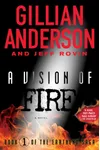
- A Vision of Fire (2014)
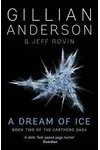
- A Dream of Ice (2015)
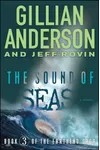
- The Sound of Seas (2016)
Publication Order of The EarthEnd Saga
Each of the three novels expands the scope of the threat, moving from psychological anomalies in children to massive global conspiracies and ancient lost continents. Below is a detailed breakdown of the books in their publication order:
1. A Vision of Fire (2014)
The trilogy begins with A Vision of Fire, which introduces Dr. Caitlin O’Hara, a dedicated child psychologist and single mother living in New York. Her life changes when she is called to treat Maanik, the daughter of the Indian ambassador to the United Nations. Maanik has experienced a traumatic assassination attempt on her father, but her symptoms go far beyond standard post-traumatic stress: she experiences violent, apocalyptic visions and speaks in tongues. As Caitlin investigates, she learns that children across the globe are exhibiting similarly bizarre, self-destructive, and paranormal behaviors. Grounded in psychological realism and escalating geopolitical tensions, this opening installment sets the stage for a grander mystery linking the human mind to the Earth's ancient past.
2. A Dream of Ice (2015)
The mystery deepens in A Dream of Ice, taking the characters from New York to the frozen wastes of Antarctica. Here, a field agent named Mikel Jasso discovers a miraculously preserved city belonging to the ancient, highly advanced civilization of Galderkhaan beneath the ice. Meanwhile, Caitlin O'Hara's connection to the phenomena grows personal and mystical as she begins to develop unexplained psychic abilities, including the power to heal with her mind. The book successfully raises the stakes, transitioning from a localized psychological mystery into a full-scale exploration of ancient technologies and lost histories, all while keeping the suspense high.
3. The Sound of Seas (2016)
The final book in the trilogy, The Sound of Seas, delivers a high-concept conclusion that incorporates time travel, spiritual manifestations, and ancient alien technology. When Caitlin’s deaf son, Jacob, is accidentally pulled back in time, Caitlin must unlock the secrets of the ancient Galderkhaani tiles—sophisticated crystal devices that act as computers housing collective memories and vast destructive power. The resolution ties together the global conspiracies, the origins of the Galderkhaani people, and Caitlin's ultimate fight to save both her family and the future of humanity.
Understanding the Chronological Flow and Time-Bending Elements
While the third book, The Sound of Seas, introduces time-travel elements and dives deep into the historical era of the Galderkhaani, this historical context does not warrant a non-linear reading order. The chronological flow of the narrative follows Caitlin O'Hara's subjective timeline as she uncovers these anomalies. Reading the trilogy out of sequence would spoil the major reveals regarding the true nature of the ancient civilizations and the source of the children's visions. Therefore, stick strictly to the order of release to enjoy the escalating tension and character development.
The Collaboration: Gillian Anderson and Jeff Rovin
The EarthEnd Saga was born from a unique creative partnership between actress Gillian Anderson, widely celebrated for her iconic portrayal of FBI Special Agent Dana Scully on The X-Files, and Jeff Rovin, a seasoned, bestselling author known for his work on Tom Clancy's Op-Center novels. Anderson wanted to explore writing a protagonist who, like Scully, was a analytical woman of science confronted with the inexplicable. However, she chose to make Caitlin O'Hara a child psychologist rather than a law enforcement agent to emphasize empathy and maternal instincts over investigation. Rovin brought his decades of experience plotting high-stakes geopolitical thrillers and military logistics, resulting in a series that balances intimate, character-driven family drama with massive, world-spanning conspiracies.
What to Know Before You Start
Before diving into the EarthEnd Saga, readers should keep a few details in mind to set their expectations:
- An X-Files Vibe: Fans of the paranormal investigation genre will immediately feel at home. The series blends grounded science, global politics, nuclear standoffs, and paranormal anomalies in a way that feels reminiscent of 1990s conspiracy thrillers.
- Serial Narrative: The books do not function well as standalones. Each novel ends with significant cliffhangers and plot threads that carry directly into the next, meaning you should treat the trilogy as a single, long story split into three parts.
- Imprint History: The series was one of the flagship launches for Simon & Schuster's Simon451 imprint, which was dedicated to publishing speculative fiction, fantasy, and sci-fi aimed at crossover audiences.
- Adaptation Hype: In 2016, there were announcements and discussions regarding a potential television adaptation of the trilogy. While those plans have remained in development limbo, the cinematic pacing of the books makes them highly visual and fast-paced reads.