
How to Read Earth’s Children: Recommended Reading Order
The Earth’s Children series is a strictly linear narrative that follows a single protagonist, Ayla, from her childhood through adulthood. Because the narrative progresses chronologically alongside Ayla’s personal development, technological discoveries, and relationships, the series must be read in publication order. Reading these novels out of sequence is not recommended, as each book relies heavily on the character growth, emotional beats, and plot points established in the preceding volumes.
Earth’s Children Books in Chronological and Publication Order
- The Clan of the Cave Bear (1980): The story begins with five-year-old Ayla, an anatomically modern Cro-Magnon girl orphaned by a devastating earthquake. She is rescued and raised by a clan of Neanderthals. As she grows, Ayla struggles to fit into their rigid societal structure and gender roles, using her intellect to survive while facing prejudice from those who see her as different. This book sets the foundation for the entire series, exploring the biological and cultural divisions between early human species.
- The Valley of Horses (1982): After being exiled from the Clan, Ayla finds refuge in a pristine, isolated valley. Here, she spends years alone, mastering survival skills, discovering how to start fire with iron pyrites, and domesticating a wild horse named Whinney and a cave lion named Baby. Her isolation ends when she rescues Jondalar, a Cro-Magnon man traveling from the west, initiating the central romance of the saga.
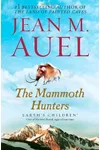
- The Mammoth Hunters (1985): Ayla and Jondalar leave the valley and join the Mamutoi, a tribe of Cro-Magnon mammoth hunters. Ayla must adapt to a complex new human society and learn to speak a vocal language after years of using Neanderthal sign language. She is adopted into the Mammoth Hearth due to her spiritual sensitivity, but her relationship with Jondalar is tested by cultural differences and a dramatic love triangle involving a local carver named Ranec.
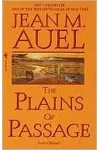
- The Plains of Passage (1990): This book covers a massive physical journey as Ayla and Jondalar travel across the prehistoric European continent to return to Jondalar's homeland. They traverse vast grasslands, cross dangerous rivers, and interact with various tribes. Along the way, they must defend their domesticated animals—their horses and a wolf companion—from tribes who view their relationship with beasts with suspicion and fear.
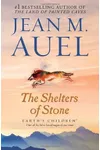
- The Shelters of Stone (2002): Ayla and Jondalar finally arrive at the Ninth Cave of the Zelandonii in modern-day France. Ayla face intense scrutiny and hostility from Jondalar's people, who look down on her Neanderthal upbringing. Through her advanced medical knowledge, veterinary skills, and spiritual insight, Ayla works to win over the tribe and begins training under the Zelandoni, the community’s spiritual leader.
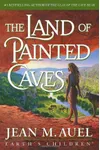
- The Land of Painted Caves (2011): The final installment follows Ayla as a Zelandoni acolyte. She embarks on journeys to sacred caves throughout the region to view ancient paintings and receive spiritual revelations. The novel focuses heavily on her obligations to the tribe, domestic strain, and the tribe's growing understanding of early human reproduction.
Publication Order vs. Chronological Order
In many speculative fiction series, readers have to choose between publication order and internal chronological order. For Earth’s Children, there is no such dilemma. The publication order matches the chronological timeline of Ayla’s life exactly. There are no prequels, side novels, or chronologically displaced chapters. To understand Ayla’s growth from an orphaned child to a spiritual leader, you must start with the first book and proceed sequentially through to the sixth.
What to Know Before You Start
Before diving into Jean M. Auel's prehistoric world, readers should prepare for the unique structure and tone of the series. The books are famous for their immense detail. Auel spent years researching Paleolithic archaeology, survival techniques, ethnobotany, and geology. As a result, the narrative contains lengthy, highly descriptive passages detailing how flint tools are knapped, how wild herbs are processed for medicine, and how animals are skinned and preserved. While this level of detail builds an incredibly immersive world, it can occasionally slow down the narrative pace, particularly in the later books.
Additionally, the series contains highly explicit romantic scenes and details mature themes. The relationship between Ayla and Jondalar is central to the plot, and the books frequently feature lengthy, detailed depictions of physical intimacy. The series also deals with heavy themes such as trauma, survival, discrimination, and cultural assimilation, making it best suited for mature readers.
Spin-Offs, Co-Authored Books, and Adaptations
There are no spin-offs, short story collections, companion books, or co-authored additions to the Earth's Children series. The six core novels make up the entirety of the franchise. Some libraries or retailers list the author under her maiden name, Jean M. Untinen-Auel, but these listings refer to the same six books and do not indicate a separate author or collaborator.
The series has had a quiet history with adaptations. The first novel was adapted into a 1986 feature film, The Clan of the Cave Bear, starring Daryl Hannah as Ayla. The film was a critical and commercial failure, leading to the cancellation of any planned movie sequels. In 2015, a TV pilot was produced for the Lifetime network, but it was not picked up. More recently, in late 2025, animator Liane-Cho Han and Pilepse Production announced they are developing a 2D animated series based on the novels, aiming to bring Ayla's prehistoric world to a new generation of viewers.
Practical Reading Guidance
The definitive starting point is The Clan of the Cave Bear. Starting with any other book will spoil the emotional weight of Ayla's upbringing and leave readers confused about her unique sign-language communication, psychological trauma, and unusual survival skills. While the first three books are widely considered the strongest and most tightly paced in the series, readers should be prepared for a shift in pace starting with The Plains of Passage. If the long travel logs or the repeated recitation of tribal songs in the final books become tedious, skimming those descriptive passages is a common and effective strategy to keep the plot moving forward without missing key story points.