
Step into the enchanting archipelago of Earthsea, a world of scattered islands, deep oceans, and ancient dragons where magic is bound to the true names of things. Crafted by the legendary Ursula K. Le Guin, the Earthsea Cycle is a cornerstone of modern fantasy. But unlike many fantasy series that follow a single, straight line, Earthsea grew, shifted, and matured over nearly fifty years. Navigating its novels, short stories, and essays can be tricky, which is why we’ve put together this practical guide to help you find your way through the archipelago.
The Recommended Reading Order: Start Here
If you are exploring Earthsea for the first time, we strongly recommend following the publication order. Le Guin wrote these books as her own worldview and understanding of the characters evolved, and the sequence reflects a profound maturation of both the author and her world. Here is the recommended path:
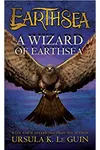
- A Wizard of Earthsea (1968) – The classic starting point. It follows a young, reckless boy named Ged (known in his youth as Duny or Sparrowhawk) who discovers he has immense power, only to unleash a terrible shadow upon the world through his own pride. This is a story of self-discovery, arrogance, and the necessity of facing one's shadow.
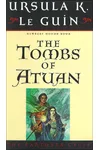
- The Tombs of Atuan (1970/1971) – A shift in perspective. Set on the dusty, isolated island of Atuan, it follows Tenar, a girl taken in childhood to be the high priestess of the ancient, dark powers known as the Nameless Ones. Her life changes when Ged arrives, seeking a lost treasure. It is a story of female agency, psychological confinement, and escaping toxic traditions.
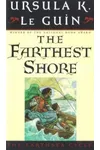
- The Farthest Shore (1972) – The conclusion of the original trilogy. Ged is now the Archmage of Roke, and he sets sail with the young prince Arren to discover why magic, craftsmanship, and life itself are draining away from the edges of the world. It explores mortality, the fear of death, and the cost of trying to live forever.
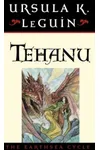
- Tehanu (1990) – Published eighteen years later, this book subverts the classic fantasy tropes established in the first three. It returns to Tenar’s perspective on Gont, examining what happens after the grand adventures end, focusing on domestic life, healing, and a traumatized young girl named Therru. It introduces a deeply feminist perspective on power and magic.
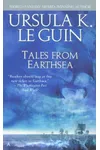
- Tales from Earthsea (2001) – A collection of five short stories that expand the lore of the world. Crucially, the final story in this volume, "Dragonfly," serves as an essential narrative bridge between Tehanu and the final novel.
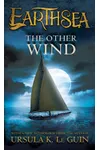
- The Other Wind (2001) – The final novel in the Earthsea Cycle. It weaves together the threads of Ged, Tenar, Tehanu, and the prince (now King Lebannen) as they confront a crisis involving the boundary between life and death, re-evaluating the nature of the world itself.
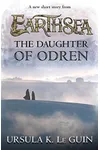
- The Daughter of Odren (2014) – A standalone novella set in the archipelago that explores themes of vengeance and family tragedy on the island of Odren. It is best read after finishing the main series.
- "Firelight" (2018) – The final piece of the Earthsea puzzle. Published posthumously, this short story serves as a quiet, beautiful epilogue to the lives of Ged and Tenar, bringing a sense of finality to the cycle.
The Two Eras of Earthsea
To truly appreciate Earthsea, it helps to understand the massive gap between its two distinct eras. The first three books (1968–1972) are often considered the "original trilogy." They were written as young adult high fantasy, heavily influenced by Taoist principles of balance and the classic heroic journey. However, by the time Le Guin returned to the series in the late 1980s, her perspective on gender, power, and society had grown considerably.
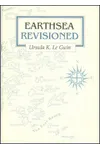
With Tehanu in 1990, Le Guin deliberately deconstructs the patriarchal structures of the wizarding world she had built. While the first three books focused on the active, external magic of men and wizards, the latter half of the series examines the quiet, domestic, and often unrecognized strength of women, the elderly, and the powerless. If you want to understand this transition from the author's own perspective, look for Earthsea Revisioned (1993), a published lecture in which Le Guin discusses her changing relationship with the fantasy genre and why she felt compelled to write Tehanu.
Chronological Order vs. Publication Order
Some readers are tempted to read the series chronologically by placing the short stories from Tales from Earthsea first. We advise against this. For example, the story "The Finder" is set three hundred years before A Wizard of Earthsea and details the founding of the School of Wizardry on Roke. While historically interesting, reading it first ruins the mystery and awe of Roke Island that you are meant to experience alongside Ged in the first book.
Other stories in the collection are scattered across the timeline. "The Bones of the Earth" is a prequel focusing on Ged’s teacher, Ogion, while "On the High Marsh" fits between the second and third books. Trying to read them in exact chronological sequence requires constant book-switching and breaks the natural thematic growth of the series. Stick to publication order, but make sure not to skip Tales from Earthsea before reading The Other Wind—the story "Dragonfly" is a mandatory bridge for the final book’s plot.
Similarly, the earliest short stories written by Le Guin set in Earthsea—"The Word of Unbinding" and "The Rule of Names" (both published in 1964)—predate the writing of A Wizard of Earthsea. While they introduce the magic of names and the dragon Yevaud, they are best read as historical curiosities after you've experienced the main trilogy, as they represent a slightly different, more traditional fantasy style.
What to Know Before You Start
Before you set sail, keep these unique aspects of Earthsea in mind:
- Words Have Power: Magic in Earthsea is not about casting fireballs or summoning storms at whim. It is based on the "Old Speech" – the language spoken by dragons and the creators of the world. To control something, you must know its true name. This makes magic a deeply philosophical, responsible act.
- A Diverse World: Le Guin made a deliberate choice to populate her archipelago with people of color. Ged and Tenar are dark-skinned (except for the inhabitants of the Kargad lands, who are pale and often cast as the antagonists). In the late 1960s, this was a radical departure from the eurocentric, white-dominated fantasy landscape.
- Focus on Harmony: Unlike traditional epic fantasy, there are no dark lords to defeat or massive armies clashing in Earthsea. The struggles are internal, psychological, and spiritual. The goal is always to restore balance, not to conquer.