

The Recommended Reading Order for Edward X. Delaney
To experience Captain Edward X. Delaney’s evolution from an active-duty NYPD investigator to a retired consultant, the best path is to follow the original publication order. While Delaney’s debut is technically a supporting role in a heist thriller, the subsequent novels trace his personal and professional life linearly. Reading them out of order will spoil major life events, particularly regarding his marriages and career status.
- The Anderson Tapes (1970) – The series prequel/introduction, featuring Delaney as a supporting detective.
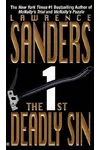
- The First Deadly Sin (1973) – The true beginning of the Delaney series, centering on him as the main protagonist.
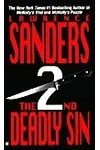
- The Second Deadly Sin (1977) – Delaney returns from retirement to solve a murder in the art world.
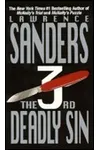
- The Third Deadly Sin (1981) – An unofficial investigation targeting a female serial killer.
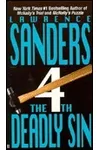
- The Fourth Deadly Sin (1985) – Delaney’s final case, hunting a killer through a psychiatrist’s private patient records.
The Books in Detail
1. The Anderson Tapes (1970)
Unlike the rest of the series, The Anderson Tapes is primarily a heist novel rather than a pure detective procedural. The story follows Duke Anderson, a career thief who plans a massive robbery of a luxury Manhattan apartment building. Edward X. Delaney is introduced late in the book as an NYPD Captain who takes charge of the chaotic aftermath. Sanders writes the novel in a unique documentary style, utilizing wiretap transcripts, police logs, and official memos, which sets a paranoid, surveillance-heavy tone for the era.
2. The First Deadly Sin (1973)
This is the definitive starting point for readers looking for a classic detective story. Delaney takes center stage as an active Captain hunting down a serial killer who strikes victims in the dark with an ice ax. The narrative splits its focus, alternating between Delaney’s methodical police work and the daily life of the killer, Daniel Blank. In addition to the grueling case, Delaney faces a deep personal crisis as his first wife, Barbara, lies dying in the hospital. During his investigation, he meets Monica Gilbert, the widow of one of the victims, who plays a major role in his future.
3. The Second Deadly Sin (1977)
By the start of the third book, Delaney has retired from the NYPD as Chief of Detectives. He has married Monica and settled into a quiet life in New York. However, when a brilliant but universally disliked artist is stabbed to death, Delaney is lured back as an unofficial consultant. Working outside the traditional department hierarchy, he uses his classic interrogation techniques and sharp instincts to dissect the victim’s close circle of greedy associates and rivals.
4. The Third Deadly Sin (1981)
Now fully adjusted to retirement, Delaney is once again pulled back into the shadows of Manhattan. A killer dubbed the “Hotel Ripper” is brutally murdering men in midtown hotel rooms. In a rare twist for late-20th-century crime fiction, the antagonist is Zoe Kohler, a seemingly ordinary woman living a double life. Delaney must use psychological profiling and old-fashioned footwork to track her down before she strikes again.
5. The Fourth Deadly Sin (1985)
In Delaney’s final outing, he tackles the murder of a prominent New York psychiatrist. With the doctor dead, Delaney is task-force lead on a sensitive investigation that requires analyzing the private patient files of highly disturbed individuals. The novel serves as a fitting farewell to Delaney, emphasizing the psychological depth and procedural precision that Sanders spent fifteen years developing.
What to Know Before You Start
Lawrence Sanders’ Edward X. Delaney books are credit-point classics of the crime fiction genre, but readers should keep a few stylistic elements in mind:
- Atmosphere and Setting: The books are set firmly in the late 1960s through the mid-1980s. New York City is depicted as a gritty, decaying, and dangerous urban landscape. The procedural elements reflect the technology of the era, relying heavily on wiretaps, phone records, physical surveillance, and manual filing cabinets.
- The Culinary Rituals: One of Delaney’s most famous quirks is his devotion to food. Throughout his stressful investigations, he frequently retreats to his kitchen to construct massive, highly detailed sandwiches (often featuring rye bread, liverwurst, mustard, pickles, and raw onions) washed down with cold beer. These domestic scenes provide a unique, humanizing contrast to the dark crimes he investigates.
- Dual Perspectives: Sanders pioneered the use of parallel narratives in mainstream procedurals, showing readers the perspective of both the detective and the criminal. This creates tension, as the reader often knows who the killer is long before Delaney closes the net.
Standalones and Crossover Connections
Lawrence Sanders is also famous for writing the Commandments series (such as The Sixth Commandment and The Tenth Commandment) and the lighthearted Archy McNally private investigator series set in Palm Beach. Despite some fans wondering if they share a universe, the Delaney books are entirely self-contained. There are no character crossovers or shared plotlines between Delaney and Sanders’ other protagonists. The tone of the Delaney series is significantly darker and more dramatic than the breezy, comedic mysteries of the McNally books.
The Adaptations
The series has been adapted for the big screen twice, featuring major Hollywood talent:
- The Anderson Tapes (1971): Directed by Sidney Lumet, this thriller starred Sean Connery as the thief Duke Anderson. Edward X. Delaney was portrayed as a supporting character by Ralph Meeker.
- The First Deadly Sin (1980): Directed by Brian G. Hutton, this adaptation starred Frank Sinatra in one of his final film roles as Captain Edward X. Delaney. Faye Dunaway played his terminally ill wife, Barbara, and Brenda Vaccaro portrayed Monica Gilbert. The film is also notable for featuring a very brief, uncredited screen debut by Bruce Willis.