
The Recommended Reading Order
For the best experience, Karen Harper’s Elizabeth I Mysteries should be read in chronological order. Because the narrative tracks Queen Elizabeth’s real life, her evolving relationships, and her political standing from a vulnerable princess to an established sovereign, jumping around will spoil character developments and the general flow of Tudor history. Fortunately, the publication order matches the chronological timeline perfectly.
The Chronological and Publication Order of the Books
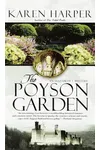
- 1. The Poyson Garden (1999)
Fictional Setting: 1558
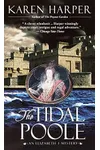
Set during the final tense months of Queen Mary I’s reign. Lady Elizabeth is exiled to Hatfield House, surviving under constant threat of execution. When a plot to poison her Boleyn kin is discovered, Elizabeth must act as an amateur sleuth to protect her line and her life, establishing her investigative instincts. - 2. The Tidal Poole (2000)
Fictional Setting: 1559
Elizabeth has ascended the throne, but her early days of power are marred by murder. During her coronation pageantry, a courtier is killed, prompting the new Queen to form her secret "Privy Plot Council" to investigate the threat. - 3. The Twylight Tower (2001)
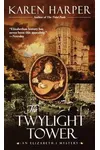
Fictional Setting: 1560
The suspicious death of the court's lutenist in the Tower of London forces Elizabeth to examine the loyalties of those closest to her, including her favorite, Robert Dudley. - 4. The Queene's Cure (2002)
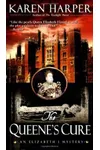
Fictional Setting: 1562
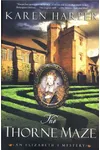
As smallpox ravages England, Elizabeth must deal with plague-scarred effigies and a lethal conspiracy that targets both her physical health and her political power. - 5. The Thorne Maze (2003)
Fictional Setting: Summer 1564
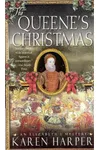
A royal progress to Hampton Court turns deadly when a cousin of the Queen is found strangled inside the palace’s famous hedge maze. - 6. The Queene's Christmas (2003)
Fictional Setting: Winter (Yuletide) 1564
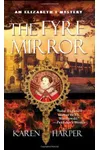
Celebrating the festive season is cut short by a plot to blow up the Queen's chambers, throwing the Tudor court into a state of holiday panic. - 7. The Fyre Mirror (2005)
Fictional Setting: Spring 1565
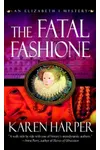
Elizabeth enlists the aid of her court astrologer, John Dee, when a series of suspicious fires and a mysterious glass mirror point to a dark conspiracy within the realm. - 8. The Fatal Fashione (2005)
Fictional Setting: 1566
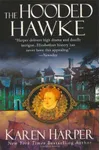
The luxurious world of Elizabethan fashion and cosmetics becomes deadly when poisoned garments and cosmetics threaten the court. - 9. The Hooded Hawke (2007)
Fictional Setting: Summer 1569
On a royal progress to the West Country, Elizabeth and her entourage—including a young Francis Drake—are targeted by an assassin. This novel serves as the final installment in the mystery series.
Chronological and Fictional Timeline Caveats
While the publication sequence mirrors the internal timeline, readers should note the minor release overlap in 2003 and 2005. Both The Thorne Maze and The Queene's Christmas were released in 2003, but The Thorne Maze is set during the summer of 1564, whereas The Queene's Christmas is set during the following winter. Reading The Thorne Maze first is essential for keeping the temporal continuity intact. Similarly, in 2005, both The Fyre Mirror and The Fatal Fashione were published. The Fyre Mirror (set in 1565) takes place before The Fatal Fashione (set in 1566), matching the chronological history of Elizabeth's reign.
Key Supporting Characters: The Privy Plot Council
As Elizabeth investigates threats to her throne, she relies on a small circle of trusted allies who form her unofficial "Privy Plot Council." Understanding these relationships is key to enjoying the series:
- Robert Dudley: Elizabeth’s Master of Horse and her favorite. Their deep affection and romantic tension serve as the emotional anchor of the series, though political realities constantly keep them apart.
- Kat Ashley: Elizabeth’s loyal governess and maternal figure. Kat provides a grounding presence and emotional support, acting as a protector when court conspiracies grow too close.
- William Cecil: The Queen's cautious and brilliant secretary. Cecil often acts as a foil to Elizabeth’s impulsive detective instincts, preferring official, bureaucratic safety over hands-on sleuthing.
- John Dee: The court mathematician and astrologer. He lends his scientific knowledge and esoteric skills to help Elizabeth solve complex puzzles, most notably in The Fyre Mirror.
What to Know Before You Start
Karen Harper was a passionate Tudor enthusiast who conducted extensive research on the period, drawing on real historical events and people to build her mysteries. However, readers should remember that the central premise—Queen Elizabeth I acting as a hands-on detective who personally investigates murders—is entirely fictional. Harper masterfully weaves real political tensions (such as the succession debate, the threat of Mary, Queen of Scots, and religious divisions) into the mysteries, making the historical backdrop feel authentic even if the sleuthing is pure fiction.
The tone of the series sits at a comfortable intersection of historical fiction and cozy mystery. While there are murders, conspiracies, and high stakes, the stories focus heavily on relationships, courtly culture, clothing, food, and daily Tudor life, avoiding overly graphic violence.
Companion Reads and Connecting Works
If you finish the Elizabeth I Mysteries and want to spend more time in Karen Harper’s version of the Tudor court, she wrote several standalone novels that expand on key figures from the series:
- The Queen's Governess (2010): This novel centers on Kat Ashley, who serves as Elizabeth's beloved governess and is a prominent supporting character in the mystery series. Reading this book offers a deep, emotional backstory to Elizabeth's childhood and her bond with Kat.
- The Last Boleyn (originally published as Passion's Reign in 1983): Focuses on Mary Boleyn, Elizabeth's maternal aunt. Since Elizabeth’s maternal Boleyn heritage is a recurring theme in the mysteries (especially in the first book, The Poyson Garden), this standalone provides excellent context.
- The Queen's Confidante (2011): Set earlier in the Tudor era (1501), this novel follows a candlemaker who gets drawn into royal secrets, carrying a similar investigatory spirit to the Elizabeth I books.