







Where to Start Reading Ellery Queen
For readers looking to dive into the cases of Ellery Queen, choosing a starting point depends on what style of mystery you prefer. Because the series spans over four decades and evolves significantly, there are three primary entry points recommended by fans and critics:
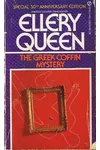
- The Classic Puzzle Start: The Greek Coffin Mystery (1932) – If you want to experience the peak of the 'fair-play' Golden Age puzzle where every clue is laid out for you to solve, this is widely considered the duo's early masterpiece.
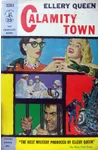
- The Small-Town Realism Start: Calamity Town (1942) – If you prefer psychologically rich characters, small-town secrets, and emotional depth, start here. It introduces the fictional town of Wrightsville and marks a major shift in the series' tone.
- The Masterpiece Thriller Start: Cat of Many Tails (1949) – A dark, atmospheric city-wide manhunt for a serial killer in New York. It features a mature, psychologically strained Ellery and showcases the authors at the height of their narrative power.
The Four Phases of Ellery Queen
The core series of novels written under the pseudonym Ellery Queen is traditionally divided into four distinct phases, tracking the evolution of the authors' style and the character himself:
Phase I: The Logic Puzzles (1929–1935)
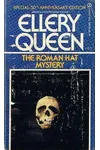
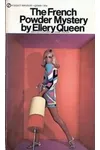
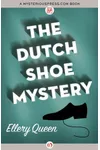
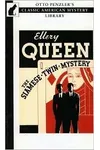
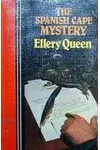
Beginning with The Roman Hat Mystery (1929) and ending with The Spanish Cape Mystery (1935), these books established the signature Ellery Queen style. In this era, Ellery is a somewhat snooty, monocle-wearing intellectual who assists his father, Inspector Richard Queen of the NYPD. These novels feature the famous 'Challenge to the Reader'—a literal page near the end where the authors pause the story to declare that the reader now possesses all the clues necessary to solve the crime. The titles in this era almost exclusively follow the 'The [Nationality] [Noun] Mystery' naming convention (e.g., The French Powder Mystery, The Dutch Shoe Mystery, and The Siamese Twin Mystery).
Phase II: The Hollywood and Mainstream Shift (1936–1940)
Starting with Halfway House (1936), the cousins abandoned the 'Nationality' title formula and softened Ellery's character. Influenced by their time writing scripts in Hollywood, the authors made Ellery more down-to-earth, dropped the monocle, and introduced romantic interests. Novels like The Four of Hearts and The Devil to Pay (both 1938) reflect this slicker, more commercial style.
Phase III: Psychological Realism & Wrightsville (1942–1958)
This phase is widely regarded as the series' peak of literary merit. Beginning with Calamity Town (1942) and ending with The Finishing Stroke (1958), the stories move away from pure, abstract puzzles toward human drama, psychological depth, and social issues. Ellery becomes a more reflective, vulnerable character who occasionally makes mistakes. This era also introduces the fictional New England town of Wrightsville, which serves as the backdrop for several of his most emotionally complex cases. Note that The Glass Village (1954) was published during this phase; though written by the cousins, it features neither Ellery nor Inspector Queen, focusing instead on a thematic exploration of mob mentality in a small town.
Phase IV: The Late Period and the Ghostwriters (1963–1971)
After a short hiatus following The Finishing Stroke, the brand returned in the 1960s. During this phase, Manfred Lee struggled with severe writer's block and health issues. To keep the series going, Frederic Dannay created highly detailed plot outlines, which were then expanded into novels by other prominent writers. Despite being ghostwritten, books containing the character of Ellery Queen are considered canonical. These include:
- The Player on the Other Side (1963) – Ghostwritten by sci-fi legend Theodore Sturgeon, this is highly acclaimed and features both Ellery and his father.
- And on the Eighth Day (1964) and The Fourth Side of the Triangle (1965) – Ghostwritten by Avram Davidson, featuring Ellery in unique settings.
- The House of Brass (1968) – Also ghostwritten by Avram Davidson, this focuses heavily on Inspector Richard Queen and his new wife, Jessie Sherwood, with Ellery playing a minimal role.
Understanding the Non-Ellery Queen Books
When looking at the full bibliography of the 'Ellery Queen' name, readers often get confused by books that do not feature the detective at all. It is important to separate the main canon from spin-offs and standalone projects:
- Ghostwritten Paperback Originals (No Ellery Queen): In the 1960s and 1970s, the authors commissioned a series of paperback thrillers under the Ellery Queen name that do not feature the detective character. These include works like Dead Man's Tale (ghostwritten by Stephen Marlowe), Death Spins the Platter (by Richard Deming), and Kill as Directed (by Henry Kane). These are standalone thrillers and are not part of the detective's timeline.
- Daniel Nathan's The Golden Summer (1953): This book is an autobiographical, non-mystery novel written by Frederic Dannay under his birth name, Daniel Nathan. It is not part of the Ellery Queen series.
- Inspector Queen's Own Case (1957): This novel stars Ellery's father, Inspector Richard Queen, as he investigates a case in retirement. Ellery does not appear in the book.
- Barnaby Ross & Drury Lane: Early in their careers, the cousins wrote four novels under the pseudonym Barnaby Ross, featuring a deaf, retired Shakespearean actor named Drury Lane who solves crimes. These were later republished under the Ellery Queen name.
Publication Order vs. Chronological Order
Unlike some detective series where books can be read in any sequence, the Ellery Queen novels are best read in publication order. This is because the character of Ellery Queen grows and ages over the span of 42 years, transitioning from an eccentric, detached sleuth in 1929 to a deeply empathetic and psychologically complex investigator by the 1950s, before entering the more stylized puzzles of the late 1960s. Reading out of order can make his shifting personality feel jarring rather than like a natural evolution.