









Where to Start with Erast Fandorin
For anyone looking to enter the world of Erast Petrovich Fandorin, there is only one true starting line: The Winter Queen (originally published in Russian as Azazel). Unlike some long-running detective series where the protagonist arrives fully formed, Fandorin's journey is highly linear, and his character is defined by the trauma he experiences in this debut adventure.
In The Winter Queen, we meet a twenty-year-old Fandorin working as a lowly, enthusiastic police clerk in 1876 Moscow. He is naive, idealistic, and lacks his signature quirks. The events of this book—involving a mysterious suicide that unfurls into a global conspiracy—permanently alter him, leaving him with prematurely gray temples, a slight stutter, and a tragic detachment from love. Skipping this book means missing the emotional foundation of the entire series. From here, the safest and most rewarding path is to follow the publication order, which mirrors Fandorin's aging and the shifting political landscape of late-Imperial Russia.
The Primary Series: Original Publication Order
Boris Akunin (the pen name of writer and scholar Grigory Chkhartishvili) designed the series to span sixteen main works, with each book paying homage to a different subgenre of detective fiction. While the first ten books have widely available English translations, the later books have had sporadic English releases. Below is the complete list of the primary Fandorin books in their original publication order:
- 1. The Winter Queen (1998 / Setting: 1876) – Conspiracy Mystery. Introduces a young Fandorin investigating a wealthy student's public suicide in Moscow.
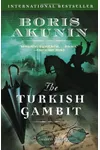
- 2. The Turkish Gambit (1998 / Setting: 1877) – Espionage Thriller. Set against the backdrop of the Russo-Turkish War, where Fandorin acts as a secret agent.
- 3. Murder on the Leviathan (1998 / Setting: 1878) – Closed-Room Mystery. A classic Agatha Christie-style whodunit set aboard a luxury steamship bound for India.
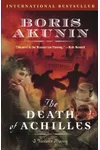
- 4. The Death of Achilles (1882 / Published in 1998) – Assassination / Political Mystery. Fandorin returns to Moscow from Japan accompanied by his loyal servant Masa to investigate the death of a beloved general.
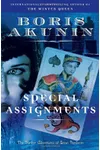
- 5. Special Assignments (1999) – Novella Collection. Contains two distinct stories: The Jack of Spades (1886, a lighthearted con-artist tale) and The Decorator (1889, a dark, gruesome hunt for a Jack the Ripper copycat).
- 6. The State Counsellor (2000 / Setting: 1891) – Political Detective. Fandorin matches wits with revolutionary terrorists and corrupt government officials in Moscow.
- 7. The Coronation (2000 / Setting: 1896) – High-Society Mystery. Set during the coronation of Tsar Nicholas II, Fandorin tries to rescue a kidnapped royal child.
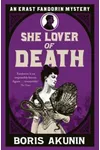
- 8. She Lover of Death (2001 / Setting: 1900) – Gothic Mystery. Fandorin infiltrates a morbid suicide club in Moscow. Runs concurrently with the next book.
- 9. He Lover of Death (2001 / Setting: 1900) – Underworld / Adventure Mystery. Set at the exact same time as She Lover of Death, focusing on the slums of Khitrovka and a search for buried treasure.
- 10. The Diamond Chariot (2003 / Setting: 1905 & 1878–1882) – Espionage and Flashback. Divided into two parts: a railway sabotage plot during the Russo-Japanese War, followed by a massive flashback detailing Fandorin's years as a diplomat in Japan, where he met Masa.
- 11. The Jade Rosary (2006 / Settings: 1881–1900) – Short Story Collection. Ten stories filling historical gaps in Fandorin's life, including a crossover with Sherlock Holmes and Arsene Lupin in Brittany. (Limited English translation).
- 12. All the World's a Stage (2009 / Setting: 1911) – Theatrical Mystery. An aging Fandorin falls in love with an actress and investigates murders at a Moscow theater. (Limited English translation).
- 13. Black City (2012 / Setting: 1914) – Espionage Thriller. Fandorin travels to the oil-rich city of Baku on the eve of World War I to hunt a revolutionary terrorist. (Limited English translation).
- 14. Planet Water (2015 / Settings: 1903–1912) – Novella Collection. Contains three stories, including a deep-sea treasure hunt and the pursuit of a train robber. (No official widespread English translation).
- 15. Not Saying Goodbye (2018 / Settings: 1918–1921) – Civil War Epic. Fandorin wakes from a long coma to find the Russian Empire collapsed, navigating the chaos of the Bolshevik Revolution. (No official widespread English translation).
- 16. The Pit (also known as Yama) (2023 / Setting: 1900) – Narrated Mystery. The final book of the cycle, set around the turn of the century and narrated by Masa, wrapping up Akunin's planned 16-book genre cycle. (No official English translation).
Chronological Caveats and Timeline Disagreements
While the chronological flow of Fandorin's life generally moves forward from 1876 to 1921, there are two major exceptions that complicate a purely chronological reading: The Diamond Chariot and the story collections. The second half of The Diamond Chariot is a lengthy prequel set in Japan between 1878 and 1882. Reading this first is not recommended, as it relies on the emotional weight of Fandorin's established persona and explains the origin of his relationship with Masa, which is already a fixture of the series by book four.
Similarly, the collections The Jade Rosary and Planet Water contain stories scattered across Fandorin's timeline. Trying to read these stories in strict chronological order by jumping back and forth between novels is needlessly complicated. The best approach is to read the primary novels in publication order, inserting the collections after The Diamond Chariot and Black City respectively, treating them as nostalgic lookbacks at Fandorin's younger days.
Spin-Offs and the Greater Fandorin Universe
The Fandorin saga does not end with Erast. Boris Akunin built a sprawling literary universe around the Fandorin family tree. The most significant spin-off is the Nicholas Fandorin Series (often called The Adventures of the Master), which features Erast's modern-day grandson, Sir Nicholas Fandorin, a British historian. These novels (including Altyn Tolobas, Extracurricular Reading, F.M., and The Falcon and the Swallow) alternate between Nicholas's contemporary misadventures and historical storylines featuring his ancestors.
Additionally, Fandorin's loyal Japanese companion, Masahiro "Masa" Shibata, stars in his own spin-off novel, Just Masa (2020). Set in 1923, the story follows Masa returning to Japan after the death of Fandorin to open his own detective agency in a rapidly changing homeland. Reading Just Masa is highly recommended after finishing Fandorin's main story, as it provides a touching epilogue to their decades of partnership.
What to Know Before You Start
Because Boris Akunin was a scholar of Japanese literature and a translator, the series is heavily influenced by Eastern philosophy. Fandorin is not just a Sherlockian mind; he is trained in martial arts, adheres to a personal code of honor resembling Bushido, and relies on a form of Zen fatalism. Another unique trait is Fandorin's legendary luck: he cannot lose at any game of chance, whether it is cards, dice, or Russian roulette. However, this cosmic luck in gambling is balanced by tragic misfortune in his personal relationships. Keep in mind that as you read, the tone shifts radically from light comedic capers to grim historical tragedies, reflecting the turbulent history of Russia itself.