
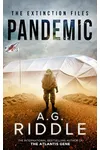
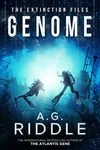
The Recommended Reading Order
If you are ready to jump into A.G. Riddle’s high-stakes techno-thriller, the recommended reading path is simple and direct. The Extinction Files is a completed duology, meaning the publication order and chronological order match perfectly. For the best experience, you must read the two books in sequential order:
- Pandemic (Book 1, 2017)
- Genome (Book 2, 2017)
Because the second book, Genome, picks up only a few weeks after the dramatic conclusion of Pandemic, skipping ahead is highly discouraged. The sequel relies heavily on character development, unresolved mysteries, and the world-building established in the first installment. Reading them out of order will spoil major twists and leave you thoroughly confused about the motivations of key factions.
What to Know Before You Start
Before diving into this fast-paced thriller, there are a few key elements that will help you appreciate the depth of A.G. Riddle's narrative. The series blends real-world epidemiology, cutting-edge genetics, and complex historical references to create a terrifyingly plausible scenario. Perfect for fans of Michael Crichton and Dan Brown, it pairs detailed scientific concepts with global conspiracy networks.
At the center of the conflict is a secretive organization known as the Order of Citium. Riddle drew inspiration from real-world history to construct this group, basing its name on the ancient Greek city-kingdom of Kition (Citium) in Larnaca, Cyprus, and the philosopher Zeno of Citium, who founded Stoicism around 300 BC. In the universe of the Extinction Files, this faction acts as an elite cabal that believes humanity has stagnated. They argue that controlled catastrophes are necessary to force rapid genetic evolution and societal progress, presenting a chilling, utilitarian philosophy that conflicts directly with our protagonists' values.
The books are also notable for their dual-narrative structure. On one side, you have a detailed, procedural medical mystery focused on Dr. Peyton Shaw and the CDC as they struggle to contain a deadly pathogen. On the other side, you follow Desmond Hughes in a fast-paced psychological thriller as he battles retrograde amnesia and tries to uncover his own involuntary connection to the outbreak. These two perspectives eventually collide, driving the plot forward at breakneck speed.
Detailed Book-by-Book Breakdown
1. Pandemic (April 2017)
The story begins with a terrifying outbreak in Kenya. A lethal, Ebola-like virus is spreading rapidly, prompting the World Health Organization and the CDC to deploy Dr. Peyton Shaw, a brilliant and dedicated epidemiologist. Peyton is tasked with finding the source of the outbreak and containing it before it can spark a global disaster. However, as she investigates the ground zero site, she finds disturbing evidence that the virus is not a natural mutation. It is a biological weapon, designed with surgical precision and distributed intentionally. Her race to stop the virus takes her from the frontlines of the hot zone to the halls of political power.
Meanwhile, in Berlin, venture capitalist Desmond Hughes wakes up in a luxury hotel room with no memory of who he is. On the floor lies a dead body, and the police are closing in. Desmond finds clues left behind by his former self, indicating that he is somehow tied to a global conspiracy and must find Dr. Peyton Shaw. As the pathogen begins to crop up in major cities around the globe, Desmond must piece together his fragmented memory while escaping hostile operatives who want him dead. His journey forces him to confront the dark reality of his past associates and the secretive Order of Citium.
2. Genome (October 2017)
Picking up shortly after the events of the first book, the global population is reeling from the initial outbreak. Although a vaccine was successfully deployed to halt the immediate threat of the pandemic, a new and more insidious problem emerges: the vaccine contained advanced nanites that are now dormant in the bloodstream of millions. The Order of Citium is working relentlessly to update the control software for these nanites, which would give them unprecedented power to reshape the human population.
In Genome, the struggle shifts from containment to a race to decode a hidden message buried deep within human DNA. Peyton Shaw and her mother, Lin Shaw—whose shifting loyalties to the Citium create intense family drama—work to reconstruct the research of a deceased geneticist who mapped ancestral human genomes. Meanwhile, Desmond is captured by the ruthless Yuri Penchenko and must undergo dangerous memory-retrieval processes to unlock the secrets of "Rendition" and the mysterious "Looking Glass" project. The novel delves deeper into the philosophical questions of human evolution, genetic manipulation, and the ethical boundaries of science, culminating in a dramatic conclusion in Antarctica.
Themes and Character Dynamics
At its core, the duology explores the ethics of genetic manipulation and the moral dilemmas of modern science. Riddle places his characters in situations where they must choose between the greater good of species survival and the preservation of individual human rights. The Order of Citium believes that their actions are justified to ensure the long-term survival of the human species, challenging readers to consider the limits of scientific intervention.
The relationship between Peyton and Desmond anchors the high-stakes narrative. Peyton's logical, analytical approach as a scientist balances Desmond's chaotic search for identity. Their trust is constantly tested as Desmond's past actions are revealed, adding a strong layer of interpersonal tension to the global threat. Supporting characters, such as the government operative Avery and the antagonist Yuri Penchenko, add depth to the power struggle, ensuring that the conflict feels grounded in realistic geopolitics.
Continuity, Spin-Offs, and Riddle's Connected Works
One of the most common questions readers ask is whether the Extinction Files is connected to A.G. Riddle’s other popular series, such as The Origin Mystery (which begins with The Atlantis Gene) or The Long Winter trilogy. The answer is no: The Extinction Files is a self-contained duology set in its own distinct universe. It does not share characters, factions, or scientific lore with his other books.
Additionally, there are no spin-offs, short stories, or companion novels associated with the series. While Riddle frequently explores themes of human survival, ancient conspiracies, and advanced technology across all of his writing, you can read Pandemic and Genome without needing to have read any of his other works first. Furthermore, although Riddle’s novels Departure and The Atlantis Gene have been optioned for film and television adaptations by major Hollywood studios, the Extinction Files has not been optioned and remains purely a literary duology.
Chronological vs. Publication Order Details
For those looking to purchase these books, they are widely available as individual paperbacks, ebooks, and audiobooks (narrated by Stephen Mendel). In 2023, Riddle released a complete digital box set containing both novels under the title The Extinction Files: The Complete Series. If you purchase the box set, the books are already pre-arranged in their proper chronological and publication order, making it a convenient option for readers who want to tackle the entire story in one sitting.