
The Banished Lands Reading Order: Where to Start
Welcome to the Banished Lands, a sweeping fantasy realm where ancient giants once ruled, talking crows spy from the trees, and the forces of angels and demons wage a silent, devastating God-War. British author John Gwynne has crafted one of the most beloved modern epic fantasy settings, combining classic heroic fantasy tropes with the gritty realism of historical shield-wall combat.
To experience this story as intended, you should read the books in publication order. The overall Banished Lands saga is split into two distinct, successive series. Because the second series takes place 130 years after the first and deals directly with the aftermath of its conclusion, starting with the sequel trilogy will immediately spoil the major plot twists, character deaths, and the ending of the original quartet. Here is the recommended reading sequence:
- The Faithful and the Fallen Quartet (Start here with Malice)
- Of Blood and Bone Trilogy (The direct sequel series set 130 years later)
1. The Faithful and the Fallen Quartet (2012–2016)
This is the core series that launched John Gwynne's career. It introduces us to the Banished Lands, the mythology of the God-War between Elyon (the creator) and Asroth (the lord of the fallen), and a prophecy concerning the avatar of each side: the Bright Star and the Black Sun. The story follows Corban, a young smith's son who wants to be a warrior, alongside a shifting cast of characters across the land.
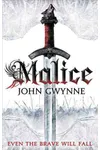
- Malice (2012): The story begins with Corban as he undergoes his passage to manhood, while whispers of a giant uprising and a looming prophecy begin to destabilize the kingdoms. Malice won the 2013 David Gemmell Morningstar Award for Best Fantasy Newcomer.
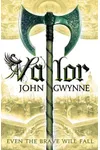
- Valour (2014): (Published as Valor in the US). The war has broken out in earnest, and alliances shatter. Corban is forced to flee his home and learn what it truly means to lead. This book was shortlisted for the 2014 David Gemmell Legend Award.
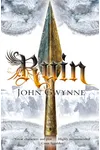
- Ruin (2015): The stakes reach new heights as the Black Sun's forces advance. The point-of-view cast expands to fourteen characters, deepening the emotional scale and highlighting the horrors of war. This book was shortlisted for the 2015 David Gemmell Legend Award.
- Wrath (2016): The final, action-packed showdown that wraps up the main character arcs, bringing the prophecy of the Bright Star and the Black Sun to its devastating, high-stakes conclusion. This book was shortlisted for the 2016 David Gemmell Legend Award.
2. The Sequel Trilogy: Of Blood and Bone (2018–2020)
Once you finish the main quartet, you can move directly to the sequel trilogy. Set roughly 130 years after the events of Wrath, the world has shifted. The Ben-Elim (angels) and the Kadoshim (demons) now walk the land openly, and humanity finds itself caught in the middle of their ongoing struggles. While it features a brand-new cast of POV characters, the legacy of Corban and his companions looms large as historical myth.
- A Time of Dread (2018): A new threat arises in the Banished Lands as the order established at the end of the original quartet begins to fracture. We meet new protagonists, including Drem, a hunter's son, and Riv, a warrior-in-training in the fortress of the Ben-Elim.
- A Time of Blood (2019): The Kadoshim prepare for a grand return, forcing our new heroes to flee across the Banished Lands to warn the remaining human factions of the oncoming storm.
- A Time of Courage (2020): The definitive conclusion to the entire Banished Lands saga. Humanity, giants, and remnants of the angelic forces make a final stand to prevent Asroth and the Kadoshim from claiming total dominion over the world.
Publication vs. Chronological Order
Fortunately for readers, the publication order of these books matches their internal chronology. There are no prequel novellas or side stories that disrupt the flow. Simply read the books in the order they were written. Reading Of Blood and Bone before the core quartet is highly discouraged, as the very setup of A Time of Dread reveals which characters survived, who won the final battle in Wrath, and how the political landscape of the Banished Lands was permanently altered.
What to Know Before You Start
Before you pick up Malice, here are a few things to keep in mind to enhance your reading experience:
- Pacing and Style: Malice is a slow-burn introduction. It takes time establishing the world, the heavy lore, and the large cast of characters. However, once the shield walls clash and the plot picks up in the final third of the book, the pacing accelerates drastically and rarely slows down for the remainder of the seven-book saga.
- Norse and Celtic Influence: Gwynne is an avid historical reenactor and viking enthusiast. The world-building is heavily inspired by Celtic and Norse mythology, complete with giant clans, heavy iron weaponry, and shield-wall tactics that feel incredibly grounded and authentic.
- The POV Structure: The series uses a multi-POV format (similar to George R.R. Martin's A Song of Ice and Fire). Some characters are heroic, some are villainous, and others are morally complex figures caught in the middle. Seeing the same conflict from opposing sides is one of the series' greatest strengths.
- Animal Companions: If you love animal companions in fantasy, you will adore this series. From massive wolvens (huge, wolf-like creatures) to talking crows and loyal hounds, the animal companions are major characters in their own right, and their bonds with the human cast form the emotional heart of the story.
Are His Other Books Connected?
It is worth noting that John Gwynne's other major series, The Bloodsworn Saga (comprising The Shadow of the Gods, The Hunger of the Gods, and The Fury of the Gods), is set in a completely separate Norse-inspired world called Vigrið. It has no connection to the Banished Lands, meaning you can read it before or after your journey through The Faithful and the Fallen without worrying about spoilers or continuity.