
The Recommended Reading Order for Fallen Blade
Kelly McCullough’s Fallen Blade series is a six-book epic fantasy saga that blends the gritty, cynical tone of classic hardboiled detective noir with traditional sword-and-sorcery elements. Fortunately for readers, the reading order is straightforward. The publication order aligns perfectly with the chronological progression of the plot. There are no prequels, side novellas, or external short stories that you need to seek out; the entire story is told sequentially across the main six novels. Attempting to read them out of order will result in major spoilers, as Aral's personal growth and the overarching political and theological conflicts build directly from one book to the next.
Here is the recommended reading path for the series:
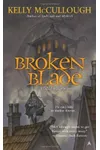
1. Broken Blade (2011)
The series opens by introducing us to Aral Kingslayer, once an elite assassin—a Blade—dedicated to Namara, the goddess of justice. Since her temple was destroyed and Namara was murdered six years prior, Aral has descended into severe alcoholism and works under a false identity as a "shadow jack" (a low-level mercenary and smuggler) in the corrupt city of Tien. Accompanied by his familiar Triss, a sentient living shadow, Aral is hired by a mysterious woman, Baroness Maylien Dan Marchon, for a job that pulls him back into the lethal web of politics and forces him to confront his painful past.
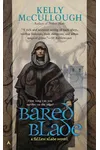
2. Bared Blade (2012)
Aral's attempt to return to a quiet life is short-lived. In this second installment, Aral and Triss intervene to protect two young women at a local tavern that doubles as his office. This minor action spirals into a deadly conflict over a missing magical artifact. With multiple factions, including foreign powers and non-human races, vying for the item, Aral must navigate a labyrinth of conspiracies to prevent an all-out war while continuing to struggle with his identity and path to recovery.
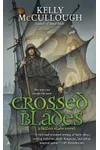
3. Crossed Blades (2012)
The past strikes closer than ever when Jax Seldansbane, a fellow former Blade and Aral’s onetime fiancée, arrives with a desperate plea. The forces responsible for the destruction of their order and the death of Namara are active again. Jax needs Aral's help to rescue her new lover and their students from the fanatical Hand of Heaven. This mission forces Aral to confront deep personal betrayals and realize that the fall of his goddess was orchestrated by someone he once trusted completely.
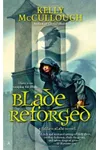
4. Blade Reforged (2013)
Aral has begun to reclaim his sobriety and sense of purpose, aided by his allies and his complicated relationship with Baroness Maylien. However, when he learns that a loyal friend from his darkest days has been imprisoned by Maylien's uncle, King Thauvik, Aral must act. The rescue mission is deeply personal; it was Aral's slaying of Thauvik's half-brother that earned him the name "Kingslayer." Aral must return to the heart of the kingdom and embrace his destiny, recognizing that he cannot run from what he was born to do.
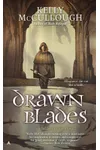
5. Drawn Blades (2014)
Aral is sought out by Siri the Mythkiller, a legendary assassin who once rivaled him and earned the title of First Blade of Namara. Siri, who is also Aral’s former lover, needs his aid on a perilous journey into the ancient Sylvani Empire. As they travel into territories controlled by non-human species, Aral faces the ultimate test of whether he can save Siri from the darkness consuming her or if he will be dragged down into the abyss along with her.
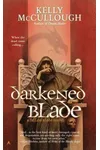
6. Darkened Blade (2015)
Nine years after Namara’s death, the goddess herself appears to Aral in a dream, demanding ultimate justice for her murder and the destruction of her temple. In this climactic series finale, Aral must gather the surviving remnants of his order, unite with Triss, and face down the ultimate architect of their ruin: Heaven’s Son. The book brings the overarching theological war and Aral's long path toward redemption to an epic, satisfying conclusion.
Understanding the Fallen Blade Universe and Lore
One of the most praised aspects of McCullough's series is its distinctive magic system and setting. Unlike many Eurocentric fantasy settings, the world of Fallen Blade draws heavy inspiration from medieval Asian cultures, visible in its social structures, geography, and honor systems. The magic system is centered on the concept of familiars. While ordinary mages might bond with magical beasts like gryphinxes, the Blades of Namara were uniquely bonded to Shades—sentient, living shadows. Triss is not merely a pet or a tool; he is a fully realized character with his own personality, humor, and tactical utility, serving as Aral's partner, conscience, and spy.
The underlying conflict of the series is both political and divine. The murder of the goddess of justice threw the pantheon and the mortal kingdoms into disarray, leading to the rise of corrupt religious authorities like the Hand of Heaven. The narrative is as much a detective mystery as it is an epic fantasy, with Aral utilizing tradecraft, stealth, and investigation rather than grand battlefield sorcery to achieve his goals.
What to Know Before You Start
Before diving into the books, readers should be aware of a few key elements of the series' tone and structure:
- Noir Influence: The series relies heavily on hardboiled detective tropes. Aral’s narration is cynical, introspective, and filled with dry humor, making the books feel like a classic detective novel set in a fantasy world.
- Character-Driven Scale: While the stakes eventually escalate to involve the fate of empires and gods, the narrative remains tightly focused on Aral's personal perspective. It is a story about trauma, addiction, recovery, and finding a reason to live.
- Mature Themes: The books deal realistically with alcoholism, depression, and the moral gray areas of assassination. It also features casual, positive representation of diverse sexualities, including Aral's own bisexuality, which is treated as a normal aspect of the world.
- Standalone vs. Serial: Each book contains a self-contained mystery or mission that is resolved by the final page, but they are linked by a strong serial continuity. You should not skip any books, as the character development and overarching plot will not make sense otherwise.
For readers looking for a complete, fast-paced fantasy series with excellent world-building, a unique magic system, and a deeply human protagonist, Kelly McCullough's Fallen Blade is a modern classic that delivers a consistently high-quality experience from start to finish.