









The Recommended Reading Order
The Family d’Alembert series is a serialized space opera that follows a linear chronological progression. Because the characters age, their relationships evolve, and the political landscape of the Earth Empire shifts from book to book, it is highly recommended to read them in order. Starting anywhere else will leave you spoiled on major character arcs and empire-shaking twists.
While the internal chronology matches the publication sequence, there are a few cataloging quirks you should know about before diving in. Notably, some database lists (including our local database) swap the order of the fifth and sixth books. Rest assured, reading them in their official order keeps the narrative flow seamless. Here is the recommended path through the galaxy:
- The Imperial Stars (1976) – The adventure begins as Jules and Yvette d’Alembert investigate a conspiracy threatening the Earth Empire's throne. This is the only book directly based on E.E. 'Doc' Smith's original 1964 novella.
- Stranglers' Moon (1976) – The siblings head to a lunar colony to investigate a series of bizarre assassinations, only to find themselves trapped in a deadly game of survival.
- The Clockwork Traitor (1977) – The d'Alemberts face high-tech saboteurs and a dangerous robotic conspiracy designed to destabilize the imperial government.
- Getaway World (1977) – A search for a missing imperial minister leads the family's undercover circus troupe to a wild, lawless planet populated by criminals and outcasts.
- Appointment at Bloodstar (1978) – Also published under the title The Bloodstar Conspiracy, this fifth entry sends the agents undercover to prevent a rebel faction from weaponizing an unstable star system.
- The Purity Plot (1978) – In the sixth book, Jules and Yvette must stop a fanatical xenophobic movement aiming to cleanse the Empire of non-terrestrial influences.
- Planet of Treachery (1981) – The agents go deep undercover on a brutal prison planet to stop a massive jailbreak orchestrated by the Empire's worst enemies.
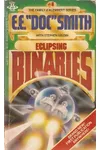
- Eclipsing Binaries (1983) – A web of double agents and political schemes puts the d’Alembert family's loyalties to the ultimate test.
- The Omicron Invasion (1984) – The Empire faces an unprecedented threat from external invaders, forcing SOTE and the d'Alemberts into full-scale military intelligence operations.
- Revolt of the Galaxy (1985) – The explosive finale of the series, where all the lingering threads, political tensions, and interstellar conflicts culminate in a galaxy-wide rebellion.
A Database Caveat: The First Four Books
In some library catalogs and online book databases, you might notice a placeholder listing titled Imperial Stars, Stranglers' Moons, The Clockwork Traitor, Getaway World. While this looks like an omnibus edition, no such official single-volume compilation was ever widely published in print. These were released as individual mass-market paperbacks by Pyramid Books in the 1970s. If you encounter this combined listing, it is simply a database grouping for the first four books of the series; you will still need to acquire and read them as separate novels.
Behind the Scenes: From Novella to Ten-Book Saga
The history of how this series came to be is as fascinating as the books themselves. It began in 1964 when legendary space opera pioneer E.E. 'Doc' Smith (famous for the Lensman and Skylark series) published a novella titled 'The Imperial Stars' in the May issue of Worlds of If magazine. It was the last piece of fiction Smith published before his death in 1965.
Nearly a decade later, in 1974, editor Roger Elwood commissioned science fiction author Stephen Goldin to expand Smith’s original novella into a full-length novel. Goldin did not stop there—he used Smith's core concept of circus performers moonlighting as imperial secret agents to build an entire ten-book story arc. While book covers and publishers frequently credited E.E. 'Doc' Smith alongside Stephen Goldin to attract fans of classic space opera, Goldin was the sole author of books two through ten. He took Smith's initial framework and crafted a highly entertaining universe that is entirely his own.
What to Know Before You Start
To fully enjoy the Family d'Alembert, it helps to adjust your expectations to the era in which it was written. This is classic, fast-paced pulp sci-fi. Do not expect hard scientific realism; instead, prepare for a fun, campy ride featuring laser blasters, personal flying cars, over-the-top villains, and dramatic circus stunts. Think of it as 'Tarzan in space' meets James Bond.
The central premise hinges on the d’Alembert family's origin. They hail from DesPlaines, a high-gravity planet. Living on such a dense world has granted them superhuman strength, speed, and reflexes relative to standard humans. This physical superiority makes them world-class aerialists in the 'Circus of the Galaxy'—the perfect cover for their real work as agents of SOTE (Service Of The Empire), the imperial intelligence agency.
The Modern Reboot: Agents of ISIS
If you find it difficult to track down physical copies of the original 1970s paperbacks, there is a modern alternative. In 2010, Stephen Goldin completely rebooted and re-imagined the series under the title Agents of ISIS (Agents of the Imperial Special Investigation Service).
Goldin rewrote the books to remove the E.E. 'Doc' Smith naming constraints and update the technology for a modern audience, publishing all ten volumes in 2010. The first book, Tsar Wars, replaces The Imperial Stars. The remaining nine books correspond directly to the original novels, with updated titles such as Treacherous Moon (replacing Stranglers' Moon) and Robot Mountain (replacing The Clockwork Traitor). Reading the Agents of ISIS series offers the exact same narrative progression, but in a revised, contemporary format that is much easier to find on modern e-readers.