
The Recommended Reading Path
For readers diving into the Father Koesler mysteries, the recommended path is straightforward: read the books in their original publication order. Author William X. Kienzle wrote the series in real-time, meaning that each book is set roughly in the year it was published. As a result, the publication order and the chronological order are identical. Reading the books sequentially allows you to watch Detroit evolve, follow the long-term character arcs of Father Koesler and his police allies, and see the changing landscape of the post-Vatican II Roman Catholic Church.
Father Koesler Publication & Chronological Order
Here is the complete chronological sequence of the 24 novels in the Father Koesler series. Use this list to track your progress through the detective's career:
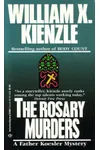
- The Rosary Murders (1979) – The iconic debut. A serial killer targets priests and nuns in Detroit, leaving a black rosary with each victim. The mystery deepens when the killer confesses to Father Koesler, leaving the priest bound by the sacred seal of confession.
- Death Wears a Red Hat (1980) – Decapitated heads begin appearing on church statues across Detroit, presenting Father Koesler and the police with a gruesome puzzle that touches on black magic and racial tensions.
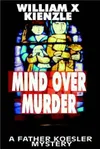
- Mind Over Murder (1981) – When an unpopular monsignor mysteriously disappears, Father Koesler looks into the lives of several suspects who all had a motive for wanting him gone.
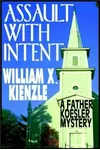
- Assault with Intent (1982) – A conspiracy to assassinate or discredit local Catholic clergy leaves Father Koesler scrambling to find the perpetrators before he becomes the next target.
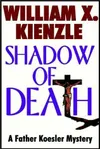
- Shadow of Death (1983) – Father Koesler travels to Rome on business, but the shadow of murder follows him when a cardinal is targeted for death.
- Kill and Tell (1984) – The murder of a prominent Detroit businessman leads Koesler to look into family secrets, illicit affairs, and corporate greed.
- Sudden Death (1985) – The death of a professional football player for the Detroit Cougars forces Koesler to tackle the high-stakes, pressure-filled world of professional sports.
- Deathbed (1986) – Set in a Catholic hospital in Detroit, this entry explores a series of suspicious deaths and administrative conspiracies.
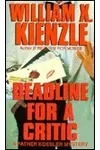
- Deadline for a Critic (1987) – A harsh and universally disliked performing arts critic is murdered, leaving behind a long list of artists, actors, and writers who wanted him dead.
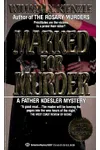
- Marked For Murder (1988) – A killer targeting former priests prompts Koesler to investigate the emotional and social impacts of leaving the priesthood.
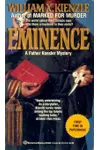
- Eminence (1989) – A controversial, charismatic monk who claims to perform miracles becomes the focal point of a media storm and a deadly plot.
- Masquerade (1990) – Father Koesler attends a conference for mystery writers, only for real-life murder to disrupt the literary games.
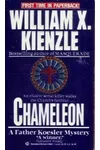
- Chameleon (1991) – A master of disguise and deception is committing murders across Detroit, challenging Koesler's ability to see through lies.
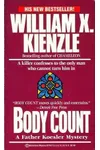
- Body Count (1992) – When a parish priest is murdered, Father Koesler finds himself examining the internal politics of the parish and the archdiocese.
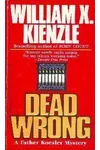
- Dead Wrong (1993) – Koesler investigates a cold case from the 1960s involving a wealthy Detroit family and a forbidden romance.
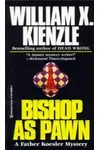
- Bishop as Pawn (1994) – A newly appointed bishop becomes a target, forcing Koesler to intervene in a web of diocesan power struggles.
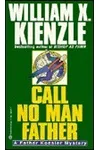
- Call No Man Father (1995) – As Detroit prepares for a high-profile papal visit, rumors of a controversial pronouncement lead to rising tensions and murder.
- Requiem for Moses (1996) – A retired rabbi and close friend of the Detroit community becomes involved in a mystery that requires Koesler's unique interfaith perspective.
- The Man Who Loved God (1997) – Koesler investigates the suspicious death of a wealthy philanthropist who left his fortune to the Church.
- The Greatest Evil (1998) – Father Koesler faces a modern threat as he tries to solve a murder connected to the rising influence of local street gangs and organized crime.
- No Greater Love (1999) – A tragic fire at a historic Detroit church leads Koesler to suspect arson, triggering a hunt for a hidden killer.
- Till Death (2000) – A mystery involving married former priests and the theological debate surrounding clerical celibacy.
- The Sacrifice (2001) – This story follows a former Anglican priest's conversion to Catholicism and the lingering resentments that culminate in vengeance.
- The Gathering (2002) – The final book in the series. Old friends and enemies gather for a reunion that turns deadly, serving as a fitting farewell to Father Koesler.
What to Know Before You Start
William X. Kienzle was a Roman Catholic priest himself, ordained in 1954. He served Detroit parishes for 20 years before leaving the priesthood in 1974 due to disagreements with the Church's strict stances, particularly on remarriage. His real-life experience infuses the Father Koesler books with unparalleled authenticity. Rather than presenting a sanitized version of church life, Kienzle uses the mystery format to debate serious issues, including the reforms of the Second Vatican Council (Vatican II), the role of women in the church, clerical celibacy, and the seal of confession.
The setting of Detroit is just as important as the religious themes. The books capture the city's gritty reality from the late 1970s through the start of the 2000s, reflecting its economic struggles, racial dynamics, and close-knit neighborhood parishes. Throughout the series, Father Koesler is aided by a wonderful recurring cast, most notably Walter Koznicki, a dedicated Detroit police inspector, and Alonzo Tully, a sharp lieutenant. Their friendship and mutual respect form the emotional core of the series.
Where to Start & Standalone Suitability
If you want the best possible experience, start with the first novel, The Rosary Murders. It establishes the central characters, Koesler's relationship with Inspector Koznicki, and the distinct Detroit setting. However, because each book features a self-contained mystery, you can pick up almost any book in the middle of the series and enjoy it as a standalone. The main caveat is that reading them out of order will spoil the gradual aging of the characters, changes in their career positions, and the shifting social issues of the passing decades.
Adaptations, Spin-offs, and Co-authored Books
The success of the debut novel led to a major feature film adaptation. The Rosary Murders was released in 1987, starring Donald Sutherland as Father Robert Koesler and Charles Durning as Father Ted. William X. Kienzle actively participated in the adaptation, co-writing the screenplay alongside legendary crime novelist Elmore Leonard and director Fred Walton. The film was shot on location in Detroit, capturing the authentic visual grit of the city and its historic churches.
There are no official spin-offs, short story collections, or co-authored books in the Father Koesler universe. Kienzle wrote every word of the 24 novels himself, and the series ended permanently after his death in 2001, with the final book, The Gathering, published posthumously in 2002.