
How to Read the Fethafoot Chronicles
Written by Indigenous Kabi Kabi author Pemulwuy Weeatunga (the pen name of John M. Wenitong), the Fethafoot Chronicles is a unique ten-book historical fantasy series that blends authentic Aboriginal Australian history, Dreamtime spirituality, and paranormal adventure. Because each installment follows a standalone mission of the Fethafoot Clan—spirit-warriors who travel instantly using sacred Songlines—readers have two main ways to approach the series: by publication order or by the historical era in which the books are set.
Option 1: Publication Order (Recommended)
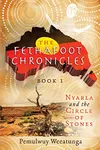
Reading the series in publication order is the easiest way to experience the evolution of Weeatunga's storytelling. Although the books jump wildly across a 50,000-year timeline, publishing them in this sequence allowed the author to reveal the lore, spiritual rules, and capabilities of the Fethafoot Clan gradually. For the best starting point, begin with the first published book, Nyarla and the Circle of Stones.
- Nyarla and the Circle of Stones (2015)
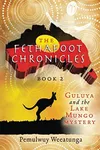
- Guluya and the Lake Mungo Mystery (2015)
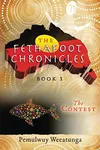
- The Contest (2015)
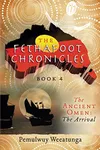
- Ancient Omen: The Arrival (2015)
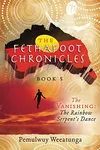
- The Vanishing: The Rainbow Serpent's Dance (2015)
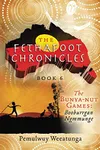
- The Bunya-nut Games: Booburrgan Ngmmunge (2015)
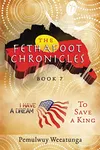
- To Save a King (2015)
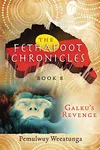
- Galku's Revenge (2015)
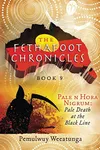
- Pale n Hora Nigrum: Pale Death at the Black Line (2015)
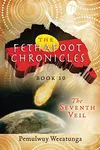
- The Seventh Veil (2016)
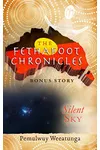
You can also read the two official companion novelettes, Silent Sky (2016) and Tchernaya Creek, at any point after finishing the main series as free bonus entries that expand the universe.
Option 2: Chronological Reading Order
If you want to follow the timeline of Australia and the Fethafoot Clan from the ancient past into the near future, you can read the books chronologically. Keep in mind that some books span multiple eras or frame ancient events within modern investigations, but their primary settings fall into this sequence:
- Guluya and the Lake Mungo Mystery: Explores the deepest ancient history of the continent, linking the Dreamtime and a modern archaeological dig at Lake Mungo (dating back to around 40,000 BP).
- The Bunya-nut Games: Booburrgan Ngmmunge: Set around 2,020 BP (Before Present, or roughly 5 BC) in Darumbal country during a massive tri-annual tribal gathering and harvest.
- The Contest: Set in the ancient era in traditional Kabi Kabi country, focusing on tribal rivalries and games of physical and spiritual prowess.
- Nyarla and the Circle of Stones: Set in 1360 AD. Nyarla, a brave young warrior, is sent by elders to investigate a dark force threatening the Heart-rock people near Uluru.
- Ancient Omen: The Arrival: Set around 240 BP (approx. the 1770s AD), capturing the portents and societal shifts during the first arrivals of European explorers.
- Pale n Hora Nigrum: Pale Death at the Black Line: Set in 1830 AD in Tasmania, focusing on twins Sonni and Bobbi during the infamous Black Line military campaign.
- The Vanishing: The Rainbow Serpent's Dance: Set in 1848 AD, offering an Indigenous perspective on the mysterious final expedition of Prussian explorer Ludwig Leichhardt.
- To Save a King: Set in the 1800s, this global adventure takes a Fethafoot warrior to Louisiana to aid Simon, a bonded slave descended from Haitian kings.
- Galku's Revenge: Set in the modern era, following police detective John Pomeroy as he investigates the mysterious death of an Aboriginal youth named Jimmy Jungarai.
- The Seventh Veil: Set in "tomorrow" (the near future), where ancient sages awaken globally to prevent a looming planetary catastrophe.
What to Know Before You Start
Before diving into the Fethafoot Chronicles, it helps to understand the cultural and spiritual framework that binds these stories together. The Fethafoot Clan—inspired by the real-world Kadaicha or Clever Men of Indigenous traditions—are spiritual protectors of the land. They are tasked by the Great Spirit to maintain balance and protect their people. Rather than walking or sailing, they traverse the continent instantly by walking the Songlines (Dreamtime creation lines), allowing the narrative to move seamlessly between different regions of Australia.
The writing style mirrors traditional Aboriginal oral storytelling. Pemulwuy Weeatunga uses an informal, conversational, and sometimes cheeky tone. This gives the books a distinct voice that contrasts with typical Western historical fiction. The series does not shy away from the harsh realities of colonization, slavery, and frontier conflict, but the core focus remains on resilience, cultural pride, and spiritual strength.
Behind the Chronicles: Pemulwuy Weeatunga
Pemulwuy Weeatunga is the pen name of John M. Wenitong, an elder of Kabi Kabi, South-Sea Islander, Indian, and Sri Lankan heritage. After facing mobility challenges later in life, Wenitong was encouraged by his daughter Yeady in 2011 to write fiction. Drawing on his extensive university-level research in Aboriginal Studies, he spent four years writing the books—including a year spent camping in the Australian bush with his dog Trumby. His goal was to counter negative stereotypes and provide ATSI (Aboriginal and Torres Strait Islander) youth with positive, culturally authentic heroes.