
Where to Start: The Two Reading Paths
If you are planning to dive into Gail Carriger’s gaslight-and-gears universe, the "Parasolverse," you will encounter two primary schools of thought on how to proceed. Because the Finishing School series is a prequel set in the 1850s, it serves as an excellent entry point. Below are the two recommended pathways to guide your journey.
Path 1: The Chronological Order (Recommended for Beginners)
Starting with the Finishing School series is the chronologically correct choice. In this path, you meet Sophronia Temminnick at age fourteen and follow her education in espionage before seeing the long-term consequences of these events play out in Carriger's adult-targeted series. This order keeps the historical timeline clean:
- Finishing School Series: Set in the 1850s, detailing the training of young female intelligencers aboard a floating dirigible academy.
- The Parasol Protectorate: Set in the 1870s, following the soulless Alexia Tarabotti as she navigates vampire and werewolf high-society politics.
- The Custard Protocol: Set in the 1890s, focusing on the next generation of airship explorers led by Prudence, the daughter of Alexia.
Path 2: The Publication Order (Recommended for Lore Lovers)
While Finishing School is the earliest story chronologically, Gail Carriger originally published the five-book Parasol Protectorate series first. Reading in publication order allows you to appreciate the subtle nods, easter eggs, and historical callbacks. In this path, the Finishing School books act as a nostalgic flashback, revealing the origins of the world's spy networks and the youth of secondary characters who appeared in the original series as older adults.
The Core Finishing School Quartet
The core series follows Sophronia Temminnick over her four years of education at Mademoiselle Geraldine’s Finishing Academy. Each book represents one year of schooling, blending traditional lessons in curtsying and tea service with lock-picking, poison administration, and military diversion. Here is the order of the core books:
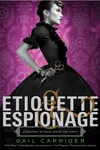
1. Etiquette & Espionage (2013)
We meet fourteen-year-old Sophronia, whose mother is desperate to curb her unladylike tendencies (which include climbing trees and dismantling household machinery). Sophronia is sent to Mademoiselle Geraldine's Finishing Academy, only to discover that the massive, caterpillar-like dirigible floating over Devon is actually a training ground for society spies, assassins, and fixers. Alongside her classmates and the "sooties" (the children working the boiler rooms), she learns to wield her wits and a deadly steel-rimmed parasol.
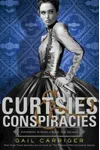
2. Curtsies & Conspiracies (2013)
Sophronia's second year brings greater challenges as the school is joined by the boys from Bunson’s Dampfold Academy for Young Gentlemen (a school for evil geniuses). Tensions rise when a prototype steampunk device—which acts like a prototype wireless communication system—becomes the target of multiple secret factions. Sophronia must balance her growing feelings for Soap, a sootie boiler-boy, with her training as an intelligencer.
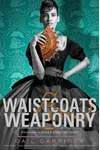
3. Waistcoats & Weaponry (2014)
Now sixteen, Sophronia finds herself caught in a rapidly escalating political struggle involving vampires, werewolves, and the British government. When a close friend is kidnapped and forced into a supernatural pack alignment, Sophronia and her friends must hijack a steam train and sneak across the countryside to execute a daring rescue, proving that they are no longer just students, but active field agents.
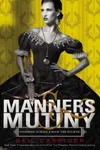
4. Manners & Mutiny (2015)
In the final installment, Sophronia's senior year culminates in open rebellion. Mademoiselle Geraldine’s Finishing Academy comes under siege by conspirators trying to weaponize technology against the supernatural community. Sophronia must use every ounce of her etiquette, espionage, and combat training to save her friends, defend the floating school, and determine her own path in a world that expects young women to remain silent.
Delightfully Deadly: The Direct Spin-offs
For readers who finish the quartet and want to know what happened to Sophronia’s classmates, Carriger penned the Delightfully Deadly novella series. These standalone romantic suspense stories show the academy's graduates working as adult spies in the 1860s and 1870s, bridging the gap between Finishing School and the Parasol Protectorate.
- Poison or Protect (2016): This novella stars Lady Preshea Villentia (Sophronia's rival classmate), now known as "The Mourning Star." As a deadly lady assassin with multiple deceased husbands, she must navigate a delicate political mission and an unexpected romance with a Scottish captain.
- Defy or Defend (2020): This story centers on Dimity Plumleigh-Teignmott, now working under the code name "Honey Bee" as the War Office's most decorative fixer. She is sent to Westminster to investigate a vampire hive in crisis.
- Ambush or Adore (2021): The final novella tells the story of Agatha Woosmoss, the quiet wallflower of Sophronia's group, who has become the greatest spy of her generation. The plot jumps across decades, detailing her elusive career and her relationship with Pillover Plumleigh-Teignmott.
What to Know Before You Start
Gail Carriger’s alternate history relies on a unique blend of Victorian social rules and speculative fiction. Vampires and werewolves are not hidden monsters; instead, they are "registered" members of high society who lead fashion trends, advise the Queen, and control major industries. The comedy of the series comes from the juxtaposition of lethal spy work and strict etiquette—a character might be scolded more for using the wrong tea fork than for knocking out an enemy guard.
Furthermore, technology in this world has evolved rapidly. Mechanical maids, steam-powered carriages, and massive floating airships dominate the landscape. To get the most out of the series, readers should expect a tone that is lighthearted, satirical, and highly focused on fashion, manners, and tea, even during high-stakes action sequences.
Practical Reading Guidance
While the Parasolverse is expansive, the Finishing School books are completely self-contained. You do not need to read the five Parasol Protectorate books to understand Sophronia's story. However, if you plan to read the entire universe, be aware that reading the chronological prequel first (Finishing School) will reveal the origins of characters like Genevieve Lefoux and Lord Akeldama, which alters how you perceive their roles in the later Victorian-era books. The author herself notes that her books are written sandbox-style, meaning you can comfortably begin with the series that most appeals to your preferred genre—whether that is YA steampunk (Finishing School), adult cozy historical fantasy (Parasol Protectorate), or sci-fi space opera (Tinkered Starsong).