
The Recommended Reading Order for Five Find-Outers
When it comes to Enid Blyton’s classic mystery series, the best way to experience the stories is in chronological order, which also matches the original publication sequence. Following the children holiday-by-holiday allows you to watch their detective skills develop, see their character dynamics evolve, and enjoy the recurring jokes and character developments that build from one novel to the next.
Although each book features a self-contained mystery that is fully solved by the final chapter, reading them out of sequence can spoil character progress. Most notably, Frederick 'Fatty' Trotteville's slow evolution from a boastful newcomer into a master of disguise and ventriloquism is a key highlight of the series that is best enjoyed chronologically.
The Official Chronological & Publication Order
Here is the standard chronological list of the 15 novels in the series. Please note that some catalog listings and databases feature minor discrepancies in book sequence (see below for details):
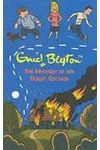
- The Mystery of the Burnt Cottage (1943) – The kids meet for the first time during the Easter holidays, form their club, and solve an arson case.
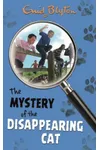
- The Mystery of the Disappearing Cat (1944) – The gang investigates the theft of a prized Siamese cat belonging to a neighbor.
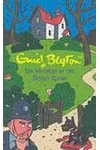
- The Mystery of the Secret Room (1945) – The children find a fully furnished hidden room in an empty house and stumble upon a criminal ring.
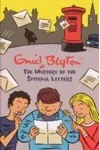
- The Mystery of the Spiteful Letters (1946) – Peterswood is flooded with anonymous spiteful letters, and the Find-Outers track down the culprit.
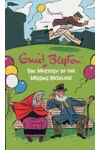
- The Mystery of the Missing Necklace (1947) – Fatty puts his disguise skills to the test while searching for a stolen pearl necklace.
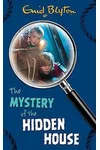
- The Mystery of the Hidden House (1948) – While holidaying, the children unravel a mystery involving a spooky house on a hill.
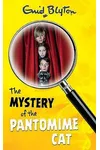
- The Mystery of the Pantomime Cat (1949) – The kids defend a theater manager accused of robbing a safe.
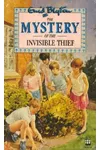
- The Mystery of the Invisible Thief (1950) – A series of burglaries committed by an apparently invisible thief baffles Peterswood.
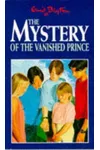
- The Mystery of the Vanished Prince (1951) – A foreign prince is kidnapped from a nearby school, and Fatty goes undercover.
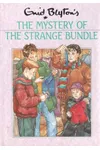
- The Mystery of the Strange Bundle (1952) – The children investigate a robbery where the only stolen item is a bizarre bundle of clothes.
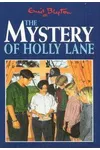
- The Mystery of Holly Lane (1953) – The money of a blind elderly man goes missing, and the children try to find it.
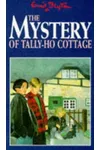
- The Mystery of Tally-Ho Cottage (1954) – A valuable painting is stolen, and the thieves hide out near Peterswood.
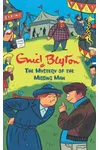
- The Mystery of the Missing Man (1956) – Fatty uses his disguises to track down an escaped convict hiding in a fairground.
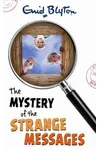
- The Mystery of the Strange Messages (1957) – Mr. Goon receives mysterious anonymous warnings, and the Find-Outers help solve the puzzle.
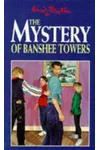
- The Mystery of Banshee Towers (1961) – The final adventure takes the gang to an old castle filled with eerie noises and art thieves.
Understanding Database and Catalog Discrepancies
If you are looking at official library catalogs or local database metadata, you might notice occasional discrepancies. For example, some records mistakenly swap the order of the books, placing The Mystery of the Strange Bundle (originally the 10th book, published in 1952) right after the first book, or listing The Mystery of the Strange Messages in 1956 instead of 1957.
For the best reading experience, you should ignore these scrambled catalog entries and follow the standard chronological list. If you read The Mystery of the Strange Bundle as the second book, it will feel highly jarring because the characters reference skills (like Fatty's advanced ventriloquism) and dynamics that do not exist until much later in the timeline. The standard progression runs smoothly from Burnt Cottage directly to Disappearing Cat.
What to Know Before You Start
The Five Find-Outers series is set in the fictional village of Peterswood, which Enid Blyton modeled after Bourne End in Buckinghamshire, where she lived. Unlike the wild, coast-spanning adventures of Blyton's Famous Five, the Find-Outers focus on localized, deductive sleuthing. The plots are classic whodunits, complete with clues, red herrings, and suspect line-ups.
A major element of the series is the lighthearted conflict between the children and the pompous local policeman, Mr. Theophilus Goon, whom they mockingly refer to as 'Clear-Orf' due to his habit of telling them to clear off. The friendly, supportive counterweight to Mr. Goon is Inspector Jenks (later Superintendent), who always treats the children with respect and takes their findings seriously. The books capture a nostalgic, mid-20th-century view of childhood independence, where kids roam free on bicycles during their school holidays and get home in time for tea.
Spin-offs, Tie-ins, and Further Reading
Enid Blyton wrote exactly 15 novels in this series, and no official sequels or continuations have been authorized. However, fans seeking more Peterswood-style action can look out for the Enid Blyton Solve-It-Yourself Mysteries gamebooks written by Stephen Thraves in the late 1980s and early 1990s. These interactive stories, such as The Five Find-Outers and the Note from Nowhere, allow readers to gather clues and solve cases alongside Fatty and the gang.
If you finish the 15 books and want more classic British children's mysteries, Blyton's own Secret Seven series or her six-book Barney Mysteries (also known as the Rilloby Fair series) are excellent next steps. For modern readers looking for a similar vibe of independent, clever kids solving puzzles, contemporary series like Adventures on Trains by M.G. Leonard and Sam Sedgman or Kat Wolfe Investigates by Lauren St. John make wonderful companions.