

The Recommended Reading Order
If you want to experience the Five Hundred Kingdoms series in the way it was designed to unfold, the best route is to follow the publication order. Although the novels are largely standalone stories that follow different characters across different regions, the world-building, magical rules, and cameos by recurring characters build upon each other. Reading them in order gives you the best understanding of how the universe operates.
Here is the recommended reading order for the main novels and novellas:
- Counting Crows (2003) – A prequel novella originally published in the Charmed Destinies anthology.
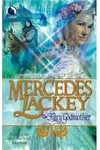
- The Fairy Godmother (2004) – The first full-length novel and the essential entry point to the series.
- Moontide (2005) – A short novella set early in the series, originally published in the Winter Moon anthology.
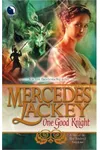
- One Good Knight (2006) – The second novel, focusing on a princess and a dragon.
- Fortune's Fool (2007) – The third novel, heavily drawing from Russian folklore.
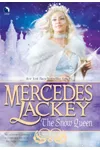
- The Snow Queen (2008) – The fourth novel, reimagining Hans Christian Andersen's classic.
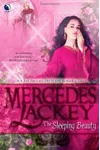
- The Sleeping Beauty (2010) – The fifth novel, twisting the tale of the sleeping princess.
- A Tangled Web (2010 / 2012) – A novella originally published in the Harvest Moon anthology, later released as a standalone ebook. Best read after The Sleeping Beauty.
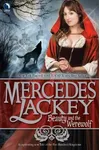
- Beauty and the Werewolf (2011) – The sixth and final novel, combining Red Riding Hood and Beauty and the Beast.
Understanding 'The Tradition'
Before diving into the books, it is crucial to understand the driving force behind the Five Hundred Kingdoms: The Tradition. In this world, magic behaves like an overactive playwright with a penchant for fairy tales. If a young girl is mistreated by her stepmother, The Tradition will push reality to turn her into a Cinderella figure. If a princess is born, she is almost guaranteed to be locked in a tower or cursed to sleep for a hundred years.
Because The Tradition doesn't care about individual happiness and is prone to generating tragic endings, the world requires Fairy Godmothers and Champions. These are trained magic-users who act as stage managers, nudging situations just enough to satisfy The Tradition's demand for a story while ensuring the characters get a happy, or at least safe, resolution. It is a meta-fictional setup that allows Mercedes Lackey to write stories where characters are actively trying to outsmart their own destinies.
A Deep Dive into the Novels
The Fairy Godmother (2004)
Elena Klovis is a young woman who has all the makings of a Cinderella: a cruel stepmother, awful stepsisters, and a life of servitude. However, when the local prince turns out to be an eleven-year-old child, the romantic fairy tale ending is ruined. Realizing that Elena's story has gone off-script, a Fairy Godmother named Madame Rachel steps in and recruits Elena as her apprentice. Rather than waiting to be saved, Elena learns to wield magic herself, guiding others through their destined paths and finding her own unexpected romance along the way.
One Good Knight (2006)
In this second novel, Princess Andromeda of Acadia finds herself trapped in a classic scenario: a dragon has laid siege to her kingdom and demands a royal virgin sacrifice. According to The Tradition, a handsome champion must ride in, slay the dragon, and marry the princess. Andromeda, who is highly intelligent and practical, decides she cannot wait for a hero. She teams up with Sir George, a champion who is tired of mindless dragon-slaying, to find a peaceful, logical way to satisfy The Tradition's demands without anyone getting eaten.
Fortune's Fool (2007)
Shifting away from Western European folklore, this book dives deep into Russian myths. Prince Sasha is the sixth son of the Emperor, and due to his musical talents and gentle nature, he is destined by The Tradition to play the role of the Fortunate Fool. Meanwhile, Katya is the daughter of the Sea King, sent to land to spy on the mortal realm. When their paths cross, they must navigate political intrigue, magical sea creatures, and the rigid scripts of folklore to forge their own destiny.
The Snow Queen (2008)
In the snowy northern reaches, Aleksia is the Snow Queen—but she is not the villain of the story. In this universe, the Snow Queen is a vital protector who regulates the harsh weather and keeps the peace. However, when The Tradition tries to force a young girl named Kay to play the victim to a wicked queen, Aleksia must intervene to prevent a magical catastrophe. She teams up with a champion named Aleksandr to rescue a young man trapped in a dangerous cycle of magical manipulation.
The Sleeping Beauty (2010)
Princess Lily is destined to fall into a magical, century-long slumber after pricking her finger on a spindle. Knowing the dangers of leaving a kingdom undefended for a hundred years, Lily's godmother attempts to redirect The Tradition. This leads to a complex web of curses, thorns, and a prince who must navigate a magical labyrinth. The story explores the mechanics of godmother magic and the lengths to which characters will go to protect their homes from destiny's script.
Beauty and the Werewolf (2011)
Bella is a merchant's daughter who is perfectly content with her quiet life. However, when her father is attacked by a werewolf, she is forced to take action. Bella ends up in the castle of a cursed, shapeshifting nobleman. This book serves as a clever mashup of Beauty and the Beast and Little Red Riding Hood, exploring the nature of curses, wolf-shifters, and the importance of looking past outer appearances.
The Supplemental Novellas
While the novels form the backbone of the series, Mercedes Lackey wrote three key shorter works that add flavor to the universe:
- Counting Crows: This short story introduces Lady Gwynnhwyfar and Sir Atremus. It is a wonderful prequel that showcases the early days of The Tradition's interference in the kingdoms.
- Moontide: A brief story that fits comfortably alongside the first two novels, illustrating the day-to-day challenges faced by the realm's magical protectors.
- A Tangled Web: This novella focuses on a kidnapping plot gone wrong involving Prince Leopold and Persephone, serving as a delightful bridge between the later novels.
Omnibus Editions and Variations
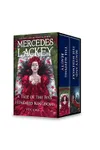
When searching for physical or digital copies of the series, you may encounter titles like Once Upon a Tale or A Tale of the Five Hundred Kingdoms followed by a volume number. These are omnibus editions rather than new stories. For example, Once Upon a Tale compiles the first three novels. Retailers sometimes list A Tale of the Five Hundred Kingdoms Volume 3 (published around 2014), which is simply a two-in-1 collection containing The Sleeping Beauty and Beauty and the Werewolf. Don't let these listings confuse you; they contain the same six core novels listed above.