
The Recommended Reading Order for The Fleet
To experience the full narrative arc of the conflict against the Khalia, you should read the anthologies in their original publication order. The series features a overarching framing narrative that tracks the escalation, stalemate, and eventual resolution of the war, making chronological reading the most satisfying path.
Note that while some online databases omit the first volume from their list of sequels, the self-titled first volume is essential. Here is the recommended reading path:
- The Fleet (1988) – Introduces the war against the Khalia, the nature of the Alliance, and the core military elements through a framing story centered on a propaganda unit documenting the war.
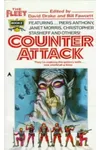
- Counterattack (1988) – The Alliance begins rallying its forces to fight back against the relentless, carnivorous Khalian hordes.
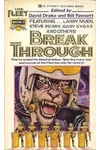
- Breakthrough (1989) – Focusing on tactical victories, deep-space maneuvers, and critical turning points in the war.
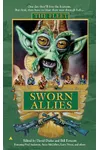
- Sworn Allies (1990) – Explores the fragile and complex political and military alliances necessary to withstand the alien onslaught.
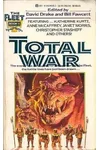
- Total War (1990) – The stakes reach their absolute peak as both internal politics and external battles threaten to tear the Alliance apart.
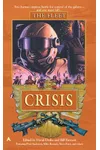
- Crisis (1991) – The final chapter in the Khalian war, bringing the main conflict to a dramatic conclusion.
The Battlestation Spin-Off & Successor Series
Once you finish the main six-volume run, you can continue into the spiritual successor series also edited by David Drake and Bill Fawcett. This two-part "braided anthology" shifts focus to the massive, mobile space station named the Stephen Hawking as it defends the outer borders against a completely new threat: the insect-like Ichtons.
- Battlestation (1992) – Establishes the new setting, the crew of the mobile base, and the start of the conflict with the Ichtons.
- Vanguard (1993) – The second and final volume detailing the defense of the station under extreme pressure.
What to Know Before You Start
Co-edited by Vietnam War veteran David Drake and veteran editor Bill Fawcett, The Fleet was conceived in the late 1980s as a shared-world project. Rather than a single narrative written by one author, it serves as a collaborative sandbox. Drake and Fawcett established the universe, the rules of technology, and the alien threat, then invited the top science fiction minds of the era to populate it with their own characters and stories.
Because of this structure, the tone varies wildly from story to story. You will find gritty, combat-heavy ground warfare written by David Drake, alongside espionage-driven adventures by Anne McCaffrey, complex political intrigues by Margaret Weis, and even lighthearted or satirical pieces by other contributors. This mosaic format makes the series incredibly dynamic, though it means you should expect shifts in style between chapters.
Key Subseries and Factions
To fully appreciate the stories, it helps to understand the main factions involved in the conflict:
- The Alliance: A coalition of human worlds and diverse alien races who have banded together for mutual defense. The Alliance military is composed of the Fleet (space operations) and specialized ground forces.
- The Khalia: Also known as "weasels" due to their appearance, they are a vicious, carnivorous alien race. The Khalia have no concept of mercy, do not take prisoners, and view other species primarily as prey, making peaceful negotiation impossible.
- The Ichtons: The primary antagonists of the follow-up Battlestation series. They are a swarm-like, insectoid threat that challenges the Alliance in the outer regions of explored space.
Practical Reader Advice
Are the books standalones?
Because the series consists of short stories, many individual tales can be enjoyed on their own. However, because the framing stories and the state of the war progress from book to book, reading them out of order will spoil major developments in the galactic conflict. It is highly recommended to read them sequentially.
Where can I find the books today?
While the original Ace Books paperbacks from the late '80s and early '90s are out of print, the series has seen digital reissues by Event Horizon EBooks, making it easy to read on modern e-readers.