
The Recommended Frank Clevenger Reading Order
For the best experience, readers should follow the series in its publication order. Because Dr. Frank Clevenger's personal life, relationships, and struggles with addiction develop significantly from one novel to the next, reading them chronologically is essential. The publication order matches the chronological timeline perfectly, making your reading path straightforward.
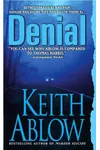
- Denial (1997)
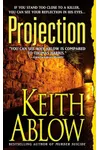
- Projection (1999)
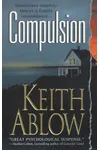
- Compulsion (2002)
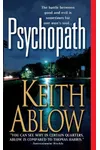
- Psychopath (2003)
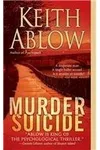
- Murder Suicide (2004)
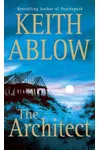
- The Architect (2005)
Detailed Guide to the Frank Clevenger Novels
1. Denial (1997)
The series begins with Denial, which introduces readers to Dr. Frank Clevenger. He is a brilliant forensic psychiatrist practicing in Massachusetts who is deeply haunted by his past. Clevenger battles serious personal demons, including severe addictions to cocaine, alcohol, and gambling, stemming from a childhood dominated by an abusive father. The plot kicks off when the police ask Clevenger to evaluate a homeless, schizophrenic man who has confessed to a series of ritualistic murders. While the authorities are eager to close the case, Clevenger is convinced that the true killer is still at large. As he digs deeper, the killer begins targeting people close to Clevenger, forcing him to confront the heavy price of denial in his own life.
2. Projection (1999)
In the second book, Clevenger is drawn into a high-stakes hostage crisis at a Massachusetts psychiatric hospital. Dr. Trevor Lucas, a former plastic surgeon who was declared criminally insane after committing a series of horrific murders, has led a riot in the secure ward. Lucas takes several staff members hostage and demands to speak only with Clevenger, the man who helped put him away. Once inside, Clevenger is forced to negotiate. Lucas agrees to release the hostages only if Clevenger can solve a mystery from Lucas's past in Baltimore within 24 hours. The investigation forces Clevenger to look at the dark parallels between himself and the psychopaths he treats, reflecting the psychological concept of projection.
3. Compulsion (2002)
Compulsion takes Clevenger to the wealthy enclave of Nantucket, where the local police require his profiling expertise. The infant daughter of billionaire Darwin Bishop has been found dead in her crib. The immediate suspect is Darwin's adopted teenage son, Billy, who shows clear signs of sociopathy. As Clevenger investigates, he realizes the entire family is hiding dark secrets. His professional boundaries blur when he enters a romantic relationship with Julia, Darwin's wife. Getting caught up in the family's psychosexual dynamics triggers Clevenger's own self-destructive impulses, leading to a dangerous climax where he must solve the murder to save his own life.
4. Psychopath (2003)
Following his previous high-profile cases, the FBI recruits Clevenger to track down the Highway Killer, a serial killer who has left twelve victims across twelve different states. The twist is that the killer is a highly intelligent fellow psychiatrist who uses his clinical training to win his victims' trust before murdering them. The killer challenges Clevenger to a public therapy session via letters published in a national newspaper. Clevenger is forced into a dangerous game of psychological chess to stop the killer. Meanwhile, he is also trying to manage his personal life and raise his newly adopted teenage son, Billy, who carries his own emotional baggage.
5. Murder Suicide (2004)
This novel centers on the death of John Snow, a wealthy and brilliant inventor suffering from debilitating epilepsy. Snow is scheduled for a radical, experimental surgery that will cure his condition but erase all of his memories, including his darkest secrets. The night before the surgery, Snow is found dead from a gunshot wound near Massachusetts General Hospital. The police suspect suicide, but Clevenger is brought in and suspects foul play. The investigation reveals a circle of suspects with strong motives, including Snow's bitter wife, a son who loathed him, a mistress, and a business partner eager to claim his inventions. Clevenger must untangle these relationships to find the truth.
6. The Architect (2005)
The final book in the series introduces West Crosse, a famous architect who designs homes for America's wealthiest families. Crosse believes he is not just building structures but is also designing his clients' lives by eliminating toxic people—such as abusive partners or rivals—through murder. The FBI brings in Clevenger and his partner North Anderson to investigate a series of seemingly unrelated deaths. As they close in on Crosse, they discover that his plans are escalating toward a high-profile target at the White House, culminating in a final cat-and-mouse game.
Understanding Frank Clevenger's Character Arc
What sets this series apart is Frank Clevenger himself. Unlike traditional detectives who maintain emotional distance from their cases, Clevenger is a deeply flawed protagonist whose own struggles with substance abuse, gambling, and relationships are central to the narrative. His professional empathy is his greatest tool and his greatest curse, allowing him to understand the minds of killers because he recognizes the potential for darkness within himself. His personal life undergoes massive changes throughout the six books, most notably his decision to adopt Billy, a troubled teenager from his past cases, which forces him to try to maintain stability despite his chaotic nature.
The Real-World Expertise of Keith Ablow
The psychological realism of the series is directly tied to the author's real-life credentials. Keith Ablow is a graduate of Brown University and Johns Hopkins Medical School, and he worked for years as a practicing forensic psychiatrist. He has testified in numerous high-profile trials and evaluated violent offenders. This background allows him to write crime scenes, profiling techniques, and psychiatric conditions with an authenticity that few other fiction authors can match. The series avoids simplistic depictions of good and evil, focusing instead on the complex trauma and mental health issues that drive criminal behavior.
Practical Reading Advice and Standalones
While the mysteries in each book are resolved by the final page, it is highly recommended to read the series in order. If you skip books, you will miss key developments in Clevenger's personal journey, including the progression of his addictions, his shifting relationship with his girlfriend Kathy, and his role as an adoptive father to Billy. Denial is the best starting point and sets the tone for the entire run. The series is ideal for fans of dark, character-driven psychological thrillers such as those by Thomas Harris, Patricia Cornwell, or Jonathan Kellerman.