
The Recommended Reading Order for Frank Einstein
The best way to read the Frank Einstein series is in its original publication order. Written by Jon Scieszka and illustrated by Brian Biggs, this six-book series is structured as a continuous narrative arc. Each installment builds on the previous book's scientific concepts, character dynamics, and the ongoing rivalry between kid inventor Frank Einstein and his classmate nemesis, T. Edison.
Reading the series sequentially ensures you understand the origins of Frank's robot companions, Klink and Klank, and how Frank's inventions evolve over time. Below is the recommended reading path:
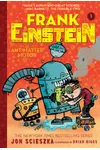
- Frank Einstein and the Antimatter Motor (2014) – The adventure begins as a lightning storm accidentally brings Frank's self-assembled robots, Klink and Klank, to life, just in time to help him construct an antimatter motor.
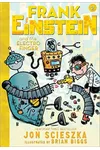
- Frank Einstein and the Electro-Finger (2015) – Frank and Watson turn their attention to electricity and electromagnetism to generate wireless power, while T. Edison schemes to monopolize the town's energy supply.
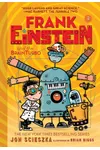
- Frank Einstein and the BrainTurbo (2015) – Exploring human anatomy and neuroscience, Frank invents a device to boost brainpower and athletic ability to help his friend Janegoodall.
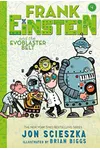
- Frank Einstein and the EvoBlaster Belt (2016) – This installment dives into evolution and genetics as Frank invents a belt that can regress or progress organisms along the evolutionary timeline.
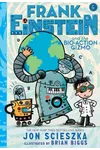
- Frank Einstein and the Bio-Action Gizmo (2017) – Focusing on Earth's ecosystems and ecological biology, Frank fights to protect the local environment from Edison's destructive commercial plans.
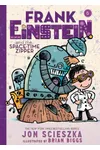
- Frank Einstein and the Space-Time Zipper (2018) – The grand finale of the series tackles astrophysics, cosmology, and the fabric of space and time as Frank tries to close a tear in the universe.
Chronological Order vs. Publication Order
For the Frank Einstein series, publication order and chronological order are identical. The story takes place over a single continuous timeline, beginning with Frank bringing Klink and Klank to life in his grandfather's garage lab. Because each book's plot directly references the aftermath of the previous book, there are no prequel novellas or spin-offs that disrupt this sequence. Readers will get the most enjoyment by starting with the very first book and following the numbering on the spines.
The Core Cast of Characters
To help young readers get acclimated to the wacky world of Midville, here is a breakdown of the primary characters they will meet:
- Frank Einstein: A kid genius, scientist, and inventor who is passionate about finding out how the universe works.
- Watson: Frank's loyal best friend and trusted lab assistant who helps ground Frank's wild ideas in reality.
- Klink: A self-assembled, highly intelligent robot who speaks with a sarcastic wit and loves learning.
- Klank: A larger, goofball robot built from spare parts who is emotionally sensitive, loves hugs, and constantly makes hilarious observations.
- T. Edison: Frank's classmates and bitter rival who wants to steal Frank's inventions for financial gain and personal glory.
- Mr. Chimp: Edison's brilliant, sign-language-using chimpanzee sidekick who often handles the actual engineering behind Edison's schemes.
- Grampa Al: Frank's supportive grandfather who provides the workspace in his antique shop garage and encourages Frank's scientific curiosity.
What to Know Before You Start
The Frank Einstein series is specifically tailored for readers aged 8 to 12 (roughly 3rd to 7th grade), but it has broad appeal for younger kids who enjoy being read to, as well as reluctant older readers. What sets this series apart is its integration of real-world STEM (Science, Technology, Engineering, and Math) principles. Jon Scieszka consulted real scientific concepts for each book, and Brian Biggs's two-color illustrations feature accurate diagrams explaining physics, biology, chemistry, and mechanics.
While the books contain plenty of comedic cartoon violence and sci-fi tropes, they also serve as excellent educational supplements. The tone is fast-paced, humorous, and deeply encouraging of the scientific method: observation, hypothesis, experimentation, and revision. Because of the heavy illustration style and short chapters, it is highly recommended for kids with reading difficulties or those transitioning into full-length chapter books.