
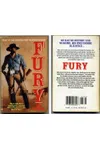



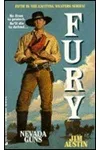
The Recommended Reading Order for the Fury Series
If you want to follow the dusty trails of John Fury from his first shootout to his final showdown in the Nevada desert, the recommended path is simple. Because the series was published in a straightforward sequence that matches the chronological flow of Fury's travels, you should read these books in their original publication order. While each volume acts as a standalone frontier adventure, reading them sequentially allows you to appreciate the subtle development of John Fury's reputation across the West.
Here is the recommended reading order for the series:
- Fury (1992) – The novel that starts it all. We are introduced to the enigmatic John Fury, a quiet but deadly gunslinger with a mysterious past and a heavy Colt Dragoon pistol, as he steps in to protect pioneers from ruthless outlaws and Pawnee warriors on the open plains.
- Blood Ransom (1992) – The stakes get personal in this gripping second installment. After Comanche braves kill a wealthy rancher's son and abduct his daughter, the desperate rancher hires John Fury to track the war party across treacherous territory and bring his daughter home.
- River War (1993) – Taking a break from the arid plains, Fury travels to the waterways of the frontier to help his old trapping partner, Reese Driscoll. Threatened by a dangerous rival gunslinger, Fury must guide Driscoll's family safely up the Missouri River in a deadly battle for survival.
- Last Chance Canyon (1993) – The action shifts to the Sierra Nevada mountains. A ruthless gang of claim-jumpers known as the Hellhounds attempts to seize every gold claim in Last Chance Canyon, forcing John Fury to stand between the greedy outlaws and the honest miners.
- Nevada Guns (1995) – The final ride of the series. John Fury finds himself embroiled in a high-stakes desert showdown when a wagon train is abandoned in the Nevada wilderness due to a cholera scare, forcing the survivors to fight off outlaws and elements alike.
Publication Order vs. Chronological Order
For many multi-decade book series, readers must choose between the order in which books were published and the order in which events actually occur. Fortunately, the Fury series does not present this headache. The publication order and the chronological order are identical. John Fury's journey starts in the central plains in the first book and progresses through various regions of the American West, ending in the Nevada deserts in the final volume.
Because the books were published between 1992 and 1995, they represent a tight, cohesive era of James Reasoner's career. The continuity is lightweight and easy to follow, making a chronological read the most natural and satisfying way to experience the series.
Who is John Fury? Character and Themes
At the center of the series is John Fury, a character who perfectly embodies the classic archetype of the stoic, silent western hero. Reminiscent of iconic characters portrayed by John Wayne or Clint Eastwood, Fury is a man of few words but decisive action. He wanders the untamed frontier with his signature Colt Dragoon, acting as a shield for the weak and a symbol of justice in a lawless land.
James Reasoner's writing elevates the series beyond standard western shoot-'em-ups by grounding the action in historical accuracy. Key themes explored throughout the five novels include:
- Justice vs. Lawlessness: John Fury frequently operates in areas where formal law enforcement is non-existent, demonstrating a personal, unyielding moral code.
- Frontier Survival: The landscape itself is a character, with characters fighting against harsh weather, rugged terrain, and isolation.
- Honor and Loyalty: Whether helping an old friend in River War or defending total strangers, Fury's actions are dictated by his unwavering sense of honor.
The Mystery of the Author: Who is Jim Austin?
When readers first picked up the paperback edition of Fury in 1992, they saw the name "Jim Austin" on the cover. However, Jim Austin is not a real person; it is a house pseudonym (or house name) owned by the publisher. In the paperback boom of the late 20th century, publishers used house names to maintain consistent branding for series, allowing different authors to write under a single moniker if needed.
For the Fury series, all five books were penned by the prolific Texas author James Reasoner. Reasoner is a legendary figure in Western and historical fiction, having written hundreds of novels under dozens of different names. If you enjoy Reasoner's style in the Fury series, you can find his work under other house names and pen names, including:
- Tabor Evans: Used for the long-running Longarm series.
- Jake Logan: Used for the popular Slocum series.
- Hank Mitchum: Used for the Stagecoach Station books.
- Justin Ladd: Used for the Abilene series.
- Jon Sharpe: Used for the Trailsman series.
Sorting Out the "Last Chance Canyon" Confusion
A common point of confusion for collectors of James Reasoner's bibliography involves the fourth book in the series, Last Chance Canyon. In addition to the 1993 Fury novel, James Reasoner also wrote a short story titled "Last Chance Canyon" under his own name.
It is important for readers and collectors to note that the short story and the Fury novel are entirely separate works. The short story does not feature John Fury and is unrelated to the plot of the Hellhounds gang in the Sierra Nevadas. If you are searching for the fourth book in this series, make sure you look for the edition credited to Jim Austin.
What to Know Before You Start
Before you dive into John Fury's adventures, here is some practical guidance to keep in mind:
- Easy Standalones: While a chronological read is recommended, the books are highly episodic. You do not need to worry about cliffhangers; each book wraps up its primary conflict by the final page.
- Collectibility: Published in the mid-1990s as paperback originals, these books can sometimes be tricky to find in physical format, but they remain highly sought-after gems for collectors of classic Western paperbacks.
- Tone: The series is fast-paced, action-heavy, and features classic frontier tropes with a clean, heroic narrative voice.