
A Complete Guide to Robert A. Heinlein's Future History
Robert A. Heinlein’s Future History series stands as one of the most ambitious and influential projects in the history of science fiction. Begun in 1939 with his debut short story, "Life-Line," the series traces a grand historical arc from the mid-20th century up through the 23rd century and beyond. Rather than a single continuous narrative, the Future History is a mosaic of short stories, novellas, and novels that share a common timeline, charting humanity’s expansion into the solar system, societal upheavals, a dark era of religious dictatorship, and the eventual rise of long-lived, genetically selected humans who take to the stars.
The Recommended Reading Path
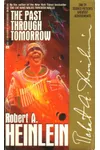
For readers looking to dive into the Future History, deciding where to start can be daunting. Because the core of the series consists of short fiction originally published in various pulp magazines, the absolute best and most cohesive starting point is the omnibus collection The Past Through Tomorrow (first published in 1967). This single volume compiles 21 of the core Future History stories in their chronological sequence, complete with Heinlein's famous timeline chart. If you read this collection, you will get the vast majority of the classic timeline in a single sweep.
However, if the massive omnibus is hard to find or feels too intimidating, you can reconstruct it by reading the three individual collections that form its backbone, followed by a couple of key novels. The recommended sequence for this approach is:
- The Man Who Sold the Moon (1950): This collection contains the earliest stories on the timeline, focusing on the first lunar expeditions, industrial development, and early technological breakthroughs.
- The Green Hills of Earth (1951): This volume covers the expansion of humanity across the solar system, focusing on space miners, pilots, and the daily life of spacefarers.
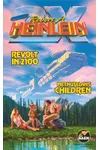
- Revolt in 2100 (1953): This collection details the "Interregnum"—a dark period where the United States falls under the control of a religious dictatorship (The Prophet), followed by a libertarian revolution.
- Methuselah’s Children (1941 / expanded in 1958): This novel is the ultimate bridge. It introduces Lazarus Long and the Howard Families—a group of humans who have achieved extreme longevity through selective breeding—as they are forced to flee Earth in a stolen starship.
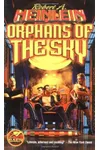
- Orphans of the Sky (1963): Originally published in 1941 as two novellas ("Universe" and "Common Sense"), this novel takes place in the far future of the timeline aboard a giant generation starship where the crew has forgotten their mission and reverted to a primitive, myth-based society. This book is notable because it is not included in The Past Through Tomorrow, meaning it must be read separately.
Publication Order vs. Chronological Order
Heinlein did not write the Future History stories in chronological order. Instead, he wrote stories filling in different eras of his timeline as inspiration struck, returning to fill in gaps over several decades. For instance, the short story "Misfit" was published in 1939—making it one of the very first pieces of the series written—but in the internal timeline, it takes place near the end of the short story era (after the events of Revolt in 2100) and directly serves to introduce the space-construction concepts that set up the Howard Families' flight in Methuselah's Children.
Because of this out-of-order creation, readers face a choice between two main reading orders:
- Chronological Order (Recommended): Reading the stories in the order of the timeline chart. This is the order presented in The Past Through Tomorrow. This gives the reader a front-row seat to the socio-political evolution of Earth and its colonies, allowing you to watch the slow build toward the space age, the decline into theocratic oppression, the subsequent revolution, and the eventual diaspora of the Howard Families.
- Publication Order: Reading the books and stories as they were published. This starts with "Life-Line" (1939) and "Misfit" (1939) and goes through the various magazine releases. This order is highly recommended for academic sci-fi fans who want to track Heinlein’s development as a writer, from his early pulp days to his more complex later novels. However, it can feel disjointed because you will jump from the far future back to the early space age and back again.
The World as Myth: Bridging into the Multiverse
In the 1970s and 1980s, Heinlein's writing took a highly experimental, meta-fictional turn. He introduced the concept of the "World as Myth"—the idea that the act of imagining a universe creates it as a real, physical dimension. Using this premise, Heinlein linked his Future History series with several of his other famous standalone works (such as The Moon is a Harsh Mistress and Stranger in a Strange Land) into a massive, interconnected multiverse.
If you wish to follow this expanded timeline, you should transition into the World as Myth books after finishing the core Future History. The reading order for this late-career sequence is:
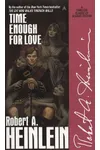
- Time Enough for Love (1973): This sprawling novel serves as the ultimate bridge. It focuses on the later lives of Lazarus Long, revisiting key moments of his past in the Future History and setting up the multiverse-spanning adventures to come.
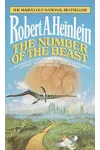
- The Number of the Beast (1980): The book that formally establishes the "World as Myth" universe, where characters construct a device to travel through dimensions, meeting characters from other sci-fi universes.
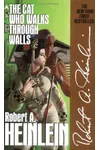
- The Cat Who Walks Through Walls (1985): A story featuring new characters that eventually cross paths with Lazarus Long and characters from The Moon is a Harsh Mistress.
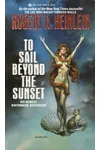
- To Sail Beyond the Sunset (1987): Heinlein’s final novel, told from the perspective of Lazarus Long’s mother, Maureen Johnson, which wraps up the entire Future History and World as Myth cycles.
Practical Reader Advice and Disagreements
One of the most common debates among Heinlein fans is how strictly one needs to adhere to the timeline. Because Heinlein designed the early Future History stories to be sold individually to magazines, almost all the short stories in The Past Through Tomorrow function perfectly well as standalone reads. You do not need deep lore knowledge to enjoy "The Roads Must Roll" or "The Green Hills of Earth."
Looking at the broader sequence, reading order becomes critical. You should not read Time Enough for Love without having read Methuselah's Children first, as you will miss the vital history of the Howard Families. Similarly, the World as Myth novels rely heavily on character cameos, references, and inside jokes that will be completely lost on anyone who hasn't read the early stories, along with major standalones like The Moon is a Harsh Mistress.
It is also worth noting that the timeline has some minor inconsistencies. Heinlein modified dates and details in later printings to keep the stories from feeling dated too quickly. Some stories listed on Heinlein's original timeline charts, such as "The Stone Pillow" (which was meant to cover the rise of the Prophet's dictatorship), were never actually written. Furthermore, the short story "Let There Be Light" is occasionally omitted from certain editions of the collections due to historical publishing rights disputes, although it fits clearly as an early technological tale right after "Life-Line."
What to Know Before You Start
Before diving into Heinlein's future, it helps to understand the socio-political backdrop of the series. The timeline is heavily influenced by Heinlein's engineering background and his evolving political philosophies, shifting from early technocratic optimism to strong libertarian individualism. The stories tackle themes of personal liberty, corporate monopoly, the dangers of religious extremism, and the biological potential of humanity. The tone is classic mid-century sci-fi—intellectual, highly conversational, and deeply focused on the mechanics of both machines and human societies. By starting with The Past Through Tomorrow, you will experience the golden age of science fiction unfolding in its most structured form.