
Where to Begin: The Recommended Reading Path
The Futuristic World of Harmony (written by Jayne Ann Krentz under her futuristic pen name, Jayne Castle) is a sprawling, colorful romantic suspense series. The best way to experience the world of Harmony is to read the books in publication order. While each novel centers on a standalone romance with a resolved mystery, the overall lore of the planet—specifically the mechanics of psychic powers, the rules of the Ghost Hunter guilds, and the secrets of the ancient alien catacombs—builds chronologically from one book to the next.
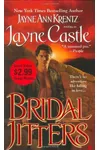
If you want to start at the absolute beginning, seek out the 1999 novella Bridal Jitters (originally published in the Charmed anthology). If you prefer starting with a full-length novel, the official entry point is 2000’s After Dark. Reading in publication order ensures you witness the evolution of Harmony’s society, from its early guild system to the neon-drenched streets of Illusion Town and the dangerous terrain of Rainshadow Island.
The Precursors: St. Helen's Trilogy
Before Jayne Castle fully defined the world of Harmony, she laid the groundwork in three precursor novels set on another Earth colony world called St. Helen's. Published in the late 1990s, these books serve as prototypes for the Harmony universe, featuring similar psychic dynamics and early versions of the world's unique flora and fauna (including the first appearances of dust bunnies). The trilogy includes:
- Amaryllis (1996)
- Zinnia (1997)
- Orchid (1998)
While not strictly required to enjoy the main Harmony series, these books are beloved by completionists and are often grouped under the broader "Curtain Worlds" umbrella—representing the distant colony planets settled by humans who passed through the mysterious energy Curtain.
The Main Harmony: Ghost Hunters & Rainshadow Series
The core Harmony universe is split into two primary threads: the main Ghost Hunters line and the Rainshadow spin-off. However, these series are highly integrated, and reading them in parallel based on release date is strongly recommended. Here is how the timeline unfolds:
The Classic Ghost Hunters Era
This initial run establishes the rules of Harmony, introducing readers to the subterranean alien ruins, the dangerous psychic storms, and the Ghost Hunter guilds that keep the colony safe. The key titles in this era are:
- Bridal Jitters (1999) - A novella introducing the psychic marriage contract dynamics.
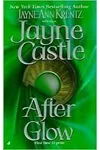
- After Dark (2000) - The first full-length novel, focusing on classic psychic synergy.
- After Glow (2004) - Deepens the mystery of the underground catacombs and ancient alien technology.
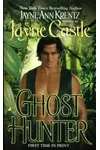
- Ghost Hunter (2006) - Explores the heavy toll and social status of elite guild members.
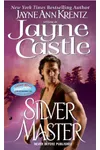
- Silver Master (2007) - Details the dangerous corporate and guild politics of the colony.
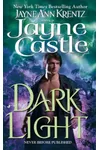
- Dark Light (2008) - Focuses on psychic talents that interact with the planet's unique energy lines.
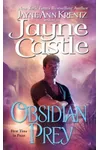
- Obsidian Prey (2009) - Introduces rare, high-stakes amber talents and ancient chambers.
The Rainshadow Island Spin-Off
Starting in 2011, Castle shifted the focus to Rainshadow Island, a mysterious, fog-shrouded sanctuary and containment zone housing dangerous alien lifeforms and psychic anomalies. The Rainshadow books run concurrently with the broader timeline:
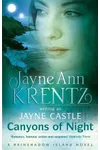
- Canyons of Night (2011) - The transition book that officially establishes the Rainshadow setting.
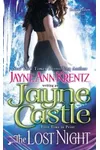
- The Lost Night (2012) - Focuses on the island's unique flora and the secrets of the sanctuary.
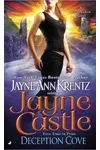
- Deception Cove (2013) - Features a light-talent heroine and crystal mysteries on the coast.
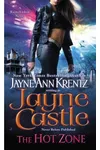
- The Hot Zone (2014) - Explores the dangerous inner zones of the island's preserve.
- Siren’s Call (2015) - Combines psychic siren abilities with the island's deepest secrets.
Illusion Town and the Modern Era
Following the Rainshadow story arc, the series moves to Illusion Town—a glowing, casino-filled oasis built in the middle of a psychic desert. The books from this era integrate elements from both subseries:
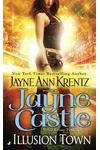
- Illusion Town (2016) - Serving as both Ghost Hunters #8 and Rainshadow #6, this book bridges the two lines.
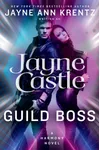
- Guild Boss (2021) - Follows the dangerous underground catacombs of Illusion Town.
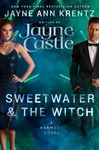
- Sweetwater and the Witch (2022) - Blends fake-dating tropes with corporate espionage and psychic matching.
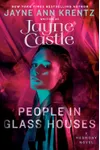
- People in Glass Houses (2024) - Venturing into the Glass House sector of the underworld.
- It Takes a Psychic (2025) - Explores the mysteries of Lost Creek with a para-archeologist and a private investigator.
Crucial Caveat: The Arcane Society Cross-Overs
One of the most unique aspects of Jayne Castle's bibliography is her participation in the Arcane Society crossover events. Jayne Ann Krentz designed the Arcane Society as a secret organization of psychically gifted individuals spanning three distinct historical periods, written under three pen names:
- Amanda Quick (Regency/Victorian historical romance)
- Jayne Ann Krentz (Modern-day contemporary romantic suspense)
- Jayne Castle (Futuristic colony world romance)
While you can read the Harmony books independently, two major storylines are actually the third parts of interconnected trilogies. If you want the complete narrative arc, you must read the books across all three authorships:
The Dreamlight Trilogy
This trilogy follows a cursed family crystal across generations, culminating on the planet Harmony:
- Fired Up by Jayne Ann Krentz (Book 1 - Contemporary)
- Burning Lamp by Amanda Quick (Book 2 - Historical)
- Midnight Crystal by Jayne Castle (Book 3 - Futuristic; also fits as Harmony #7)
The Looking Glass Trilogy
This trilogy tracks the history of a rare psychic phenomenon and its resolution on Rainshadow Island:
- In Too Deep by Jayne Ann Krentz (Book 1 - Contemporary)
- Quicksilver by Amanda Quick (Book 2 - Historical)
- Canyons of Night by Jayne Castle (Book 3 - Futuristic; also fits as Rainshadow #1 / Harmony #8)
What to Know Before You Start
Harmony is a highly distinct setting with a few recurring tropes that readers adore. Before diving in, keep these elements in mind:
- The Curtain: Centuries ago, Earth colonists traveled through a space anomaly called the Curtain. The Curtain closed behind them, trapping them on Harmony with no way to contact Earth. Over time, their technology adapted, and the planet's unique ambient energy unlocked latent psychic abilities.
- Dust Bunnies: These are not lint balls! In Castle’s universe, dust bunnies are six-legged, four-eyed, extremely intelligent alien animals native to Harmony. They look like cute, fluffy balls of fur, but they possess sharp teeth and strong telepathic bonds with their human companions. Almost every protagonist has a loyal dust bunny sidekick.
- Green Quartz and Amber: Harmony's economy and technology run on specialized crystals that channel psychic power. Different types of talents (like Prism talents or Amber talents) are required to cut, charge, and utilize these crystals.