


















The Recommended Reading Order: Publication Sequence
With 38 novels published over the course of nearly six decades, the Gorean Saga (also known as the Chronicles of Counter-Earth) is a massive sci-fi and fantasy undertaking. While the series occasionally shifts narrators and geographical focus, the story develops in a linear timeline. Because the complex political landscape, alien histories, and cultural rules build cumulatively, reading in publication order is the only recommended path for new readers.
Here is the complete publication order of the Gor books by John Norman:
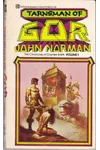
- Tarnsman of Gor (1967)
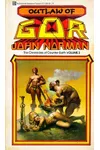
- Outlaw of Gor (1967)
- Priest-Kings of Gor (1968)
- Nomads of Gor (1969)
- Assassin of Gor (1970)
- Raiders of Gor (1971)
- Captive of Gor (1972)
- Hunters of Gor (1974)
- Marauders of Gor (1975)
- Tribesmen of Gor (1976)
- Slave Girl of Gor (1977)
- Beasts of Gor (1978)
- Explorers of Gor (1979)
- Fighting Slave of Gor (1980)
- Rogue of Gor (1981)
- Guardsman of Gor (1981)
- Savages of Gor (1982)
- Blood Brothers of Gor (1982)
- Kajira of Gor (1983)
- Players of Gor (1984)
- Mercenaries of Gor (1985)
- Dancer of Gor (1985)
- Renegades of Gor (1986)
- Vagabonds of Gor (1987)
- Magicians of Gor (1988)
- Witness of Gor (2001)
- Prize of Gor (2008)
- Kur of Gor (2009)
- Swordsmen of Gor (2010)
- Mariners of Gor (2011)
- Conspirators of Gor (2012)
- Smugglers of Gor (2012)
- Rebels of Gor (2013)
- Plunder of Gor (2016)
- Quarry of Gor (2019)
- Avengers of Gor (2021)
- Warriors of Gor (2022)
- Treasure of Gor (2024)
Tarl Cabot vs. Shifting Perspectives: Gorean Subseries
While the primary protagonist and narrator of the series is Tarl Cabot—an English history professor transported to Gor who trains to become a formidable warrior and agent of the Priest-Kings—John Norman frequently shifts the narrative point of view. Understanding these subseries and narrative styles will help you manage expectations as the series progresses.
The Tarl Cabot Novels
The vast majority of the books are written from Tarl Cabot's first-person perspective. These books follow his physical training, philosophical evolution, and active participation in the planetary conflict between the insectoid Priest-Kings and the predatory Kurii. Key entries in his core arc include the opening trilogy, the struggle against the Kurii, and his journeys through the varying cultures of Gor, such as the deserts of the Tahari in Tribesmen of Gor and the northern frozen lands in Beasts of Gor.
The Female-Narrated Chronicles
A significant portion of the saga shifts away from Tarl Cabot to focus on Earth women who are abducted and brought to Gor. These books explore Gorean society, its caste system, and its controversial dominant-submissive relationships from a first-person female perspective. These installments include:
- Captive of Gor (Book 7): Narrated by Elinor Brinton, a wealthy and arrogant heiress from New York City who must adapt to a life of bondage on Counter-Earth.
- Slave Girl of Gor (Book 11): Narrated by Judy Thornton, an Earth woman who struggles to survive after being thrust into the Gorean wilderness.
- Kajira of Gor (Book 19): Narrated by Tiffany Collins, who undergoes rigorous Gorean slave training while navigating local political intrigue.
- Dancer of Gor (Book 22): Narrated by Doreen Williamson, following her journey from Earth captive to becoming a highly trained Gorean dancer.
- Witness of Gor (Book 26): Narrated by Janice, an Earth captive assigned to tend to a mysterious, amnesiac prisoner in the mountain stronghold of Treve.
- Prize of Gor (Book 27): Narrated by Ellen, recounting her struggles in the aftermath of a Gorean invasion.
- Smugglers of Gor (Book 32): Features a multi-perspective structure, highlighting Margaret Alyssa Cameron as she is brought to Brundisium.
- Quarry of Gor (Book 35): Narrated by Allison Ashton-Baker, detailing her capture and transformation in the Gorean wilderness.
What to Know Before You Start: Tone, Structure, and Controversy
Before diving into Gor, new readers must understand that the series undergoes a drastic thematic transformation. If you start the series expecting a standard sci-fi adventure, you may be surprised by where the novels go.
The Planetary Romance Era (Books 1 to 6)
The early books (from Tarnsman of Gor through Raiders of Gor) are classic planetary romances heavily inspired by Edgar Rice Burroughs' John Carter of Mars books. They emphasize adventure, exploring a world hidden behind the sun, and discovering bizarre alien life. While the cultural rules of Gor—especially the physical limitations on advanced projectile weaponry enforced by the Priest-Kings—are established early, the narrative focuses on swordplay, siege warfare, and high-altitude battles on the backs of giant hawks called tarns.
The Erotic and Philosophical Shift (Book 7 Onward)
Beginning with Captive of Gor, the series shifts its focus. Action sequences become secondary to lengthy philosophical dialogues, cultural exploration, and highly detailed descriptions of Gorean bondage, social hierarchy, and master-slave dynamics. Norman uses the setting to critique modern Earth culture, arguing that Gorean societal structures align closer to inherent human biology. Due to these explicit themes of male dominance and female submission, the series remains highly controversial and polarizing in science fiction circles.
The Publishing Hiatus
Readers following the series will notice a massive publication gap. After Magicians of Gor in 1988, there was a 13-year hiatus before the publication of Witness of Gor in 2001. During this time, the series was unofficially blacklisted by mainstream science fiction publishers due to its controversial subject matter. John Norman eventually found independent publishers in the early 2000s, allowing him to resume the narrative and continue publishing new installments up through Treasure of Gor in 2024.
Practical Reader Advice
To get the most out of your journey through Counter-Earth, keep the following practical advice in mind:
- Start at the beginning: Do not skip Tarnsman of Gor. The first three books act as a tight trilogy that introduces the mechanics of the world, the rules of the Priest-Kings, and the stakes of the alien conflict. Jumps to later books will leave you lost.
- Read the first six as a test run: If you enjoy the adventure of the early books but find yourself uncomfortable with the slave-conditioning themes that emerge in Captive of Gor, you may want to stop there. The series only doubles down on those themes as it progresses.
- Treat the female-perspective books as world-building: While some readers choose to skip the female-narrated volumes to follow only Tarl Cabot's story, doing so creates massive narrative gaps. These books introduce key political conflicts, shifts in cities, and developments in the war with the Kurii that directly affect Tarl's subsequent adventures.