
How to Read the Grail Quest Series
Bernard Cornwell's Grail Quest series is best read in publication order. Because the narrative follows a linear timeline detailing the life, military career, and personal quests of the English archer Thomas of Hookton, reading the books out of order will spoil major character developments, military outcomes, and the resolution of the search for the Holy Grail.
Here is the recommended reading path for the series:
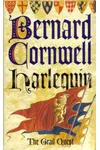
- Harlequin (published as The Archer's Tale in the U.S.) (2000)
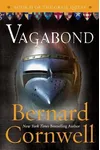
- Vagabond (2002)
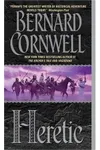
- Heretic (2003)
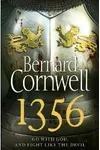
- 1356 (2012)
The Grail Quest Books in Detail
1. Harlequin / The Archer's Tale (2000)
The story begins on Easter morning in 1342 in the coastal village of Hookton. A brutal French raiding party, led by a mysterious figure known as the Harlequin, attacks the village, massacres the inhabitants, and steals a prized family relic—a lance rumored to have belonged to Saint George. The sole surviving son of the village priest, Thomas, is a talented archer who swears vengeance. He travels to France to join the English army under King Edward III. His journey culminates in the legendary Battle of Crécy (August 1346), where the English longbow makes history, and Thomas discovers that his family lineage is tied to an even greater secret: the Holy Grail.
2. Vagabond (2002)
Set immediately after the events of the first book (1346–1347), Thomas is sent back to England on a mission to investigate the Grail's potential location. He finds himself caught in the middle of a Scottish invasion, leading to the brutal Battle of Neville's Cross (October 1346). Thomas faces enemies on all sides, including Dominican inquisitors and his own treacherous cousin, Guy Vexille. The story eventually moves back across the English Channel to the grueling Siege of Calais, where the hunt for the Grail intensifies amid the horrors of medieval warfare.
3. Heretic (2003)
Taking place between 1347 and 1348, the third installment wraps up the original Holy Grail trilogy. The Black Death has begun its devastating sweep across Europe, adding a grim layer of dread to the landscape. Thomas is sent to Gascony to capture a castle held by his cousin Guy Vexille. Along the way, he rescues a young woman named Genevieve who has been condemned as a heretic. Together, they must survive the plague, religious zealots, and a final, explosive confrontation over the Grail.
4. 1356 (2012)
Published nearly a decade after the original trilogy, 1356 is a standalone companion novel that acts as a direct continuation of Thomas of Hookton's adventures. The story jumps forward about eight years to the mid-1350s. Thomas is now a seasoned knight and the feared commander of a mercenary band known as the Hellequins. Instead of the Grail, the quest centers around a new legendary relic: la Malice, a mythical sword rumored to have been used by Saint Peter in the Garden of Gethsemane, said to grant its wielder guaranteed victory. The narrative builds toward the historic Battle of Poitiers (September 1356), where the Black Prince wins a legendary victory against the French.
The Great U.S. Title Swap: Harlequin vs. The Archer's Tale
One of the most common points of confusion for new readers is the title of the first book. In the United Kingdom and international markets, the novel was published as Harlequin. However, when the book was released in the United States, the publisher, HarperCollins, changed the title to The Archer's Tale. This change was made to avoid potential marketing confusion with the famous Harlequin Romances line of romance novels. If you are shopping for the series in North America, look for The Archer's Tale—it is identical in content to Harlequin.
Chronological Timeline and Historical Battles
For readers who appreciate grounding their fiction in real-world history, Cornwell matches Thomas of Hookton's fictional quest with the actual timeline of the early stages of the Hundred Years' War. The sequence of events flows as follows:
- 1342: The raid on Hookton (Harlequin / The Archer's Tale).
- 1346 (August): The Battle of Crécy (Harlequin / The Archer's Tale).
- 1346 (October): The Battle of Neville's Cross (Vagabond).
- 1347: The Siege of Calais (Vagabond).
- 1347–1348: The outbreak of the Black Death in Gascony (Heretic).
- 1356 (September): The Battle of Poitiers (1356).
What to Know Before You Start
The Grail Quest series occupies a unique space in Bernard Cornwell’s bibliography. While it features the Arthurian-adjacent element of the Holy Grail, it is not a fantasy series. Cornwell treats the Grail with historical realism: its power lies in the belief of the people and the political leverage it offers to kings and popes, rather than overt magical spells. The series is celebrated by readers for its gritty, unvarnished look at medieval combat, particularly its detailed depictions of archery mechanics and longbow tactics.
Readers who enjoy Cornwell's other works, such as The Last Kingdom (Saxon Stories) or the Sharpe series, will find a very similar tone here. Thomas of Hookton is a classic Cornwell protagonist—cynical, highly capable, slightly rebellious, but driven by a core sense of honor.
The Azincourt / Agincourt Connection
Many readers wonder if Cornwell’s standalone novel Azincourt (published as Agincourt in the U.S.) is connected to the Grail Quest. The short answer is: only superficially. Azincourt is set in 1415, nearly 60 years after the events of 1356, and follows a different protagonist named Nicholas Hook. While Bernard Cornwell includes a brief easter egg referencing Thomas of Hookton in the text of Azincourt to establish they share the same universe, the two main characters are not related, and the books do not need to be read together.