

Where to Start Reading the Hannibal Lecter Series
Dr. Hannibal Lecter is one of the most mesmerizing, terrifying figures in modern fiction. A brilliant forensic psychiatrist, a man of immaculate taste, and a savage cannibalistic serial killer, Lecter’s shadow looms large over the crime fiction landscape. If you are preparing to step into this dark world created by Thomas Harris, your first decision is choosing how to approach the books.
While there are only four novels in the series, the introduction of a prequel novel later in the publication cycle has left many new readers wondering whether they should read the books in chronological order or publication order. The short answer is: stick to the publication order. Reading the books in the order they were written allows you to experience Hannibal Lecter exactly as the world did—first as a shadowy, terrifying enigma in the background, and later as a complex, main protagonist whose traumatic origins are slowly peeled back. Starting with the prequel ruins the mystique that made the series a cultural phenomenon in the first place.
Publication Order: The Recommended Path
Reading by publication order is the most satisfying way to experience the evolution of Thomas Harris’s writing and the gradual expansion of Lecter’s character. When Harris first introduced the doctor, he had no idea the character would become the centerpiece of his legacy. Here is the chronological progression of the books as they were published:
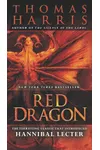
1. Red Dragon (1981)
This is where the story begins. Interestingly, Hannibal Lecter is not the main antagonist of Red Dragon; that role belongs to Francis Dolarhyde, a terrifying killer known as the Tooth Fairy. The novel follows former FBI profiler Will Graham, who is dragged out of retirement to track down Dolarhyde. Desperate for insight into the killer’s mind, Graham visits the Baltimore State Hospital for the Criminally Insane to consult Dr. Hannibal Lecter, the brilliant psychiatrist who nearly killed him years prior. Lecter’s presence in this book is brief but chillingly unforgettable, setting the stage for what was to come.
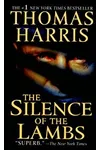
2. The Silence of the Lambs (1988)
Widely considered the crown jewel of the series, this masterpiece pits FBI trainee Clarice Starling against a new serial killer known as Buffalo Bill. To catch him, Clarice must build a psychological bridge to Lecter, who remains behind bars. Their quid pro quo interactions—where Clarice trades details of her childhood trauma for Lecter’s razor-sharp insights—create one of the most intense and iconic relationships in literature. The novel won the Bram Stoker Award and went on to inspire the legendary, Oscar-sweeping film adaptation starring Anthony Hopkins and Jodie Foster.
3. Hannibal (1999)
Eleven years after the events of The Silence of the Lambs, Hannibal Lecter is free, living under an alias in Florence, Italy, and indulging his refined tastes. However, he is hunted by both the FBI and Mason Verger, a wealthy, sadistic former patient seeking horrific revenge. The tone shifts dramatically here: Lecter steps into the spotlight as the main character, and the book explores a much darker, gothic, and controversial relationship between Lecter and Clarice Starling. It is a dense, baroque novel that splits fan opinions but remains essential to the narrative arc.
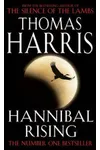
4. Hannibal Rising (2006)
Written twenty-five years after the first book, this prequel takes us back to Hannibal’s childhood in Lithuania during World War II. We witness the horrific trauma he suffered at the hands of Nazi collaborators, his escape to France, and his early steps toward becoming a lethal vigilante and eventually the monster we know. It provides the definitive origin story, explaining exactly why Hannibal possesses such a specific set of appetites and psychological defense mechanisms.
The Chronological Reading Order
If you have already read the series once or are particularly interested in a straight-line timeline, you can choose to read the books chronologically. This order places the prequel at the very beginning:
- Hannibal Rising (2006) – The origin story, set in the 1940s and 1950s.
- Red Dragon (1981) – The introduction of Will Graham and the hunt for the Tooth Fairy, set in the late 1970s and early 1980s.
- The Silence of the Lambs (1988) – Clarice Starling’s trainee days and the search for Buffalo Bill, set in the late 1980s.
- Hannibal (1999) – Lecter on the run in Florence and the ultimate confrontation with Mason Verger and Starling, set in the late 1990s.
Chronological vs. Publication Order: Caveats and Tone Shifts
Choosing the chronological route comes with significant caveats that readers should keep in mind before they begin. First and foremost, reading Hannibal Rising first strips away the horror of the unknown. Part of what makes Hannibal Lecter so terrifying in Red Dragon and The Silence of the Lambs is that he has no clear origin. He is presented almost as an elemental force of evil—a genius mind completely untethered from normal human morality. By reading his backstory first, you immediately humanize him, viewing his actions through the lens of childhood trauma and revenge, which fundamentally alters how you perceive his later interactions with Will Graham and Clarice Starling.
Second, there is a distinct shift in writing style. Thomas Harris wrote Hannibal Rising under unique circumstances. The film producer Dino De Laurentiis, who owned the cinematic rights to the character, made it clear that a prequel movie would be made with or without Harris's involvement. To retain creative control over his character's history, Harris chose to write the screenplay and the novel simultaneously. As a result, the book has a much more visual, fast-paced, and screen-friendly style that feels very different from the slow, clinical, and psychological depth of his early works. Moving directly from the cinematic style of Hannibal Rising to the dense, procedural prose of Red Dragon can feel jarring for readers.
Practical Reader Advice and Adaptations
Can the books be read as standalones? Red Dragon and The Silence of the Lambs function reasonably well on their own as self-contained crime thrillers, but reading them in order is highly recommended to fully appreciate the character development. Hannibal, however, relies heavily on the emotional groundwork laid in The Silence of the Lambs and will make little sense to a newcomer.
It is also worth noting that Thomas Harris has never co-authored any Hannibal Lecter books, nor are there any official short stories or spin-off novels written by other authors. The literary universe begins and ends with these four books. However, if you enjoy the books, the cinematic and television adaptations offer rich companion experiences. The film adaptations of Red Dragon (both the 1986 film Manhunter directed by Michael Mann and the 2002 version directed by Brett Ratner), The Silence of the Lambs (1991), and the NBC television series Hannibal (which brilliantly reimagines the pre-arrest relationship between Will Graham and Lecter) are all highly regarded and expand upon the themes of the books in unique ways.