
The Recommended Reading Order for Hearts on the Rails
The best way to experience Rachel Wesson’s historical series is in order of publication. Because the characters’ lives, relationships, and the institutions they build evolve sequentially, reading them out of order will spoil major plot points, marriages, and character fates. The publication order aligns perfectly with the chronological order, though readers should prepare for a significant chronological time jump midway through the series.
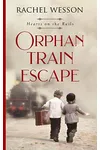
- Orphan Train Escape (2018)
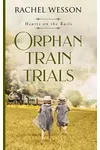
- Orphan Train Trials (2018)
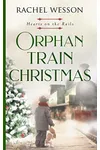
- Orphan Train Christmas (2018)
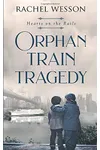
- Orphan Train Tragedy (2019)
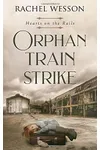
- Orphan Train Strike (2020)
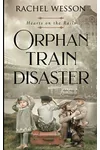
- Orphan Train Disaster (2020)
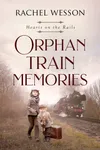
- Orphan Train Memories (2024)
Understanding the Timeline: The Big Chronological Time Jump
While the series maintains a linear progression, it is split into two distinct historical eras. This shift is one of the most unique aspects of the series, showing the long-term legacy of the characters and their mission across generations.
The Pre-Civil War Era (Books 1–4)
The first four books are set in the mid-19th century, starting around the launch of the real-life Orphan Train Movement in 1854. This era focuses on the immediate struggle of transporting children from the crowded, disease-ridden slums of New York City to farming communities in the American West, specifically focusing on Clover Springs, Colorado. The tone is dominated by frontier survival, early railway expansion, and the immediate trauma of family separation.
The Progressive Era and Labor Movements (Books 5–7)
With Orphan Train Strike, the timeline leaps forward to the early 20th century (1909–1912). The focus shifts from the open plains of the West back to the industrial grit of New York City. The characters navigate major historical events, including the Triangle Shirtwaist Factory strike of 1909, the tragic Triangle Shirtwaist Factory fire of 1911, and the maiden voyage of the Titanic in 1912. The series transitions from a frontier survival story to an industrial labor drama, tracing how the descendants and successors of the original characters fight for workers' safety and the protection of vulnerable city youths.
Deep Dive: Book-by-Book Reading Guide
1. Orphan Train Escape (2018)
The saga begins by introducing Bridget Collins, a fierce young woman who must flee New York to protect her younger siblings from their abusive uncle. To escape, Bridget takes a job as an outplacement agent for the newly formed Orphan Train program. Guiding a group of vulnerable children to Clover Springs, Colorado, Bridget must navigate the perils of the journey, the skepticism of western settlers, and her own fears of being hunted down.
2. Orphan Train Trials (2018)
The second book shifts focus to Bridget’s sister, Kathleen Collins, and a new character, Bella Jones. Kathleen is on a desperate quest to track down her younger brothers, who were sent West on an earlier train before the family was reunited. Bella, meanwhile, is running from a dark past in New York. Together, they work to establish a safe haven for displaced children while facing personal trials and emerging romantic interests in the West.
3. Orphan Train Christmas (2018)
Set during a bitter Colorado winter, this holiday-themed installment centers on Kathleen as she manages the day-to-day operations of the Sanctuary. As Christmas approaches, Kathleen fights to secure permanent, loving homes for a new group of orphans. Amid the freezing weather and emotional challenges, she must also confront her growing feelings for a local deputy and decide if she can allow herself to find personal happiness.
4. Orphan Train Tragedy (2019)
Now married, Kathleen Green (née Collins) longs for a child of her own. Her work with the Orphan Train Sanctuary keeps her surrounded by children, yet intensifies her painful struggle with infertility. When a sudden disaster strikes the community, Kathleen is presented with a heartbreaking choice. She must decide how far she is willing to go to protect an orphaned child and whether she can bear the devastating consequences of her choices.
5. Orphan Train Strike (2020)
This book marks the series' major historical shift to 1909. The story introduces Maria Mezza, a young Italian immigrant working in New York's garment industry, and Alice Doe, a girl running for her life. Maria becomes swept up in the historic Triangle Shirtwaist Factory strike, fighting for basic human rights and safe working conditions, while the network established by the Collins family in the earlier books works behind the scenes to shelter those displaced by the unrest.
6. Orphan Train Disaster (2020)
Set in 1911, this installment revolves around the real-life tragedy of the Triangle Shirtwaist Factory fire. Lily, a character dedicated to building a safer, modern textile factory to employ vulnerable women, finds her plans delayed by bureaucracy. Meanwhile, Maria, her sister Rosa, and their friend Leonie remain trapped working in the unsafe conditions of the garment district, leading to a dramatic and emotional climax during the historic fire.
7. Orphan Train Memories (2024)
The seventh book spans two continents in the year 1912. Lily and her partner Charlie travel to Ireland for a new adventure, where Charlie surprises her with tickets for the Titanic's maiden voyage. Back in New York, Kathleen is left to run the Sanctuary alone. She faces mounting pressure as she attempts to open Lily's new factory, care for the newly arrived Chivers orphans, and maintain order amidst personal exhaustion.
Practical Reader Advice
Can the books be read as standalones? While each book features a self-contained romantic subplot and resolves its immediate historical crisis, they are highly serialized. Reading out of order will make the generational transitions and character growth confusing. It is strongly recommended to start with Orphan Train Escape.
Historical Accuracy: Rachel Wesson blends meticulous historical research with fiction. The Orphan Train movement (which ran from 1854 to 1929 and relocated over 200,000 children) serves as the backbone for the first half of the series. The second half accurately portrays the labor strikes, the garment factory dangers, and the societal pressures of Gilded Age New York. It is a fantastic series for readers who enjoy learning about lesser-known eras of American history through a deeply personal lens.
Tone and Sensitivity: The series deals with heavy themes, including child abandonment, historical disasters, labor exploitation, and domestic abuse. However, Wesson balances these tragic elements with strong themes of community, romance, hope, and female resilience, making it an uplifting read overall.